‘Where’s he at?’ WV flood survivor says government should do more to help
Jul 31, 2026 | 5:59 am ET
Description
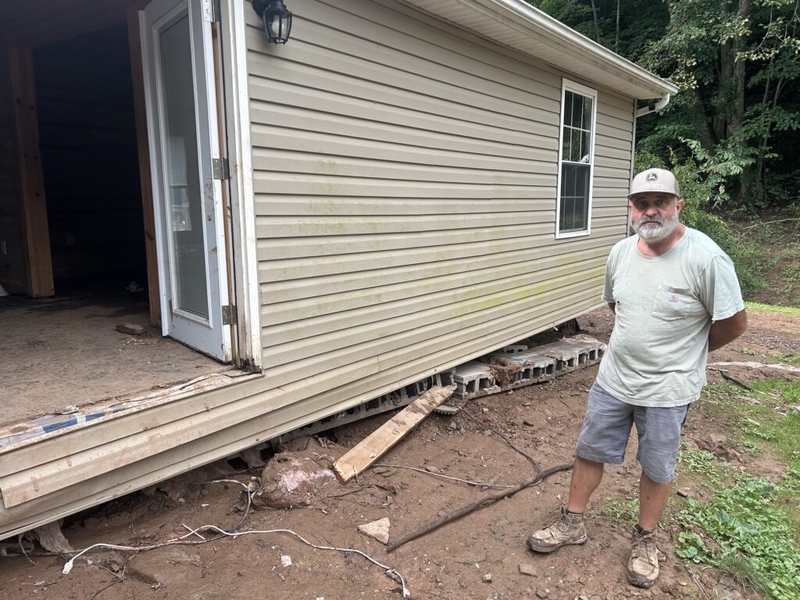
Jason Mulholland stands beside his home in Lewis County, W.Va. The house was destroyed by flooding last week. (Photo by Lori Kersey | West Virginia Watch)
WESTON, W.Va. — On July 21, it took 45 minutes for flash floods to destroy three houses in Jason Mulholland’s family. The home he shared with his wife and the nearby homes of his two sons, 33 and 29, are all beyond repair.
Mulholland had just returned from work and was making dinner when the water from the creek behind his home on Copley Road, near Weston, started to rise. He and his son started moving their vehicles out of the water’s path. He carried two of his grandchildren, 4 and 1, to safety from the rising water.
“We stood in the middle of the road there in three feet of water and watched all this float away,” he said, gesturing to the ruined houses.
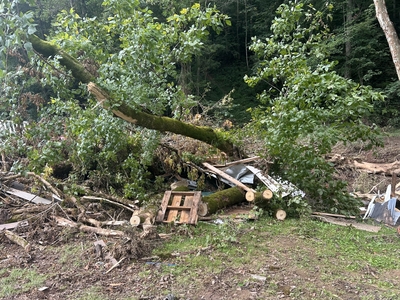
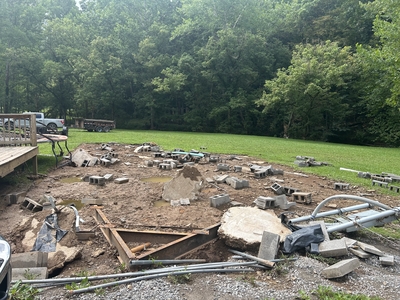
His own home – a double-wide trailer that he’d recently remodeled – was knocked feet from its foundation. A porch and some cinderblocks are all that’s left from one of his son’s houses. Debris from the rest of it washed down the creek and tangled in nearby trees.
Now, Mulholland is angry that the West Virginia and federal governments haven’t done more for his family and the rest of his community.
“He’s running this country,” Mulholland said of President Donald Trump. “He’s worried about what’s going on over here and overseas…but he’s not here worried about us, the people that voted him in office. My gripe is ‘where’s he at?’”
Gov. Patrick Morrisey has requested an expedited major disaster declaration that would allow individual assistance and public assistance for Lewis County, where Mulholland lives, and six other counties hard hit by deadly storms and flooding on July 21 and 22. The Trump administration has not yet approved the declaration.
Mulholland said a representative from the Federal Emergency Management Agency has been to his house and told him if the Trump administration approves the disaster declaration, they’ll offer him $48K for his home, which he’s put $300,000 into. The federal government could loan him money to rebuild, he said he was told.
“That’s not what us fellow West Virginians or fellow Americans want to hear,” Mulholland said. “They want to hear our president and our governor of West Virginia step up and say, ‘Look, guys, what can we do to help you?’ And they ain’t none of them doing that.”
Mulholland is also angry that Morrisey and Trump haven’t been to his neighborhood to see the damage and speak with affected residents. Morrisey has so far made four visits to flood-affected areas of the state, speaking to reporters twice from Buckhannon and once from Weston. He also visited St. Marys and Weston last weekend.
Mulholland said it’s sad that the state can spend $2 million on a festival and Ferris wheel for America’s 250th birthday, and the president can spend money on war, while neither the state or federal government are doing more for flood victims.
“It don’t make a bit of sense,” he said. “And I will get out. I will get out to West Virginians, if I’ve got to go on every news station in the state of West Virginia. And until I see him or get some kind of assistance, I’m going to let fellow West Virginians know how he’s doing.”
Lars Dalseide, communications director for Morrisey, said the governor understands the frustration that families are feeling after the devastating flood. He pointed out that during his four visits over the last week, Morrisey met with local officials, first responders, business owners, and residents. The governor, Dalseide said, has also directed state resources to support response and recovery efforts and requested the major disaster declaration from the federal government.
The West Virginia National Guard was deployed to assist in flood response, and the governor also sent in the state Department of Highways and the Department of Environmental Protection.
“The administration remains focused on helping every affected community recover as quickly as possible,” Dalseide wrote in an email to West Virginia Watch.
Morrisey spoke to reporters about flood recovery Wednesday in Weston, where he celebrated the reopening of the Shop n’ Save grocery store.
There, he told a reporter he’d been in touch with officials from the federal government about the state’s disaster declaration application and that he would continue to push “as hard as possible,” but said it could take time.
The governor encouraged people to volunteer at construction and mucking projects in affected areas. West Virginia Voluntary Organizations Active in Disasters is coordinating volunteers.
Morrisey also urged people to be patient.
“It does take time to muck out the homes. It takes time to rebuild the bridges and the roads and do the things that are necessary for long-term recovery,” Morrisey said. “But the state of West Virginia is going to stand behind Upshur County. It’s going to stand behind Lewis County. It’s going to stand behind Pleasants County and all the counties and cities affected by Mother Nature’s wrath.”
Mulholland has lived on Copley Road for 50 years, and his mother has been there 73. Neither have experienced flooding like they did last week, even during a historic flood in 1985.
“In 85, when it flooded that bad, the water never got in that road,” he said. “It got up in here, but it was never in (the road).”
Floods – even deadly ones – are not uncommon in West Virginia. Last year, flooding hit several counties in southern West Virginia. A flood in northern West Virginia last summer killed several people in Ohio County.
While Mulholland waits to know what assistance he can get from the government, he said he doesn’t plan to leave the land he lives on.
“I mean, will it ever happen again?” he said. “You don’t know. A person just doesn’t know if it’s going to happen. I mean, I would have never ever expected it to happen. But here we are.”
Charleston, WV