When time becomes a barrier to justice for Michigan survivors
Sep 29, 2026 | 8:00 am ET
Description
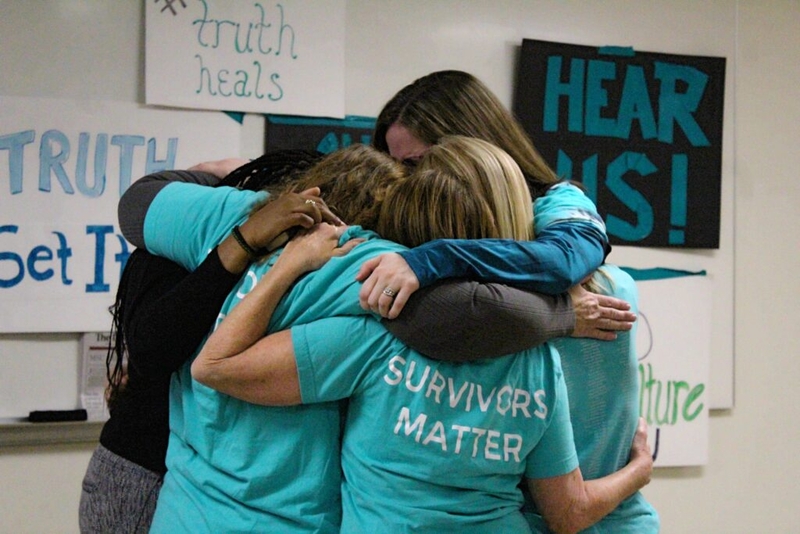
Survivors of Larry Nassar's sexual abuse, along with some of their parents react to the Michigan State University Board of Trustees voting unanimously to release documents the school has withheld from the state attorney general for years for its investigation into Nassar's abuse on Dec. 15, 2023. (Photo: Anna Liz Nichols)
For survivors of childhood sexual abuse, coming forward can be a complex process shaped by trauma, fear, shame and the circumstances surrounding the abuse. Survivors may not disclose what happened or fully understand their experiences until years or decades later. But the law does not always give survivors that same amount of time. In Michigan, statutes of limitations can prevent survivors from bringing civil claims based on abuse that occurred years earlier.
The experiences now coming to light at Michigan institutions show why those time limits can be significant. An independent investigation into Interlochen Center for the Arts documented decades of sexual abuse and institutional inaction. More recently, 16 former University of Michigan hockey players who played for the university between 1984 and 2001 filed a lawsuit alleging they experienced sexual abuse that was normalized as team hazing. In both instances, survivors are coming forward about abuse that occurred years or even decades earlier, underscoring why the amount of time survivors have to seek legal accountability matters.
We approach this issue from different but connected perspectives seeking justice for sexual abuse survivors. As one of the survivors of Larry Nassar’s abuse, Erin has not only openly spoken about being a survivor but also spoke to him directly in court during his sentencing. For over two decades, Megan has represented survivors of sexual assault and institutional abuse, including hundreds of survivors in cases involving powerful individuals and institutions. Our experiences have shown us both the importance of giving survivors an opportunity to seek accountability and the reality that reaching that point can take time.
As survivors of abuse come forward, the Justice for Survivors package offers Michigan lawmakers an opportunity to remove longstanding legal barriers that have kept many survivors from seeking legal accountability.
The opportunity to be heard
For me, Erin, having the opportunity to share my experience and seek accountability was an important part of healing and moving forward from my abuse. I grew up playing soccer and dreamed of one day playing at the collegiate level. When I began experiencing severe back pain at 11 years old, I was referred to Nassar for treatment at his office on MSU’s campus. I later came forward as a survivor of his abuse and had the opportunity to stand in a Michigan courtroom and speak about my experience as part of the legal proceedings against him.
That opportunity did not erase what happened to me, but it allowed me to seek accountability and have my experience heard. Speaking out also gave me the chance to be a voice for survivors who may not be ready or able to speak for themselves. While every survivor’s experience is different, each person should have the ability to decide for themselves whether and when they are ready to seek accountability.
Why time matters in childhood sexual abuse cases
I, Megan, have spent decades representing survivors of sexual assault and institutional abuse. I have seen why survivors may need years or even decades to understand what happened to them, process their experiences, and decide whether they are ready to disclose the abuse. Grooming, fear, shame and power imbalances can make that process even more difficult.
The experiences at Interlochen and those described by former University of Michigan hockey players in a recently filed suit demonstrate that reality. In both instances, years or decades separate when the abuse occurred from when survivors were ready to come forward to seek accountability.
When a statute of limitations expires before a survivor is ready to come forward, they can lose the ability to bring a civil claim and pursue justice. The law should reflect the reality of how survivors experience and disclose childhood sexual abuse.
A path forward for Michigan survivors
The Justice for Survivors package seeks to address those barriers. Among its proposed reforms, the legislation would extend the civil statute of limitations for survivors of sexual abuse to age 48, eliminate the civil time limit when an abuser has been criminally convicted, and create a one-year revival window for civil claims that have already expired.
For survivors, that revival window would allow them to bring claims before a court and have the facts considered rather than being barred solely because too much time has passed.
Justice and accountability can look different for every survivor, and not everyone will choose to pursue a civil claim. What matters is that survivors have the opportunity to make that decision for themselves rather than having an expired statute of limitations make it for them.
The experiences now coming to light at Interlochen and within the University of Michigan hockey program demonstrate why that opportunity matters. By passing the Justice for Survivors package, Michigan lawmakers can better align state law with the realities of childhood sexual abuse and give survivors a meaningful opportunity to seek legal accountability.
Lansing, MI