In wake of record-breaking heat waves in Pa., experts reflect on preparing for the future
Jul 13, 2026 | 4:15 am ET

Description
As heat waves envelop the nation, attendees at the Great American State Fair in Washington, D.C. find shade under large umbrellas at the FIFA Fan Zone on the National Mall on June 30, 2026. (Photo by Sam Gauntt/States Newsroom)
The below research was funded in part by the Common Health Coalition, which is also a funder behind Whitney Downard’s training with the National Press Club Journalism Institute Public Health Fellowship.
In a hypothetical state with a large, metropolitan city, five days of extreme heat has taken its toll: hospitalizations have spiked, dozens have died and hundreds of millions of dollars were lost due to decreased productivity and health costs.
Researchers with John Hopkins Bloomberg School of Public Health ran the above scenario in an “archetypal community,” calculating that unusually hot weather for less than a week could cause as many as 300 deaths and 4,000 emergency department visits in addition to a $870 million cost.
“The model isn’t intended to predict future events, but it’s a helpful way to walk through the potential consequences,” said Crystal Watson, the director of the school’s SHIELD Initiative. “While some of those costs are a little bit harder to define sometimes, the magnitude of the consequences, I think, really help to illustrate the benefits of prevention and preparedness.”
In the days preceding Independence Day storms, areas across Pennsylvania as well as the Northeast saw back-to-back days above 100 degrees. Heavy rain and fierce winds caused tens of thousands to lose power.
A spokesperson for the Pennsylvania Department of Health said the agency monitors heat-related illnesses using symptom monitoring data from emergency departments. Between June 29, 2026, and July 5, 2026, it recorded 1,345 heat-related illness emergency department visits — peaking at 335 visits on July 3.
Gathering data on heat-related deaths will take months, but CBS News reported seven heat-related deaths in Philadelphia in early July.
Climate change is associated with rising temperatures and extreme weather, increasing the possibility of such events in the commonwealth — the U.S. Environmental Protection Agency estimates that the country’s largest metropolitan areas can expect roughly six heat waves a year.
With that figure in mind, Watson and other researchers on a Thursday public health panel emphasized ways to plan and prepare ahead of the deadliest type of weather event.
In Washington state, physician Vicki Sakata doesn’t have to imagine such a scenario. A 2021 “heat dome” flooded Seattle-King County 911 with the largest number of calls since its 1968 opening. More than 100 deaths are attributed to the dome, which coincided with the COVID-19 pandemic.
“The surge (of heat-related illnesses) during our heat dome did not actually occur until two to three days after the temperature started to rise,” said Sakata, a senior medical advisor with the Northeast Healthcare Response Network. “This is often the case … our body, physiologically, as it is exposed to more and more heat, started to make compensation maneuvers. It compensates until it can no longer compensate.”
“When that happens, then there’s no going back and you need emergency help,” she continued.
Seven drownings in one day during the heat dome was more than double the average, she said, as residents sought refuge from the high temperatures.
But Sakata noted that her state had hosted six World Cup games without incident, saying that every preparation committee crafted a heat plan.
“We can do so much in planning and mitigation that we actually can alleviate a lot of the response needs,” she said. “It takes a village, outside of just healthcare and public health, to create communities that can be resilient to heat.”
An emphasis on planning
Paul Peterson, the director of preparedness programs with the Tennessee Department of Health, reported that hundreds visited emergency departments in his state during the late June and early July heat wave.
“The data that we have can inform preparedness actions, and it can inform things that we can do to better prepare our communities,” said Peterson. “Data can be used for action and not just as a dashboard.”
Items to be considered before an emergency should include: triggers for opening cooling centers, transportation options, individual roles in overlap jurisdictions, promoting resources, choosing collaborative partners and identifying at-risk communities, he said.
“In a heat event, there are going to be individuals that have less resources and more, so there’s going to be a number of ways that we can better prepare those populations by being really proactive,” said Peterson. “The communities at the greatest risk should be at the center of our planning, not an afterthought.”
“Temperatures and all these types of scenarios tell us what’s coming, but preparedness really determines what happens next,” he added.
Panelists emphasized the ability to prevent negative, heat-related outcomes by planning ahead for different scenarios. Prolonged periods of heat, for example, can overwhelm power grids and cause rolling brownouts, further endangering residents without cooling options.
Sakata noted that elderly residents warranted extra consideration, noting that the U.S., as a whole, is growing older. Pennsylvania is the fifth-oldest state in the country.
“We all need to work together, and that does not happen freely. That does not happen without a cost,” she added, in response to a question about ongoing federal cuts to public health priorities. “If we are going to close these (resource) gaps … we need to make the investment.”
Debra Lubar, a former chief operating officer with the Centers for Disease Control and Prevention who now works with the Milbank Memorial Fund, shared concerns about staff turnover in preventative health planning following waves of federal reductions.
“I know that puts more pressure on wellness and state leaders,” said Lubar.
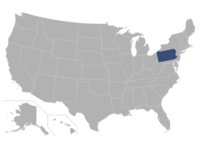
Harrisburg, PA