Advocates say new EPA guidance on PFAS falls far short of what’s needed
Jul 13, 2026 | 5:08 am ET

Description
Maine has been a leader in regulating perfluoroalkyl and polyfluoroalkyl substances — including being the first state to pass a rule requiring manufacturers to report intentionally added PFAS in products. (Photo by Getty Images)
Environmental advocates criticized a draft memorandum from the Environmental Protection Agency for failing to remotely address the risks of PFAS in sludge. Although Maine has worked to address the issue across the state, the EPA recommendations instead put all responsibility on individuals to manage the problem, two experts told Maine Morning Star.
“This is the EPA failing to do its job and failing to follow the science,” said Emily Carey Perez de Alejo, executive director of Defend Our Health.
And that failure, Carey Perez de Alejo said, means state governments will have to do even more to fill the vacuum.
Last week, the EPA published the draft guidance memorandum on two types of PFAS — or per- and poly-fluoroalkyl substances, a group of manmade chemicals created in the 1940s — in the Federal Register. PFAS are used in a variety of consumer and industrial products, because they are both oil and water resistant. But they don’t break down in the environment or in the body, and have been tied to negative health impacts.
That publication starts a 60 day clock for public comment on the draft, giving the public until Sept. 4 to respond.
“I would say that EPA’s guidance document is disappointing, but unfortunately not surprising,” said Erica Kyzmir-McKeon, with the Conservation Law Foundation. “EPA is essentially choosing to ignore its own science that irrefutably shows the human health and environmental harms from PFAS and sludge.”
The draft guidance from the EPA focuses on two types of PFAS – PFOA and PFOS — in biosolids, or sludge, a wastewater treatment byproduct that can be used as a fertilizer on farm fields. Much of the contamination in Maine has been linked to the spread of sludge, prompting the state to ban the practice in 2022.
In contrast, the draft guidance calls spreading sludge a “cost-effective strategy” to improve soil quality, and only offers voluntary recommendations for the practice.
“It’s not what the EPA is here for,” Carey Perez de Alejo said. “The EPA is supposed to be a central agency that supports the states by setting not voluntary recommendations — but guidance and standards when the science shows that action is needed.”
The recommendations leave individuals responsible to manage their own risks to avoid PFAS in sludge by suggesting researching the supplier of the sludge, avoiding application in areas where children may have access to the soil and avoiding application in garden beds used for growing foods most likely to absorb the PFAS from the soil.
But Kyzmir-McKeon said for an individual, it is “almost impossible” to find enough information to know if sludge has been spread near a food they have at home.
“It’s particularly outrageous that the EPA is essentially suggesting that individuals and not the EPA are the ones that have the responsibility to protect themselves and their children from the dangers of PFAS and sludge,” Kyzmir-McKeon said.
The guidance for farmers recommends avoiding spreading sludge near fishable waters, in areas where children under 5 may have access and on fields for agricultural products that have higher risks for human exposure.
“It’s just wildly irresponsible of the federal government, but the states are having to step in in this case because individuals cannot solve this problem on their own, and they should not be asked to,” Carey Perez de Alejo said.
The guidance for farmers recommends avoiding spreading sludge near fishable waters, in areas where children under 5 may have access and on fields for agricultural products that have higher risks for human exposure.
The draft guidance comes against a backdrop of the agency’s apparent unwillingness to finalize an earlier draft risk assessment on the issue of PFAS in sludge. That draft assessment was published in January 2025, shortly before President Donald Trump took office, after the bulk of the work was completed during President Joe Biden’s administration.
Since then, the EPA has not finalized that draft assessment, and the new draft guidance directly criticizes the assessment, stating that the agency has identified “serious flaws” with the risk assessment, causing confusion and a “lack of clarity” on how the public should consider spreading sludge.
“What it indicates to me is that they want to essentially ignore the draft risk assessment and not have to move forward with finalizing it, which is unfortunate,” Kyzmir-McKeon said.
Taken altogether, Carey Perez de Alejo said, the draft signals that the EPA won’t have strong, cohesive regulations for PFAS anytime soon, and states will have to step up to address the issue.
“The good news is that the states taking coordinated action on these issues is showing really good impact even in the absence of federal leadership,” Carey said.
It leaves state agencies to both develop regulations and fund testing and treatment. And that will be a challenge, even in a state like Maine that has been proactive about PFAS.
“Maine being the leader on this is the silver lining, because we have already taken action, so we are doing in Maine what we need to to protect communities and families and kids,” Carey said. “The biggest impact this will have on Maine is that there will not be federal funding for some of the work that there should be federal funding for.”
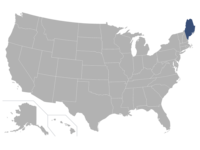
Augusta, ME