WA Fish and Wildlife authorizes killing of one wolf after suspected cattle attacks
May 26, 2026 | 4:53 pm ET

Description
A gray wolf in snow. (Eric Cole/U.S. Fish and Wildlife Service)
Washington will permit the killing of a single gray wolf in the state’s northeastern corner following three suspected attacks on livestock.
The incidents took place in the Aladdin Valley, a forested rural area northeast of Colville in Stevens County. On Sunday, May 17, authorities investigated one calf that was killed and another that was injured. The next day, they examined another injured calf. The Department of Fish and Wildlife said the injuries were consistent with a wolf attack.
Kelly Susewind, the agency’s director, issued the wolf kill order Friday afternoon.
State wildlife managers, who are responsible for bringing back gray wolf populations to a level where they are no longer considered endangered, do not know which wolf or wolves attacked the calves. Three packs inhabit the area.
Because multiple attacks happened within a short period of time and because nonlethal deterrents such as foxlights were in place for over a month, Susewind’s directive is consistent with the state’s Wolf Conservation and Management Plan.
At the end of last year, state and tribal officials counted a minimum of 270 wolves and 49 packs in Washington, the highest count recorded since the state monitoring began in 2008.
The wolves in eastern Washington make up 69% of all wolves in the state and were delisted from the federal Endangered Species Act in 2011. But under state law, the species is still considered endangered until at least four successful breeding pairs inhabit western Washington.
This means it is illegal to hunt, harass or kill wolves, no matter where they reside.
Ranchers have long criticized how the state manages wolf populations, arguing they should be allowed to take matters into their own hands when a wolf attacks livestock. In this scenario, wildlife conservationists argue that the agency should not kill a potentially innocent wolf and that doing so could result in more livestock attacks.
“If you’re killing adult wolves, you may be killing the most skilled hunters… And you’re leaving behind their juvenile offspring,” which may be more likely to go after livestock, said Amaroq Weiss, senior wolf advocate at the Center for Biological Diversity.
Following the recent attacks, Fish and Wildlife trapped and radio-collared an adult male wolf in the area. The agency says that killing one wolf will not jeopardize wolf recovery in the state.
Weiss argues the agency’s directive does not account for the social harm to the pack if a member is killed.
“We call them packs, but what it really is is a family,” Weiss said, referencing an academic article criticizing recovery standards. “When you kill the mother or father… it can cause the pack to break up into two packs, three packs, none of which then really has a good set of leaders among it.”
The agency does not know which wolf will be killed, but it tries to avoid killing pups, breeding adults or collared wolves if possible, said Staci Lehman, Fish and Wildlife spokesperson for eastern Washington.
When a calf is killed by wolves, Fish and Wildlife requires that property owners remove the carcass from the area, but ranchers say this prevents the agency from determining who the culprit is.
If the body were to be left in place, “those wolves will return to that area to feed,” said Kelly Shockey, district representative of Okanogan, Ferry and Stevens counties for the Washington Cattlemen Association. “But they don’t ever want to quite go down that road.”
“When those wolves come back to look for more feed on that carcass, nine times out of ten, they won’t find it, so they’ll take another calf,” Shockey said. “And that’s where you get your repeated either kills or injured calves.”
The state will pay up to $10,000 per livestock loss claim, but some ranchers refuse to file a claim, seeing it as a way to admit that they are ok with wolves in the area.
People “seem to be real compassionate with these apex predators and they’re killers,” Shockey said. “But where’s the compassion on the other side?”
Francisco Santiago-Ávila, science and advocacy director for Washington Wildlife First, hopes that Fish and Wildlife will be more transparent with their findings about wolf attacks on livestock so that “organizations do not need to file lawsuits just to learn what is really going on.”
“Roughly 80% of the wolves the Department has killed were targeted due to predations on public lands,” Santiago-Ávila said. “The Department has stopped disclosing this information because it knows there is enormous public opposition to killing wolves.”
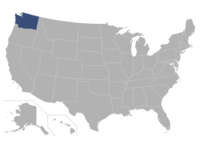
Olympia, WA