Views on abortion, AI set Oklahoma attorney general candidates apart
Oct 15, 2026 | 3:12 pm ET
Description
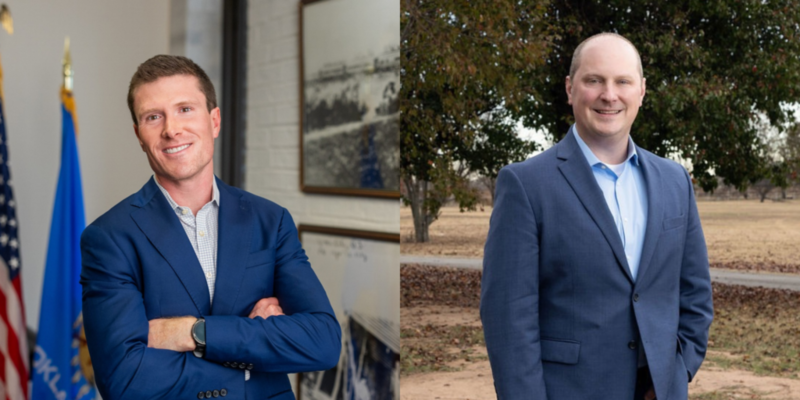
Democrat Nick Coffey, left, and Republican Jon Echols, right, are both on the Nov. 3 ballot to be Oklahoma's next attorney general. (Photos provided)
OKLAHOMA CITY — While they share similar views on a controversial aluminum smelter, two candidates for Oklahoma attorney general vary in how they’d handle an abortion lawsuit and artificial intelligence.
Democrat Nick Coffey and Republican Jon Echols, both from Oklahoma City, are competing to be the state’s next attorney general. Gentner Drummond, the current attorney general, made an unsuccessful bid for governor instead of running for another term.
A former federal prosecutor with the U.S. Attorney’s Office, Coffey said his experience in a courtroom working with jury trials, law enforcement and major drug and money laundering cases make him the most qualified candidate. Coffey, 35, is a graduate of the University of Oklahoma College of Law.
“I guess what sets me apart from my opponent is experience in the courtroom,” he said. “The best I can tell, I’m the only one that has overseen the extradition of a Mexican cartel leader. I did it twice at the U.S. Attorney’s office. The AG should be a prosecutor, not a politician.”
Echols, 46, served in the Oklahoma House for 12 years and was the majority floor leader for eight of them. He holds a law degree from Oklahoma City University.
“The major difference in this race just comes down to political philosophy,” he said. “I have the legislative experience, the legal experience and the small business experience to go in from day one and to run the Attorney General’s Office.”
Inola aluminum smelter
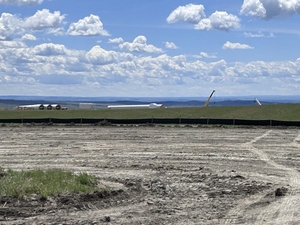
Drummond has sued to prevent the construction of what would be the country’s largest aluminum smelter from being built in Inola over environmental and foreign ownership concerns. The project has the support of President Donald Trump, Gov. Kevin Stitt and other elected state leaders, while many residents of the community located about 25 miles east of Tulsa oppose it. Residents have implemented a moratorium until April to block the $4 billion project, which is expected to produce about 600,000 tons of aluminum each year and create over 1,000 jobs.
Oklahoma AG sues to stop construction of Trump-endorsed aluminum smelter in Inola
Both Coffey and Echols said they plan to continue the lawsuit and have concerns about it being 60% foreign-owned. The smelter is part of a $200 billion deal Trump made with the United Arab Emirates.
“You know, we love in Oklahoma to talk about how we value property rights for an agricultural state. But hey, you wouldn’t know it if you looked at the way this thing had played out,” Coffey said.
Coffey said while he understands the state needs the jobs, he thinks the smelter ownership group should take a more active role in listening to the concerns of residents.
Echols said he’s concerned about the foreign ownership and high fluoride emissions from the potential smelter.
“I’m still open to learning more about the project, and I’m not against economic growth and job creation,” he said. “It just has to be done in a way that is safe for the citizens of Inola and northeast Oklahoma.”
The ownership group needs to prove the safety of the project to the attorney general and the residents of Inola, Echols said.
Holding other elected officials accountable
The office has faced criticism in recent years for how it prosecuted unrelated cases against two lawmakers. In both cases, the Attorney General’s Office allowed the legislators to enter into plea agreements on the same day the charges were first publicly unveiled.
In one case, Rep. Ajay Pittman, D-Oklahoma City, pleaded guilty to fraud-related felony charges and received a deferred sentence. In the other, Rep. Ty Burns, R-Pawnee, pleaded guilty to three domestic-violence related crimes and received a suspended sentence.
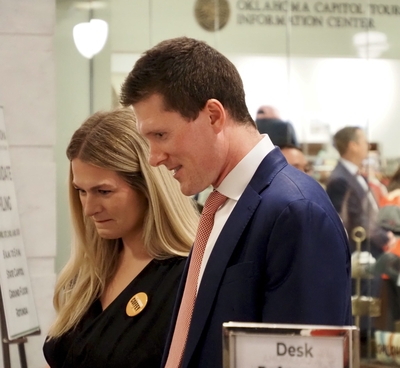
Coffey said this “double standard” and “negotiating behind the scenes” needs to end.
“Oklahomans, I think, have lost a lot of trust and faith in their elected officials,” he said. “And I don’t think we’re going to get it back until we have until we see an AG actually hold state officials accountable when they break the law.”
Publicly holding officials accountable will have a “trickle down effect” that will force other officials to “cut the nonsense” and address the real issues facing Oklahomans, Coffey said.
Echols said elected officials need to be held accountable, no matter their party affiliation, and he has a track record of doing this in the Legislature when he worked on a special committee that recommended the expulsion of a fellow Republican lawmaker.
“If anything, elected officials need to be held to a higher standard, not a lower standard,” he said. “… It’s not just elected officials. We have a problem in the state of Oklahoma with the rich and powerful getting away with things that the rest of us don’t get away with.”
No political corruption will be “swept under the rug” if elected attorney general, Echols said.
Abortion lawsuit
A group of Oklahoma mothers and physicians sued state officials last month, including the attorney general, alleging the state’s abortion ban forced them to leave Oklahoma to access abortion care when they had been given fatal fetal diagnoses by medical professionals.
The lawsuit is very concerning because these are mothers who were given medical diagnoses that their wanted children would not survive, Coffey said.
He said the attorney general’s role is to defend the laws passed by the Legislature rather than to draft policy.
“I’m gonna be in a better position to evaluate the legal defense of a law if I have all the facts (as attorney general),” Coffey said. “But right now, with what they’re describing, it is inhumane. And I would have a very hard time figuring out morally and legally how to defend this law and make these women suffer in the manner that they are describing.”
Echols said the attorney general needs to defend the law, and he would defend the state’s law as written.
“As somebody who’s 100% pro-life, I would follow the law,” he said. “And I think that’s the job of the attorney general. The job of the attorney general is not to say what they wish the law would be, the job is to follow the law.”
Echols said during his time as a lawmaker, he filed a bill attempting to clarify the definition of “terminal” in state law and allow for early inducement of labor in terminal cases.
Artificial intelligence in the courtroom
Use of artificial intelligence in the courtroom has garnered more attention this year. The Oklahoma Supreme Court in June issued a warning against the use of artificial intelligence by attorneys in court filings. An Oklahoma judge in September admitted he used AI in a filing that cited cases that do not exist.
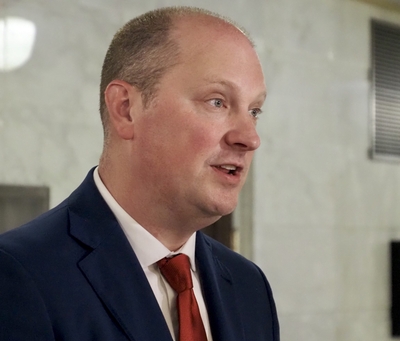
Artificial intelligence has been used in the legal profession for years for things like researching legal briefs, but there should be serious sanctions for those who use AI to draft filings without checking the final product for accuracy, he said.
He said banning the technology altogether may not be possible.
“That would seem to be unfeasible and not seem to be where the economy is headed,” he said. “But look, I’m a big believer in respect for the legal profession, and attorneys that dilute the legal profession by telling ChatGPT or Claude to draft court filings and then don’t check it, yeah, they absolutely should be heavily sanctioned.”
Echols said the next attorney general will be dealing with AI issues, from its use in the courtroom to clearing up laws on how it relates to child pornography.
“Lawyers are responsible for candor with the judiciary,” he said. “And there will need to be more regulations put on (AI) just like there needs to be additional updating of the criminal code.”
But Echols said he can also see a use for the technology in the attorney general’s office as a supplemental tool for efficiency, not to replace hard work.
Oklahoma City, OK