A veteran’s case for more choice and more voice in elections
Aug 11, 2026 | 7:01 am ET
Description
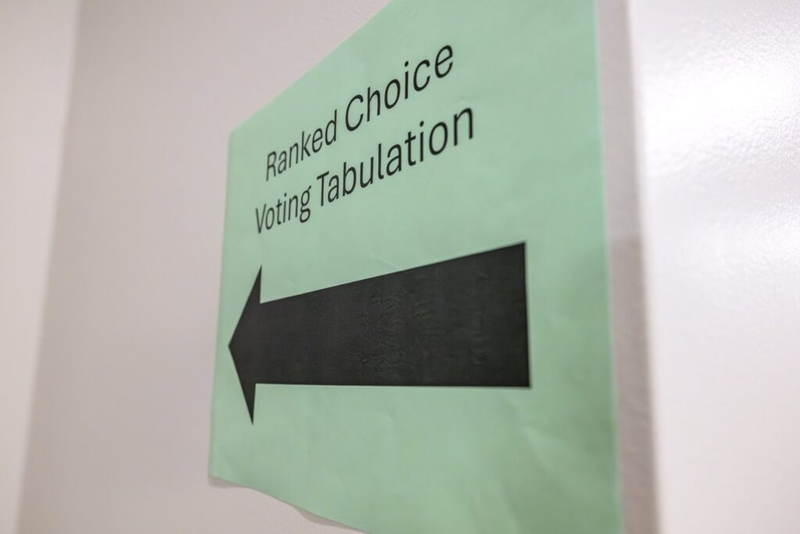
The first day of Maine’s ranked-choice tabulation to determine the winners of three primaries held on June 9, 2026. Officials in the Secretary of State’s office began conducting the count at the Maine Department of Public Safety in Augusta on June 12, 2026. (Photo by Jim Neuger / Maine Morning Star)
Eight years in the U.S. military taught me that the mission only succeeds when everyone is working toward the same goal, even when we don’t agree on every detail of how to get there. This lesson has stayed with me through every chapter of my life since: as a lawyer representing veterans fighting for the benefits they earned, as the first woman veteran appointed to a Michigan governor’s cabinet, and as a mother of six.
Now, as Director of Partnerships at Veterans for All Voters, where I work to protect and strengthen our democracy for future generations, it has become clear to me that ranked choice voting is one of the most promising reforms out there to help focus decision-makers and voters on our shared values and mission.
For those unfamiliar, ranked choice voting lets voters rank candidates in order of preference: first choice, second choice, third choice. If no candidate has the support of a majority and your first choice can’t win, your vote automatically counts for your second choice to help elect a winner more broadly supported by voters.
With ranked choice voting, there are no “spoiler” candidates, “wasted” votes, or winners opposed by the majority. It sounds simple because it is. And the effects are profound.
While ranked choice voting is already being used to give more choice and more voice to 17 million U.S. voters in 23 states, Michigan leaders and voters would like to experience it in local elections before deciding whether it might be beneficial for use in elections to higher offices.
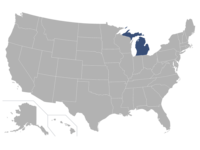
Voters in five Michigan cities have already adopted ranked choice voting for local elections, but conflicting language in state law has prevented local use. Rank MI Vote is leading a broad-based coalition of civil rights, voting rights, good government, and pro-democracy groups to pass legislation in the next Michigan Legislature to remedy this and protect the integrity of Home Rule and local control of elections.
This is one of the reasons that Rank MI Vote has shifted its focus from a statewide amendment to incremental progress that will build greater confidence in this change.
I have spent much of my career building bridges — between veterans and the agencies meant to serve them, between state and federal governments, between communities that don’t always trust each other but who need each other. I have also, at various points, considered running for office myself. What has always given me pause is not a lack of conviction, but the way our current system forces candidates to appeal to narrow factions of voters.
To win a primary, you often have to define what you’re against before you’re ever allowed to define what you’re for and before you can appeal to the broader electorate based on shared values. That process squeezes out exactly the kind of thoughtful and collaborative leaders Michigan needs.
Ranked choice voting changes that calculus. It rewards candidates who can build genuine, broad support rather than candidates who simply survive a narrow primary. It gives people like me, people who don’t fit neatly into an ideological box, who care more about solving problems than scoring points, room to run as who we actually are and still have a real path to winning.
This matters enormously for women and people of color, who have too often been told to wait their turn, tone down their message, or fit themselves into a mold built by someone else. Ranked choice voting opens the door to more candidates like us.
Ranked Choice Voting also gives voters something they deserve and too rarely get: meaningful choice. Under our current system, many voters feel they have to choose the “lesser of two evils” or strategically abandon a candidate they actually like because they’re afraid of “wasting” their vote. Ranked choice voting removes that fear. You can vote your values first and still have a say in the final outcome. That is not a small thing. That is the difference between a democracy that merely processes votes and one that actually listens to people.
This is also deeply personal to me as a veteran. I’m proud to work with Veterans for All Voters, a nonpartisan organization of veterans and military family members advocating for reforms like ranked choice voting. Veterans are thanked for our service constantly: at ballgames, in airports, in political speeches. That gratitude means something, but words are not enough. We didn’t serve a party. We served a country. Many of us signed up precisely because we believed in something larger than any single faction, and many of us came home troubled by a political system that seems increasingly incapable of putting the country first.
Veterans for All Voters is made up of people who understand that the health of our democracy is itself a national security issue, and who are willing to keep serving by fighting for the structural reforms that can heal it.
As a married mother of six, whose husband also served in the Army, we think a lot about what kind of country we are leaving our children. We want them to grow up believing that leadership is earned through building coalitions, not through outlasting your opponents in an ideological arms race. We want them to see women and people of color running for office not as exceptions who beat the odds, but as a normal and expected part of who gets to lead.
Ranked choice voting will not fix everything about our politics. But it is a simple, tested, common-sense reform that gives more choice and more voice to voters and makes our elections more representative, our candidates more accountable to the whole electorate, and our democracy a little more worthy of the sacrifices so many Americans, in and out of uniform, have made for it.
That is why I support it. That is why I hope you will too.
Lansing, MI