Achieving justice for Kansans means enforcing our state’s laws equally. That doesn’t happen now.
Aug 11, 2026 | 4:33 am ET

Description
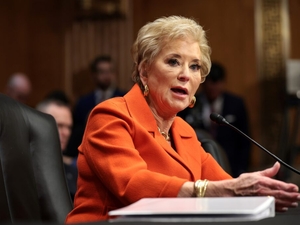
Kansas lawmakers have cleared the way for quick action over DEI complaints, but not for violations of civil rights. (Photo by Sherman Smith/Kansas Reflector)
Ten years ago in June, “Grey’s Anatomy” star Jesse Williams accepted a Humanitarian Award from the BET cable network. He held it aloft, then leaned not just into the microphone, but into a kind of racial homily prosecuting America’s caste system and binding the wounds of its casualties
“If you have a critique for the resistance,” Williams said during his electric remarks, “then you better have an established record of critique of our oppression. If you have no interest in equal rights for Black people, then do not make suggestions to those who do. Sit down.”
A new campaign, the Kansas Enforcement Parity Act, designed by a grassroots political organizing group, aims to bring some balance to discrimination enforcement. Mainly, to address discrimination with the same urgency that anti-DEI enforcement receives.
“DEI complaints are investigated within 45 days and fines levied within 90 days,” said Kevin Myles, a former NAACP official at local and national levels, and an author of the plan. “The average KHRC (Kansas Human Rights Commission) complaint for discrimination takes 11 months! Remedies are capped at $2,000, and the companies responsible for discriminating may even be able to keep their contracts. This effort would call on the state to end the hypocrisy.”
The Enforcement Parity Act would not require organizations to defend every prior DEI office, program or label, said Myles, the founder and principal designer of the Civic Codex, the organization behind the campaign.
“It advances a single public principle: “If Kansas claims to value merit and equal opportunity, it must enforce protections against racial discrimination and retaliation with equal clarity, urgency, and consequence,” he said.
Myles plans to recruit lawmakers to carry it as a bill during the next legislative session.
Organizers built the campaign on four connected demands:
- Timely civil rights enforcement
- Retaliation protection and remedy integrity
- Final-order and public-contract accountability
- Transparency and pattern enforcement
The report summary said the state has shown an ability to create a fast, visible, consequence-backed enforcement system “when it chooses,” pointing out that the Board of Regents must report enforcement activity to the Legislature and courts may impose civil penalties up to $10,000 per violation.
The state’s civil rights system, on the other hand, offers some authority, “but not comparable universal enforcement accountability.”
A person pursuing an employment or public-accommodations discrimination complaint typically must file a verified written complaint and articulate a prima facie case. The Kansas Human Rights Commission must investigate promptly, but the statute does not set a parallel universal investigation-completion deadline; complaints may be dismissed after 300 days without a probable-cause or no-probable-cause finding or other administrative disposition. Agency awards for pain, suffering, and humiliation are capped at $2,000.
“This campaign calls that difference in enforcement asymmetry,” the report said. “Kansas has created a more time-defined, public, correction-backed enforcement architecture for specified DEI-related conduct than it provides for general discrimination and retaliation complaints.”
The Kansas Human Rights Commission has important powers, but it lacks “the statutory timelines, remedy structure, public reporting, compliance monitoring, and contract-accountability requirements needed to make protection reliably enforceable,” the report said.
In 2025, the average KHRC case not resolved by mediation took more than 10 months to process. The agency reported 1,008 complaints received, 974 complaints resolved and 1,025 open cases at the end of that fiscal year.
It’s like Jesse Williams said in his speech. Maybe there is a measure of freedom, but for some, freedom remains conditional and incongruent with fairness or with justice. These aren’t just complaints, but actual people, actual lives where abuses go unanswered.
Those who persevere despite this intentional inconsistency shared his award.
“This is for the real organizers all over the country. The activists, the civil rights attorneys, the struggling parents, the families, the teachers, the students … realizing that a system built to divide and impoverish and destroy us cannot stand if we do,” William said. “The thing is that, just because we’re magic doesn’t mean we’re not real.”
Myles said if the Kansas government seriously intends to stop discrimination in the areas of employment, housing and public accommodations, this campaign offers a great starting point.
“A right is not fully real when a person facing discrimination must navigate legal terminology, secure evidence controlled by an employer or institution, withstand retaliation, and wait through an uncertain process before learning whether meaningful relief is possible.”
Mark McCormick is the former executive director of the Kansas African American Museum, a member of the Kansas African American Affairs Commission and former deputy executive director at the ACLU of Kansas. Through its opinion section, Kansas Reflector works to amplify the voices of people who are affected by public policies or excluded from public debate. Find information, including how to submit your own commentary, here.

Topeka, KS