Utah lawmakers are eyeing new Flock camera regulations amid misuse controversies
Sep 17, 2026 | 7:05 am ET
Description
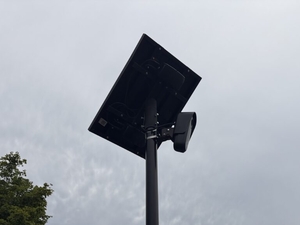
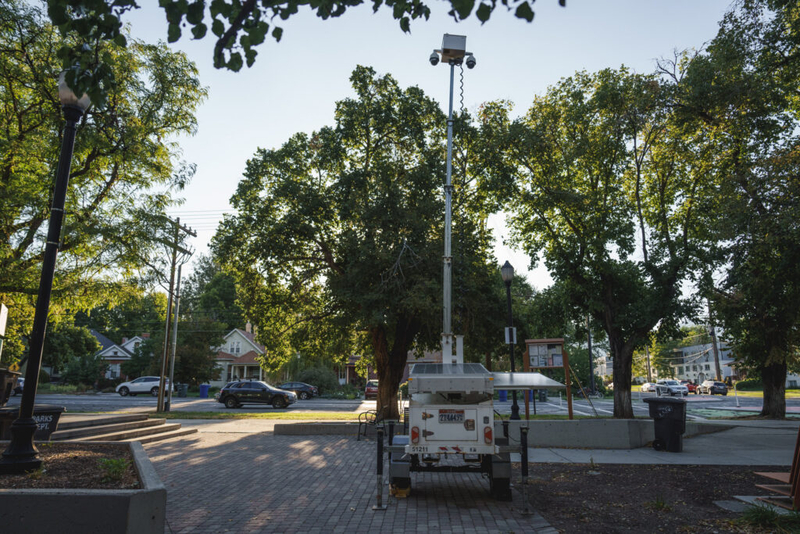
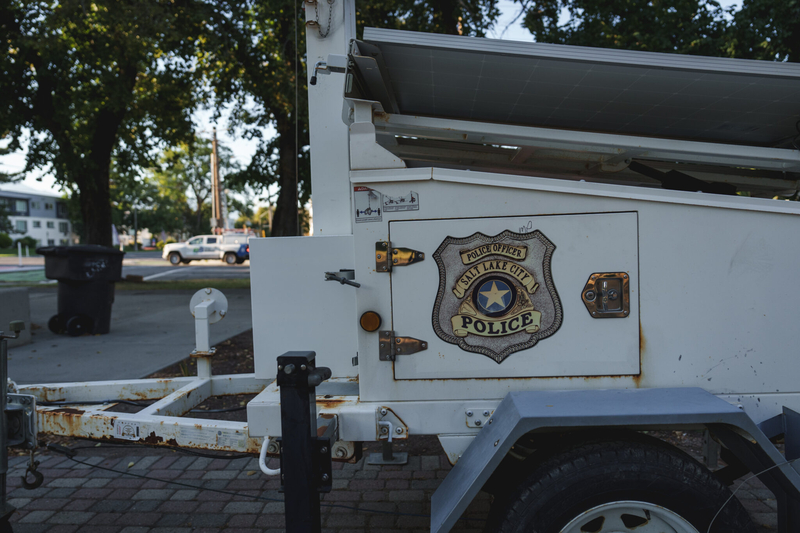
A Salt Lake City Police surveillance camera cart is stationed at Taufer Park on Tuesday, Aug. 25, 2026. (Photo by Spenser Heaps for Utah News Dispatch)
As Flock cameras’ makers aim to surf a wave of controversy, Utah lawmakers are preparing a bill proposal to strengthen privacy guardrails on automated license plate readers months ahead of the legislative session.
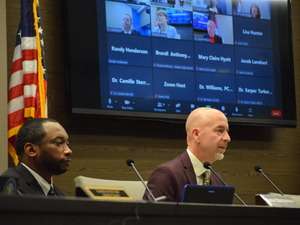
The question isn’t whether the state should allow the cameras on its roads, said Sen. Calvin Musselman, chair of the Law Enforcement and Criminal Justice Interim Committee said during a meeting Wednesday. The bill is expected to implement additional regulations for different types of technologies used by law enforcement, including license plate cameras.
“We recognize the value for law enforcement purposes,” Musselman, a West Haven Republican said. “We can also recognize there’s some legitimate concerns on privacy.”
The bill file was requested as Utah leaders, including Gov. Spencer Cox, and advocates express concerns on cases of misuse across the country. Last month Cox said he was “deeply troubled” to hear the findings of an investigation from the Utah Civic Compact revealing that almost 97% of the searches made in Weber County’s Flock database came from law enforcement agencies outside of Utah.
Most of this Utah county’s license plate camera data is searched by out-of-state law enforcement
Utah law limits searches of license plate camera databases to active criminal investigations, outstanding warrants, or to search for a missing or endangered person or a stolen vehicle.
While the technology has been in use for law enforcement purposes for years, concerns about misuse have recently emerged as police officers in other states have been accused of using Flock camera data to track people they know, and not for their jobs.
The governor asked the Utah Privacy Governing Board and the Utah Privacy Commission to conduct a review of all regulations surrounding the cameras in Utah, and to investigate how local agencies are using them. If there are gaps in the current law, Cox said during his last PBS news conference, he would support legislation to correct that. However, he added, “I think the legislation we have in place should allow us to protect people’s privacy.”
In that review, Christopher Bramwell, Utah’s chief privacy officer, told the committee the Privacy Governing Board is aiming to gather facts objectively.
“Currently, we’re hearing lots of discussion or conflation of what is law enforcement actually doing, versus what is the system capable of, versus what is an actual feature that doesn’t actually exist,” Bramwell said. “So having facts of what is it we’re doing versus what can we do, that will help to alleviate, I think, a lot of the pressure that’s coming from different sides.”
But that work is complex, since license plate readers are used in contexts outside law enforcement, including higher education and the Utah Inland Port Authority.
“Utah is the only state with a comprehensive government data privacy law, and that’s been worked on each year. But you don’t have the same for cybersecurity,” Bramwell said. “And so while you’re looking at law enforcement specifically, this is something that we’ve heard, is we’re discussing new requirements for them, but some of these may make sense to be generally applicable requirements.”
Meanwhile, law enforcement leaders made pleas to keep the technology in the state. The Utah Law Enforcement Legislative Committee, a group advocating for organizations representing chiefs of police, sheriffs, peace officers and prosecutors, said in a statement they are committed to using the technology responsibly.
“ULELC believes the responsible use of ALPR technology is not a choice between public safety and individual rights. Utah can protect both,” the group wrote.
Salt Lake City, UT