Unleashing degrowth in West Virginia
May 25, 2026 | 5:55 am ET

Description
Reducing taxes has cost the state more than$1.5 billion per year. (Getty Images)
Nearly 20 years ago, the book “Unleashing Capitalism: Why Prosperity Stops at the West Virginia Border and How to Fix It” was released by Russ Sobel, who was then an economics professor at West Virginia University. The book argued that if West Virginia implemented a number of policies more consistent with “economic freedom” and “free-market capitalism,” the state would generate stronger economic growth and well-being.
Fast forward to today, most of the policies have become law, but the promised prosperity and economic growth have been largely absent. Of the 21 specific policies proposed in the book, 14 have been enacted, two partially enacted, and just five have not been enacted.
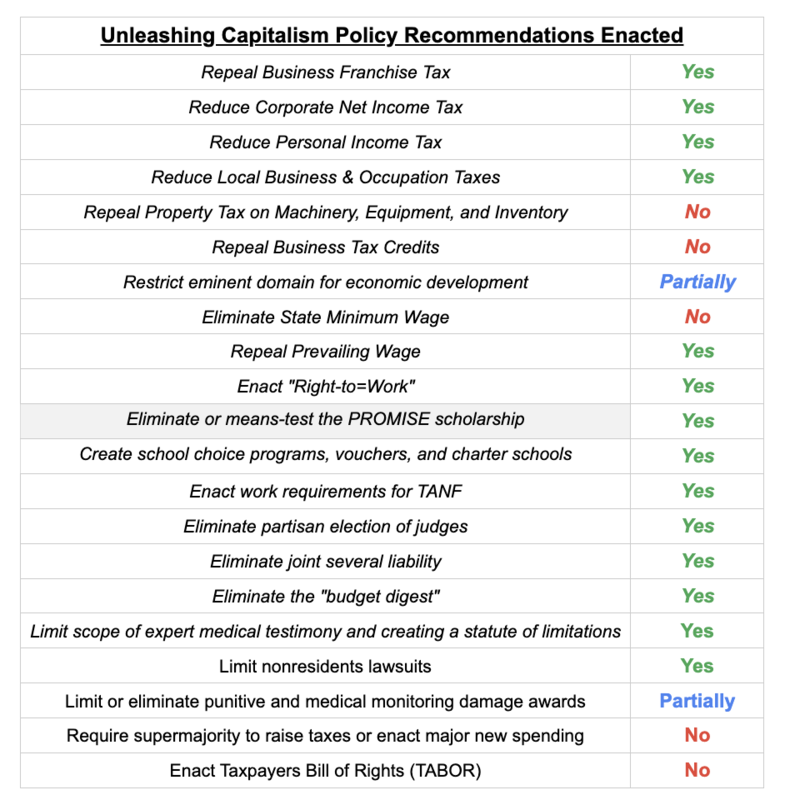
For example, the book recommended that state lawmakers reduce or eliminate personal and corporate income taxes and abolish the business franchise tax, which the state has done, but at a cost of over $1.5 billion per year.
The authors also recommended several policies to reduce labor restrictions, including enacting so-called “right-to-work,” repealing prevailing wage for state-funded projects, reducing the Promise scholarship, and privatizing public education through greater use of vouchers and charter schools. Each of these policies has since been implemented.
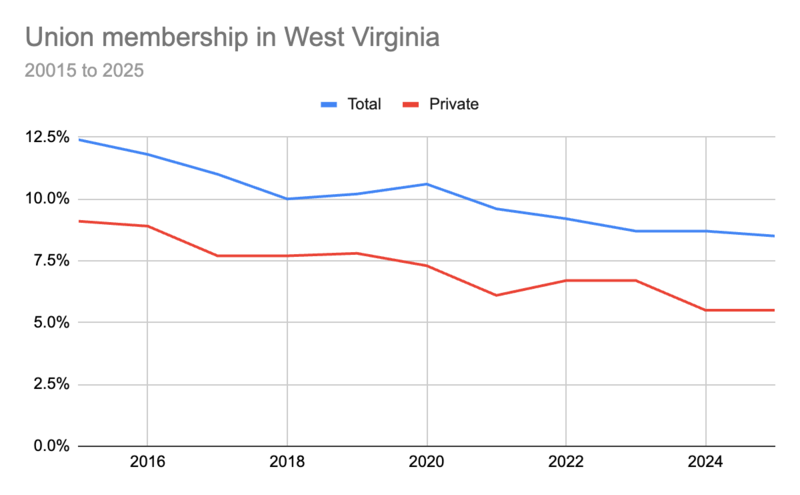
In 2016, lawmakers repealed the state’s prevailing wage law — which had ensured that local workers received adequate wages for state-funded projects — and enacted so-called “right-to-work.” Both of these laws were designed to weaken labor unions, which they have, as the state’s unionization rate has plummeted from 16% to just under 9%. Meanwhile, the state has yet to see any meaningful savings from repealing its prevailing wage law, despite claims it would save over $200 million per year.
In 2021, Gov. Jim Justice lamented that despite lowering corporate taxes, repealing prevailing wage and enacting right-to-work law, the state had not seen any increase in jobs, population or business growth. Justice said “we ran to the windows looking to see all the people that were going to come — and they didn’t come.”
Over the last several years, the state also took the advice of “Unleashing Capitalism” and created the Hope Scholarship program, which is set to provide nearly $300 million in private school vouchers next year, and it created public charter schools in 2019. The Promise scholarship — originally designed to cover full tuition and fees at our state’s public colleges — has been block granted and now covers about half of the tuition at West Virginia University.
Following the advice from “Unleashing Capitalism,” lawmakers have also enacted work requirements for Medicaid and the Supplemental Nutrition Assistance Program, and significantly scaled back state investments in programs and services. The state has also passed significant tort reform measures that limit the recovery rights of those that are injured.
Arguably, the most significant policy recommendation that was not adopted was to scale back or eliminate economic development subsidies or tax incentives. In fact, the volume of business tax credits, forgivable loans, and other incentives has grown over this time period. In 2023, Nucor received $1.7 billion in subsidies for a steel plant in Mason County while FORM Energy received $205 million in a grant for a battery factory in Weirton, WV. The state appropriated over $1 billion alone in 2023 to the West Virginia Economic Development Authority in 2023. The WVEDA has seen its assets grow from $280 million in 2018 to $1.2 billion in 2025, which reflects a large amount of funds dedicated to business subsidies.
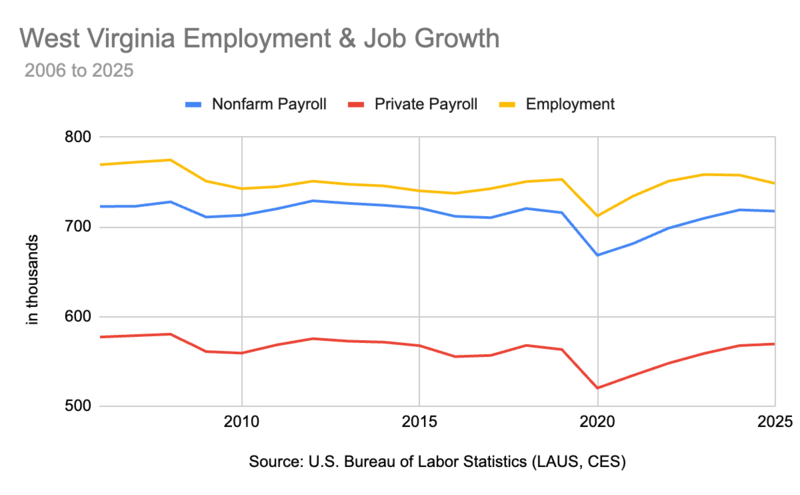
So how has West Virginia’s economy and well-being fared since the state has “unleashed capitalism?” Not well. The number of jobs and the number of people living in West Virginia has shrunk, and the state’s economic growth has been comparatively slow. This is in spite of or despite the huge growth in business subsidies in the state.
Over the last 20 years, West Virginia has not gained a single net new job. In fact, the state has lost 5,000 jobs from 2006 to 2025 — the only state to lose jobs over this period. Meanwhile, manufacturing employment — the most sought-after sector for economic development — has declined by nearly 16,000, or 26%. Total employment has fallen even further, down 21,000 since 2006.
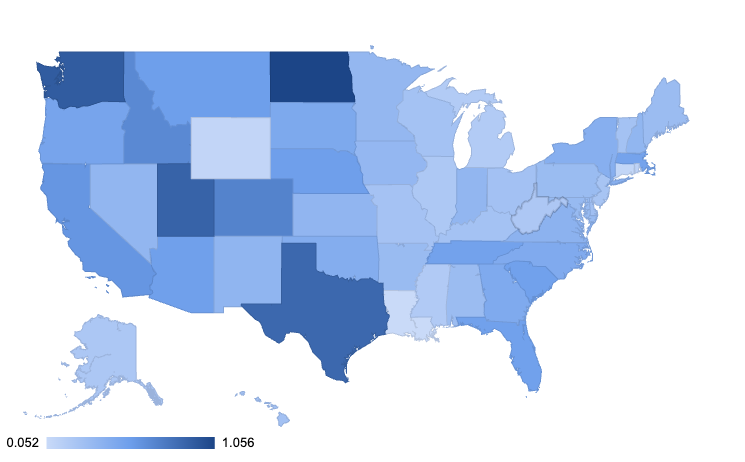
The state’s gross domestic product (GDP), a key barometer for economic growth that measures the total value of goods and services produced, has also grown slowly. West Virginia ranked 43rd out of 50 states in real GDP (2006 chained dollars) growth from 2006 to 2025, lower than any bordering state. West Virginia’s real GDP grew by 21% over this time period compared to 45% nationally. Meanwhile, the state’s share of national GDP has shrunk by 14%.
When state lawmakers were debating whether to enact “right-to-work” in 2015, a West Virginia University report claimed it would accelerate job and GDP growth while lowering private sector unionization by one-fifth. While employment and GDP growth have been anemic, the prediction about unionization may have actually been understated — private-sector union membership has declined by about 40% since 2015.
The evidence accumulated so far suggests that following the policies outlined in Unleashing Capitalism have not ushered in the prosperity that its authors promised. West Virginia continues to rank near the bottom in health, education, household income, and other measures of wellbeing. It may be time for the state to pursue a different path—one that makes long-term investments in people and places, providing a foundation upon which genuine economic growth can thrive. If we invest in the workforce, fix the infrastructure, strengthen the schools, and build a better quality of life, businesses may come because it actually makes sense.
Charleston, WV