OPINION: New Nebraska law correctly keeps books
May 25, 2026 | 4:00 am ET

Description
A wave of book bans have hit school libraries in the last few years. (Getty Images)
When author Alex Haley’s “Roots: The Saga of an American Family” became part of the American psyche in 1976, first as a best selling book, then as a beloved television miniseries, it sent scores of Black Americans in search of their own family’s genealogical history. “Roots” also changed the conversation about race in America, serving primarily as an entry to such discussions.
The response to Haley’s work gave hope to the notion that the “Roots” phenomenon would be a seminal moment in understanding not simply the brutality, violence and horrors of our nation’s history of slavery, but an opportunity to move “race relations” forward, away from poll taxes, Little Rock and the racist distemper that underpinned subsequent stories such as “Mississippi Burning” and later “Selma.”
Clearly, racial progress for Black Americans has indeed happened. Still, even if six justices of the Supreme Court think otherwise, the metaphorical level playing field remains elusive. We’ve yet to achieve some sort of color blindness or race neutrality, a place where we can recognize, even celebrate a people’s ethnicity without diminishing an individual within that group’s worth or opportunity.
For details, see redistricting under the guise of partisanship currently afoot in the South, the wholesale elimination of DEI programs and earlier angst over the non-issue of CRT, critical race theory.
By some reckoning, however, we’ve regressed. “Roots,” Haley’s Pulitzer Prize winning masterpiece has been banned in the Knox County Schools in Nashville, Tennessee, where, ironically, Haley lived for a time. Henning, east of Nashville, is home to a statue of Haley.
The usual criticisms followed the banning, said to fall under the state guidelines of something called the “Age-Appropriate Materials Act.” One offending passage, as is often the case, means high school students are denied the chance to learn about the nation’s history as told through the lens of one enslaved family’s experience.
Nebraskans have had their share of book bans or attempts at book bans in school districts and on the floor of the Nebraska Legislature. And although it’s not a book ban, at the beginning of the 2026-2027 school year, the state’s school districts will be required to implement Legislative Bill 390 by creating a catalog of all books in a school district’s library, making it accessible to parents and organizing it by school building. Districts must also give parents the “opportunity” to be notified when their child checks out a book, including the book’s title, author and due date.
Even though some of the same voices who were ready to ban books from “The 1619 Project” to “Harry Potter” supported LB 390, compared to banning a book, the new law is tame, more an administrative and clerical hurdle for librarians. School libraries already have card catalogs. Add to that the use of student IDs for almost everything and notifying those parents opting in should be doable without much technological torment.
No one is arguing that Third Graders should study the “Kama Sutra” or that high schoolers should research back issues of “Hustler.” Still, several points give one pause in any discussion of controlling available subject matter and ideas.
First, we raise independent, informed and “critical” thinkers, not by homogenizing thought but rather by offering a wide variety of perspectives for student consumption. Narrowing the lens in turn narrows how students will see the world. Journalist Walter Lippmann famously said that where everyone thinks alike, no one thinks very much. We must resist any undue political, religious or cultural pressure or influence on — or from — school boards, legislatures and others in the policy or lawmaking business.
Nor should we underestimate the power of a good story. Students can study drawings, memorize dates and know some factual history of the slave trade. Kunta Kinte’s narrative in “Roots,” however, from his kidnapping in Gambia, the brutal voyage across the Middle Passage to North America where he was sold into the nightmare of slavery and his life beyond add perspective, relevance and real humanity to the subject.
Before we ban a book or put conditions on subject matter in our schools, we should always weigh what would be lost in our children’s growth if one is removed from school library shelves and the other is deemed unsuitable.
Nor do we need to look very far for the results of such conditioning. According to NPR, 35 states have passed or introduced legislation that limits classroom discussion about slavery, American history and race. Some states have passed strange and wholly unserious laws that have come to be known as “Divisive Concept Laws,” designed to diminish students’ feelings of guilt they may feel because of their race. As this space has said before, the study of the nation’s enslavement of humans should engender a sense of discomfort.
Libraries, either down the street or a school hallway, are the original data centers. One positive thing about LB 390 is that it keeps fully available their books — and, in turn, the ideas contained in them.
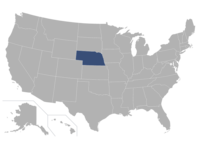
Lincoln, NE