The state of housing in Maryland: Closing the funding gap
May 25, 2026 | 5:30 am ET
Description
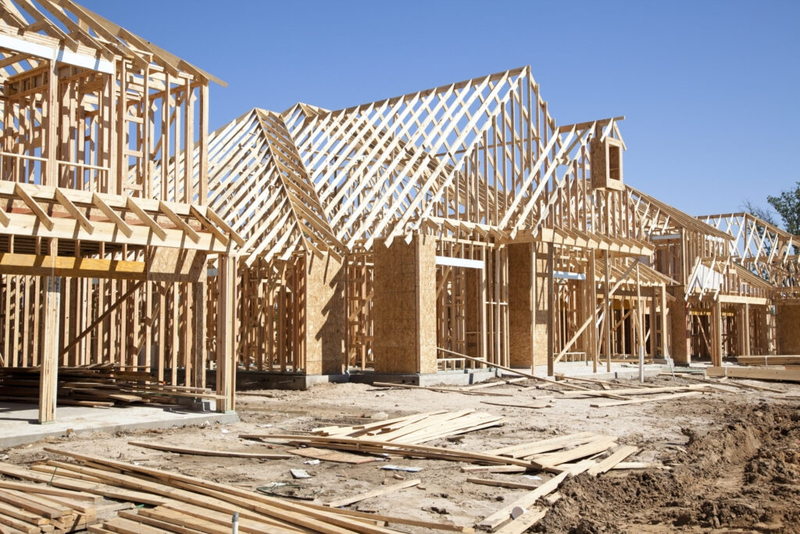
New homes under construction. Maryland has a housing shortage, but there are ways to address the problem that don't have to pit one group against another, writes Tom Coale. (Stock photo by Getty Images)
Maryland’s 2026 legislative session made one thing clear: We are no longer debating whether we have a housing problem.
The session opened in the shadow of Comptroller Brooke Lierman’s “State of the Economy” report, which named housing unavailability as a primary drag on economic growth, and closed on Sine Die with a stack of housing bills headed to the governor’s desk. The problem is acknowledged. The question now is whether Maryland is serious about paying for a solution.
For years, Annapolis has been long on goals and short on candor. More supply, more affordability, more equitable distribution across jurisdictions — nobody disagrees with any of that. What has been missing is an honest answer to why those goals keep going unmet. Anyone who has actually tried to build housing in this state knows the answer: The numbers don’t work.
Construction costs are elevated. Interest rates remain well above where most projects were first underwritten. Rents in all but the strongest submarkets can’t support what new construction costs to deliver. And on top of all that, local requirements — design standards, infrastructure obligations, drawn-out approval timelines — pile on cost without adding a single unit. Projects stall. Sites stay vacant. The gap between what we say we want and what actually gets built keeps growing.
The clearest sign that Annapolis is beginning to understand this is the continued expansion of PILOT (Payment-In-Lieu-Of-Taxes) authority. There has always been a tendency to treat PILOTs as a discretionary incentive — something a jurisdiction offers when it’s feeling generous. That framing misses the point entirely.
Your opinion matters
Maryland Matters welcomes guest commentary submissions at [email protected].
We suggest a 750-word limit and reserve the right to edit or reject submissions. We do not accept columns that are endorsements of candidates, and no longer accept submissions from public officials or political candidates.
Opinion pieces must be signed by at least one individual using their real name. We do not accept columns signed by an organization. Commentary writers must include a short bio and a photo for their bylines.
Views of writers are their own.
For low-income housing tax credit (LIHTC) developments, office-to-residential conversions and redevelopment in older communities, a PILOT isn’t an incentive. It’s the difference between a project that gets built and one that doesn’t. The math is not close. Without property tax relief, many of these projects aren’t delayed. They’re dead.
The session also wrestled with tenant protections — good cause eviction and related proposals — and this is where the central tension played out. The desire to provide renters with greater stability is legitimate. But policies that increase operating uncertainty or constrain revenue affect whether new housing gets built.
If new housing doesn’t get built, the affordability problem doesn’t get better. It gets worse. This isn’t a choice between protecting tenants and building housing — nobody serious accepts that framing. The question is whether Maryland can craft policy that does both, or whether we keep treating them as opposing forces and accomplish neither.
Which brings us to the real obstacle: money. Maryland’s primary gap financing program, Rental Housing Works, was cut by $20 million this year and faces further cuts in FY2028. Neighboring states are deploying housing trust funds worth hundreds of millions. Maryland is moving in the opposite direction.
We are short roughly 90,000 units for households at 60% of area median income or below, and that number grows every year. Without a serious funding strategy, everything else — the zoning reforms, the PILOT expansions, the good intentions — produces nothing.
One model deserves Maryland’s attention. New York City Comptroller Brad Lander has directed a portion of New York City’s public pension funds — over $270 billion in assets — into affordable housing through targeted allocations to community development financial institutions and housing construction vehicles. The premise is straightforward: well-structured affordable housing deals, particularly those anchored by LIHTC and long-term public subsidy, generate steady, predictable returns. That’s exactly what pension funds are built to hold.
This is not a social mission dressed up as an investment. It pencils. Lander’s office has shown that the tension between fiduciary duty and public benefit is, in many cases, a false choice.
And this isn’t a New York City story. Maryland’s State Retirement and Pension System manages roughly $67 billion on behalf of teachers, state employees and public safety workers. County and municipal funds hold billions more. All of it is actively seeking returns. Affordable housing — structured correctly, with public credit support — can deliver those returns while putting capital to work in the communities those same retirees live in.
State and local governments don’t have to choose between taking care of their workers and housing their residents. The General Assembly should be looking at enabling legislation that lets pension trustees treat affordable housing as the legitimate asset class it is.
Maryland lawmakers made real progress this session. But the hardest part — finding the money — is still ahead. The capital exists. The investment case is there. What’s needed now is the will to act on it.

Annapolis, MD