Uncertainty clouds state’s current authority to test medical cannabis
Apr 13, 2026 | 4:00 am ET
Description
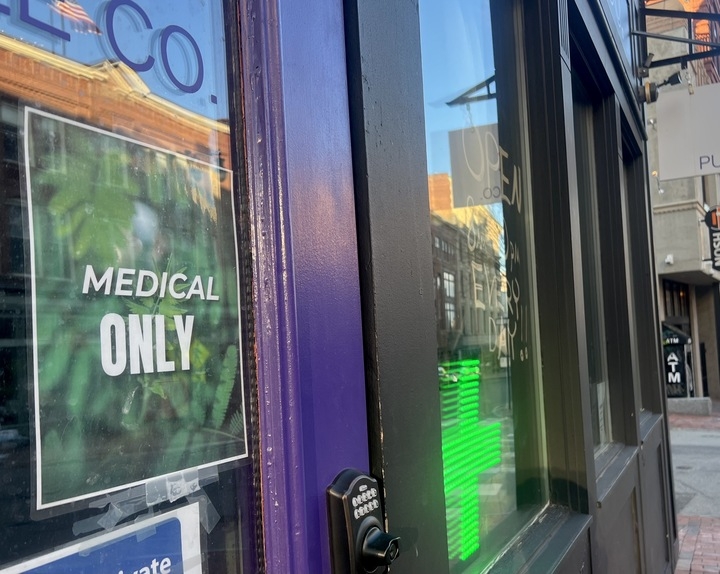
A medical cannabis shop in Portland, Maine. (Photo by Emma Davis/ Maine Morning Star)
The Maine Legislature is debating new testing requirements for medical cannabis. But, there’s fundamental disagreement over what’s already allowed and mandated.
Maine doesn’t currently require contaminant and potency testing for all medical cannabis, which voters legalized in 1999. This structure contrasts with the testing protocols the state set for the recreational market, which was backed by voters 17 years later.
That disparity “doesn’t pass the smell test,” said Rep. Marc Malon (D-Biddeford), who put forth a plan that aligns with how the administration of Gov. Janet Mills would like testing in the medical program to work. In her State of the State address last year, Mills said, “We cannot continue to encourage the wild, wild west of medical cannabis.”
But some lawmakers and cannabis businesses say the state isn’t using its existing testing authority. At the core of the disagreement is how Office of Cannabis Policy rules intersect with state law.
At the same time, neither the medical cannabis rules nor statute contain explicit parameters and penalties for what constitutes a failed test, a framework in the recreational program that some hope to adopt. Though, the state can generally take action for improperly used pesticides on any crop, enforced by the Board of Pesticides Control.
“The medical program statute does not specify the requirements necessary for the office to implement a mandatory contaminant testing program,” said Alexis Soucy, director of media relations for the Office of Cannabis Policy.
But critics, including some lawmakers and growers, argue the approach being pursued by the administration would regulate them out of business.
Legislative history
The state last updated its medical cannabis program rules in February of 2018. That included requirements for annual inspections of dispensaries and testing samples for things like pesticides. It also authorized the department to take soil, plant, and product samples for laboratory testing to determine compliance as well as to use as evidence. There is not such a mandate for caregivers, the term for any individual licensed to grow and sell medical cannabis.
Rules are written by state agencies to provide detailed requirements for how to comply with laws.
Less than a year later, the medical program statute was overhauled by the Legislature. The changes allowed registered caregivers to operate storefronts and hire an unlimited number of employees. The resulting new law did not include the testing authority and mandate outlined in the program’s rule, which had been in line with earlier versions of the statute.
After several failed attempts to update the rule, changes are now being pursued in LD 1847.
“The claim that OCP already has authority to audit test medical products and chooses not to is simply incorrect and ignores the legislative history since the medical cannabis rule went into effect,” Soucy said. “The office cannot enforce rules that are no longer supported by statute.”
Sen. Craig Hickman (D-Kennebec), who helped draft the 2018 updates, disagrees, as do some other legislators and registered caregivers.
“I don’t agree that they’re not enforceable,” Hickman said of the rules. He added, regarding the 2018 overhaul of the law, “There was no intent to eliminate more oversight.”
Rep. David Boyer (R-Poland) is also of that opinion. “They have to test. There’s plenty of regulations. They act like there’s none,” he told reporters after a press conference on LD 1847.
Authority
The office is not inspecting and testing products from all dispensaries, or caregivers, annually. That’s true of both the medical and adult use programs.
The office has told lawmakers that it doesn’t have adequate staff to do so. For medical, the office says it’s also limited in what it can do with samples taken from the inspections it does do.
“Absent statutory changes specifying that certain levels of certain substances are harmful contaminants that should not be in cannabis, or legislative approval of rules regarding medical cannabis testing, OCP is limited in what it can do with any audit test results,” Soucy said.
The office used its authority to collect and test samples from caregivers in 2023 for a study it has since pointed to when calling for program reform.
Receipts from several caregivers showed the office cited the rules as the basis for its authority to conduct the testing.
“The department may initiate an on-site assessment, in accordance with the statute and this rule to ensure compliance prior to issuing a registry identification card, as a routine review, in response to an allegation of non-compliance or as part of a plan of correction,” the receipts read, quoting from the rules. During such an assessment, the receipts state, the primary focus of the department will be taking samples, among others.
In response to questions about why the rule was enforceable in this case, Soucy said the rules are enforceable only to the extent that they’re also included in statute. That’s where the office and critical lawmakers diverge.
Soucy explained that the office can take evidence though that that authority is more limited than before the 2018 overhaul, while critics said that authority hasn’t changed.
The office’s study found that of the 120 samples from registered medical caregivers collected, 50, or about 42%, contained at least one material banned in the recreational program.
There were findings everyone agreed were alarming, notably the presence of myclobutanil, which releases cyanide gas upon combustion and causes a range of mild to severe effects when inhaled. Eight samples exceeded the pass/fail threshold of myclobutanil as set in the recreational program, with one having a concentration of 293 times that threshold.
But the most common failures were for yeast and mold, which are naturally occurring and lack scientific consensus on what levels are harmful.
Rep. Laurie Osher (D-Orono), an agricultural scientist, explained as much when urging lawmakers on the Veterans and Legal Affairs Committee last year to change the thresholds for failure in the adult use program.
“It’s really great for the state to try to regulate to force human health and safety of a product,” Osher said during the May 14 meeting. “However, this regulation is not actually guaranteeing better health and safety, but it is inhibiting a whole group of growers.”
Creating a healthy soil microbiome is needed for outdoor grows and the required microbial testing, which assumes all microbes are harmful, penalizes that, Osher said.
During the same committee meeting, lawmakers questioned Vern Malloch, deputy director of the Office of Cannabis Policy, after he said the office was not annually testing samples from medical cannabis dispensaries.
“It’s an issue of clarity on what exactly are the limits?” Malloch said. “What would we do with it if we found it?”
The rules state that the results are to be reported back to the dispensary, though do not give authority to fail a dispensary for any particular levels.
When the discrepancies between the rules and law were debated again during a Feb. 4 committee meeting this year, Assistant Majority Leader Jill Duson (D-Cumberland) concluded, “What we need to do is make it absolutely clear what the oversight authority of the office is.”
Augusta, ME