UI Center for Intellectual Freedom interim director speaks on concerns
Nov 18, 2025 | 3:58 pm ET
Description
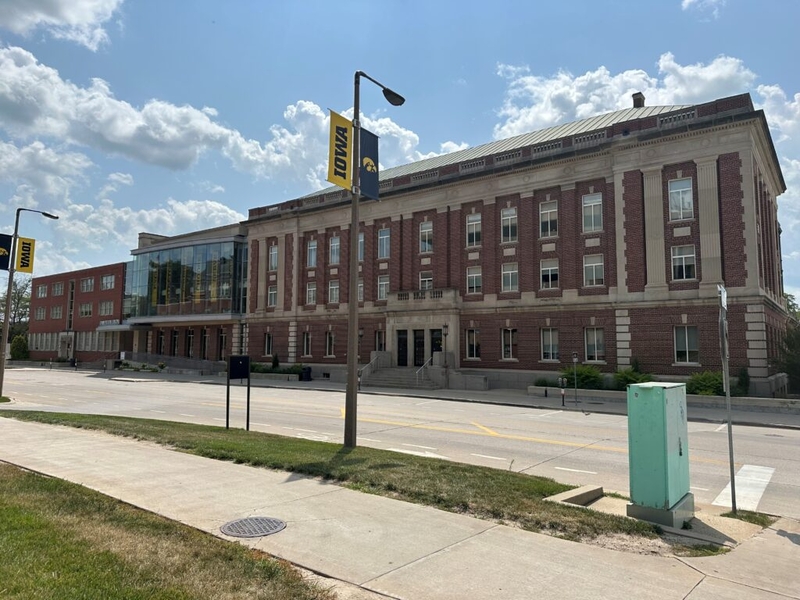
University of Iowa Center for Intellectual Freedom interim director Luciano I. de Castro said people need not be concerned with the center turning into an "ideological machine." Shown here is the UI's Memorial Union. (Photo by Brooklyn Draisey/Iowa Capital Dispatch)
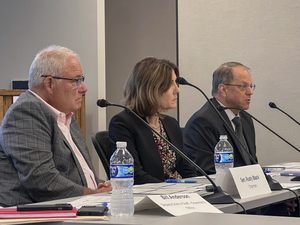
As planning for the launch of the University of Iowa Center for Intellectual Freedom ramps up, the center’s interim director is working to address concerns from the public and others about the center’s intent and offerings.
Interim Director Luciano I. de Castro said in an interview Tuesday ahead of the center’s first advisory board meeting that Iowans should show their gratitude to the top scholars who will help advise the center during its infancy and help find the leader to steer it in the future.
Responding to concerns expressed by members of the Iowa Board of Regents at its November meeting about potential out-of-state control of the advisory council, de Castro said the fact is that the council is advisory, not governing. The center, like Iowa’s public universities, is under the oversight of the board of regents, and the advisory council won’t control it.
Iowa Gov. Kim Reynolds and her “advisers” were involved in the search for scholars to recommend for the council, de Castro said, suggesting names to be brought to the board of regents.
“Governor Reynolds insisted on writing to every scholar in our committee, because I think this was a very important vision that she had, and I really appreciate it,” de Castro said. “I’m grateful that she was able to see the value of associating this center with these scholars from top universities.”
A professor and research fellow in economics at the UI Tippie College of Business, de Castro has supported the idea of creating an initiative for intellectual freedom at the university since it first came up in last year’s legislative session. He presented to the Iowa House Higher Education committee on the creation of a school for intellectual freedom in February, saying the university and state could “pioneer a new educational model rooted in American values.”
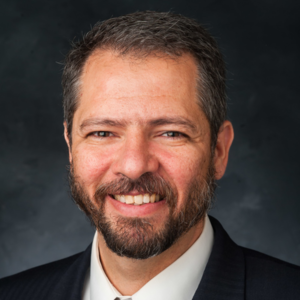
Scholars included in the advisory committee membership bring two things to it, de Castro said — their academic advice and their aid in finding a permanent director. When conducting a national search for an academic leader, he said academics need to be involved to evaluate candidates’ academic standards and quality.
De Castro added that these academics are “scholars of the highest standards,” a majority of them coming from “top universities.” Institutions represented in the council include the University of Austin, Princeton University, Stanford University, Northwestern University and more.
As only one member is allowed to join the council from the UI, Senior Advisor to the President and Vice President for External Relations Pete Matthes is representing the institution.
“You have to understand this — these people are volunteering their time to help Iowa,” de Castro said. “I think that the people of Iowa should be grateful that they are willing to help us to build the reputation of the center and make sure that we have high standards in this new institution that’s created for the people of Iowa.”
The advisory council will discuss the search for a director, as well as committee assignments and bylaws, at its first meeting Tuesday evening.
De Castro said bringing in these scholars and having them be part of the center as it gains its footing should also help assuage concerns that first came about in last year’s legislative session, during debate on the bill — now law — that requires the center’s creation and sets certain guidelines.
One worry shared among those who were against the legislation was that the center for intellectual freedom would turn into a center for indoctrination, which de Castro said is the last thing he wants to do. He and those involved in the center want to create “true academic content” in the form of courses, guest speakers and other events and provide a space where lively discussion on topics can occur.
“We want to maintain academic excellence, and this is why we made so much effort to try to actually convince these scholars to be part of our efforts,” de Castro said.
Preparing for launch
De Castro is already planning the specifics of courses to be offered through the center in the spring, titled “Political and Economic Institutions in the United States” and “American Culture and Values.” Specific information on the courses, which will last seven weeks with weekly lectures and a pass/fail grading system, will be released in December, he said.
The center’s inaugural event will take place Dec. 5-6, de Castro said, with the main bulk of the event called the “Reforming Universities Summit.” Reynolds will be in attendance, as well as former regent and current U.S. Assistant Secretary for Postsecondary Education David Barker and scholars from the University of Chicago and Stanford University, among others.
Many of the academics set to attend the event are interested in “universities and the state of universities,” de Castro said, and so discussions and other activities during it will relate to “how we improve the state of universities, or try to correct some mistakes.” The ideas brought up during the discussion will be “extremely valuable to orient what we do in the center,” de Castro said.
When asked how these topics relate to the center’s mission to “advance top-tier scholarship in areas such as the texts and debates foundational to free societies, the principles and institutions of the American constitutional order, and the foundations of responsible leadership and informed citizenship,” as stated on its website, de Castro said the center is “the democratic process” at work.
De Castro said he believes that the people of Iowa were making their opinions known on Iowa higher education and what it’s missing through the lawmakers who voted to bring the center to life. The vote passed in the Iowa Senate 32-15 along party lines and 60-37 in the House, with Republican Reps. Shannon Latham, Brian Lohse and Matthew Rinker joining Democrats in voting against the bill.
De Castro said he has also worked to bring the other side, or the lawmakers who didn’t support or vote for the center, into his thinking and planning, having reached out to Democratic members of the Iowa House Higher Education Committee after he spoke with them in February.
“The people of Iowa manifested its will that we should be teaching these topics, because there is the perception, the popular perception, that the university is not doing a sufficiently good job at addressing these topics,” de Castro said. “This is why the legislators understood that they should vote for this law to create the center to offer these contents.”
Des Moines, IA