Two Kansas Democrats running for governor embrace recreational marijuana
Jul 07, 2026 | 5:52 pm ET
Description
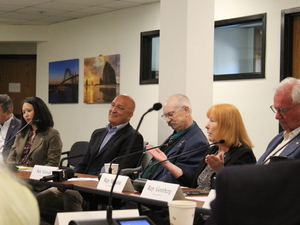
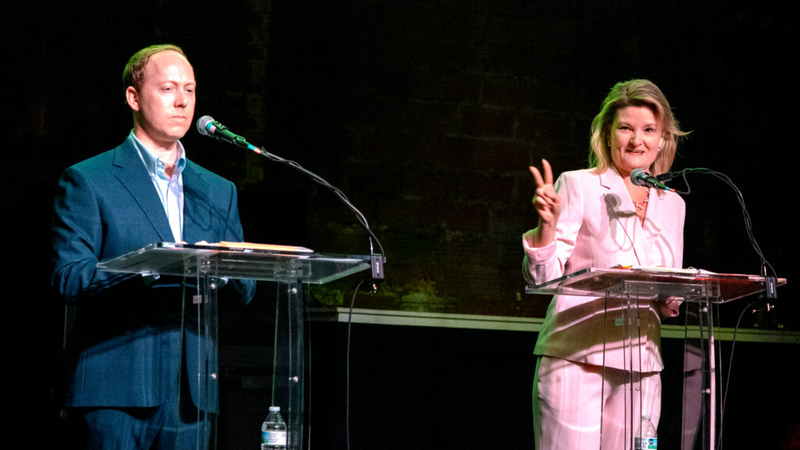
State Sens. Ethan Corson and Cindy Holscher — Democratic candidates for governor —participate in an April 26, 2026, forum at the Aztec Shawnee Theater. (Photo by Sherman Smith/Kansas Reflector)
TOPEKA — Cindy Holscher and Ethan Corson on Tuesday both called for the legalization of recreational marijuana in Kansas, separating themselves from other gubernatorial candidates who only support using the drug for medicinal use or oppose legalizing it altogether.
The two state senators are seeking the Democratic nomination for governor in the Aug. 4 primary, alongside Overland Park Mayor Curt Skoog, who has said he would focus first on medical needs.
Holscher on Tuesday released a video of herself speaking from the parking lot of a dispensary in Missouri, which she said was about 15 minutes from her house in Overland Park. She said the parking lot was full of vehicles with Kansas license plates.
Marijuana has been legal for recreational use in Missouri for nearly four years.
“That’s a lot of Kansas tax dollars going straight into Missouri’s pocket,” Holscher said. “Most Kansas voters think marijuana should be legal in our state, but because it isn’t, Kansans buy it out of state, and we miss out on the opportunity to raise more money for schools and public services. It’s time for that to change.”
Corson, meanwhile, issued a statement declaring it was time for Kansas to legalize both medical and recreational marijuana. He pointed out that Kansas is among the few states where marijuana remains completely illegal.
“Kansas is falling behind while people suffering from chronic pain, PTSD, cancer, and other serious conditions are denied relief, and tax dollars that could be invested into education here are crossing the border into other states,” Corson said. “As governor, I will support thoughtful legalization, with commonsense guardrails that protect public safety while respecting personal freedom and increasing revenues.”
On the Republican side, none of the leading candidates supports the legalization of marijuana for any purpose. That includes Senate President Ty Masterson, of Andover, who has blocked medical marijuana legislation from moving forward.
The notable exception among the seven Republicans who will be on the primary ballot is Nick Reinecker, a longtime advocate for decriminalizing the drug.
“As governor, I will fight to de-schedule cannabis and eliminate criminal penalties for possession and planting,” he said Tuesday.
Holscher’s endorsement of recreational marijuana jibes with her willingness to embrace policies that have broad public support, even if they make her an outlier politically. She has called for a moratorium on building data centers, criticized the massive incentives used to lure the Kansas City Chiefs across state lines, and voted against a new law that bans cellphones in schools.
In the video she released Tuesday, Holscher said Missouri raked in $255 million in cannabis taxes last year. She said legalizing marijuana would help Kansas keep tax dollars that would benefit schools.
“We should allow adults who choose to buy cannabis to do it in Kansas, and use it safely and responsibly,” Holscher said. “Legal cannabis is common sense, and it’s time to make it happen.”
Last year, a survey conducted by the the Docking Institute of Public Affairs at Fort Hays State University found that 64.8% of Kansas adults favor legalizing recreational marijuana, and 70.4% support legalizing medical marijuana.
During a recent recording of the Kansas Reflector podcast, Skoog said one of his first moves as governor would be to deploy his running mate, Fredonia physician Jennifer Bacani McKenney, to work on a medical marijuana plan. The key, he said, was to regulate it “in a way that is driven by the medical need.”
He said he “potentially” could support recreational marijuana sometime down the road.
“If we decide to legalize marijuana, the state is in the marijuana business, just like the state is in the alcohol business, and we need to make sure that we have the rules and regulations in place to make sure that criminal elements don’t penetrate into that business, just like we do on the alcohol side,” Skoog said.
Topeka, KS