Trump’s gerrymandering push flops as Democrats win redrawn seats
Nov 05, 2026 | 4:03 pm ET
Description
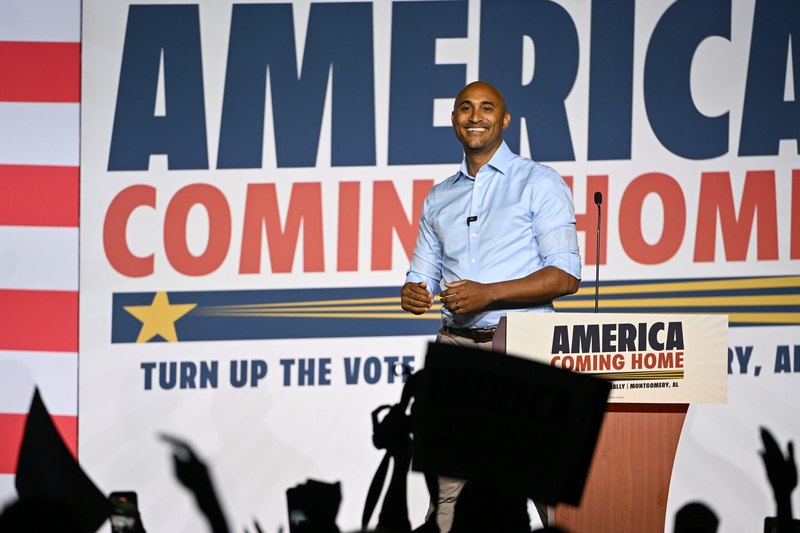
U.S. Rep. Shomari Figures, D-Ala., speaks at a final rally before the 2026 midterm elections at the Oliver-Dunn Acadome at Alabama State University in Montgomery on Nov. 2, 2026. (Anna Barrett/Alabama Reflector)
Alabama Republicans had hoped Rep. Shomari Figures would deliver a concession speech on Tuesday night after the state legislature redrew his district to be more GOP-friendly.
Instead, the Democrat declared victory — winning nearly 54% of the vote.
“We know what happened with this district,” Figures told supporters as he invoked the Republican gerrymander. “But we had a job to do. And so we put our hands to the plow and we did not look backwards.”
The Republican project to gerrymander congressional districts across the country, initiated by President Donald Trump more than a year ago, failed to deliver significant wins for the party — and, in North Carolina at least, even worked against it. Amid a nationwide blue tsunami and voter backlash in Southern states that split apart districts where a majority of residents are Black, Democrats won seats that Republicans redrew to give themselves an advantage.
States typically draw new maps every 10 years after the census. But Trump’s redistricting push, which kicked off in Texas in the summer of 2025, triggered a nationwide rush as Republican and Democratic states battled to set the electoral landscape ahead of this week’s midterms.
A late April decision from the U.S. Supreme Court set off another round of gerrymanders. The court sharply curtailed federal protections against racial gerrymandering, clearing the way for Southern states to break apart majority-Black districts that often elect Democrats.
Republicans had once hoped mid-decade redistricting would create a buffer against the losses the president’s party traditionally suffers in midterm elections. Perhaps, the thinking among Republicans went in 2025, the party could even maintain a narrow majority with the help of the gerrymandered districts.
It didn’t turn out that way, as the GOP’s effort proved woefully insufficient against the strength of the Democratic vote.
As of Thursday afternoon, Democrats had won 247 House seats, far above the 218 needed for a majority, while Republicans had won 153, according to The Associated Press. Thirty-five races had yet to be called.
“Let this be a lesson: never capitulate, never acquiesce to those who would use power for improper purposes,” Eric Holder, a former U.S. attorney general under President Barack Obama and the chairman of the National Democratic Redistricting Committee, said in a statement.
Gains were expected
New Republican maps could have netted the party as many as 15 seats, according to estimates from the nonpartisan Cook Political Report with Amy Walter. GOP-controlled state legislatures advanced news maps in Florida, Louisiana, North Carolina and Tennessee, in addition to Alabama and Texas.
In response, Democrats successfully gerrymandered a single state, California, where the party picked up five seats it had targeted. Voters approved a Democratic gerrymander in Virginia, but the state Supreme Court struck down the measure. A state court also imposed a Democratic-leaning district in Utah.
In states where Republicans targeted Democratic seats for gerrymandering, the party made no net gains, according to a Wednesday memo from the National Democratic Redistricting Committee.
“This is close to an extinction-level event for Republicans in many parts of the country,” Florida Gov. DeSantis, a Republican, said at a news conference Wednesday as he broadly described his party’s losses.
GOP efforts fail
DeSantis signed a new Florida map aimed at securing four new GOP seats into law in May. Democrats now appear likely to retain all four.
The redistricting failure was starkest in North Carolina, where Republicans are on track to lose six seats.
In the state’s 1st Congressional District, Democratic Rep. Don Davis won reelection Tuesday with just over 50% of the vote, overcoming a GOP gerrymander in what was the most expensive U.S. House race in history.
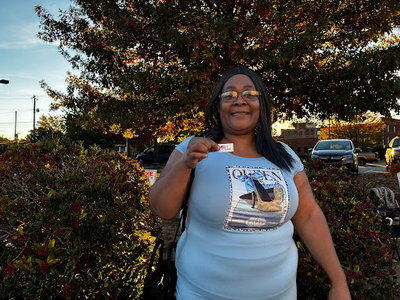
In Rocky Mount, a city of about 55,000 in North Carolina’s 1st Congressional District, Letrice Felton voted for the first time on Tuesday. The 50-year-old said she cast a ballot because of rising costs and poverty within the city. More than 60% of the city’s residents are Black and roughly 1 in 5 residents live in poverty, nearly double the national rate.
“To see people out in Rocky Mount, walking with beds of carts, with clothes and stuff,” Felton said. “It's very sad. And they need help, and it's like, there's no resources here for it.”
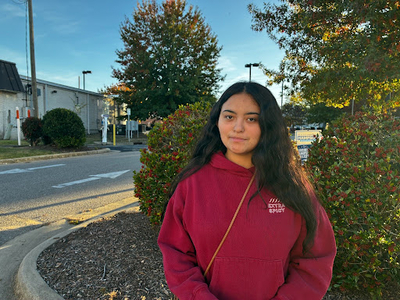
Jislem Rodriguez, 18, voted for the first time Tuesday at Edgecombe Community College in Rocky Mount. Rodriguez said she is concerned about the economy.
“Money isn't really lasting like it used to,” she said.
In Texas, state lawmakers sought to secure five additional seats for Republicans. The party instead flipped only a single newly gerrymandered district and suffered a net loss of one seat.
When Republicans redrew most of the targeted districts, they assumed Latino voters would continue backing GOP candidates, Brandon Rottinghaus, a professor of political science at the University of Houston, said in an interview.
A significant share of Latino voters instead cast ballots for Democrats. Nineteen percent of Latino voters in Texas who said they voted for Trump in 2024 voted for Gina Hinojosa, the Democratic candidate for governor, in 2026, according to CNN voter polls (poll results weren’t available for specific House races).
“On paper, these districts are still Republican but the trend has been in general toward the Republicans and the Latino vote — which these are premised on — has shifted back to the Democrats,” Rottinghaus said.
Black voter backlash
The NAACP reported strong turnout among Black voters on Tuesday. Eighty-one percent of Black voters supported Democrats in the election, up from 70% in 2024 and 73% in 2022, according to exit poll data analyzed by NPR.
Janai Nelson, president and director-counsel of the Legal Defense Fund, a legal advocacy group focused on racial justice, said in a statement that Black turnout was especially pronounced in states that redrew maps following the Supreme Court’s decision on racial gerrymandering — Alabama, Florida, Louisiana and Tennessee.
In the case, Louisiana v. Callais, the court’s conservative majority significantly limited the consideration of race when drawing legislative maps. Section 2 of the federal Voting Rights Act had previously limited states from using maps that diluted the voting power of minority citizens.
“Black and brown voters made a statement last night,” Nelson said. “Despite relentless attempts to silence their voices and stifle their power, voters of color turned out in extraordinary numbers.”
For example, Alabama voter turnout was nearly 44%, up from nearly 39% in 2022. In Montgomery County, part of Figures’ gerrymandered district, turnout among Democratic voters rose 39% over 2022.
“I’m at a loss for words, because we had the deck stacked against us,” Figures said during his victory speech.
Future maps?
The prospects of additional gerrymanders before the 2028 election are mixed.
Maryland voters approved a measure that would ease the way for the blue state to pass a Democratic gerrymander. Democratic Gov. Wes Moore said Wednesday that he wants new maps after the redistricting measure, called Question 3, passed with 60% of the vote.
“Donald Trump is not done. He has already been very clear about his intention to go after additional states,” Moore told reporters Wednesday.
The White House didn’t respond to questions about Trump’s support for future GOP redistricting efforts.
At least some Republicans have expressed reservations about pursuing new maps after such a sharp rebuke by voters. Georgia Gov. Brian Kemp, a Republican, announced Wednesday that he wouldn’t call the state legislature into special session to pass new maps before the Democratic governor-elect, Keisha Lance Bottoms, takes office in January.
Kemp had previously called a special session earlier this year, but lawmakers opted not to advance redistricting legislation.
“The voters of our state have spoken,” Kemp said in a statement.
Gerrymandering critics have called for a national ban on the practice — or at the very least, a ban on the mid-decade redraws.
Common Cause, a nonpartisan watchdog that opposes gerrymandering, said the failure of Trump’s redistricting push sets the stage for federal reform.
“At the end of the day, the American people this time around, they rejected the attempts to rig the midterms through gerrymandering,” Common Cause president and CEO Virginia Kase Solomón told reporters on Wednesday.
In Missouri, voters rejected a gerrymander passed by the GOP-controlled state legislature — called the Missouri First map — that targeted a seat in Kansas City held by longtime Democratic Rep. Emanuel Cleaver.
The measure failed resoundingly, 62% to 38%. The map wasn’t in effect for the 2026 election because of a state Supreme Court decision, but voter approval would have implemented it for the 2028 election.
“In the future, I hope that the people of Missouri will be served by a Congressional map like the Missouri First map that better represents our state,” Rick Brattin, Cleaver’s Republican opponent, said in a statement that attacked the Missouri Supreme Court for issuing a decision “to benefit Democrats” by blocking the map.
Cleaver, who won reelection with 69% of the vote, said in his own statement that his campaign overcame major hurdles, including the gerrymandered map, which was in place for the primary election and part of the general election.
“As I’ve always said from the beginning,” Cleaver said, “the will of the people always prevails in the end.”
Stateline’s Elisha Brown contributed reporting.
All States Newsroom content is free to republish. Read our republishing policy for more information.