Gun-rights groups sue — again — to block law banning ‘machine gun convertible’ pistols
Nov 25, 2026 | 7:30 pm ET
Description
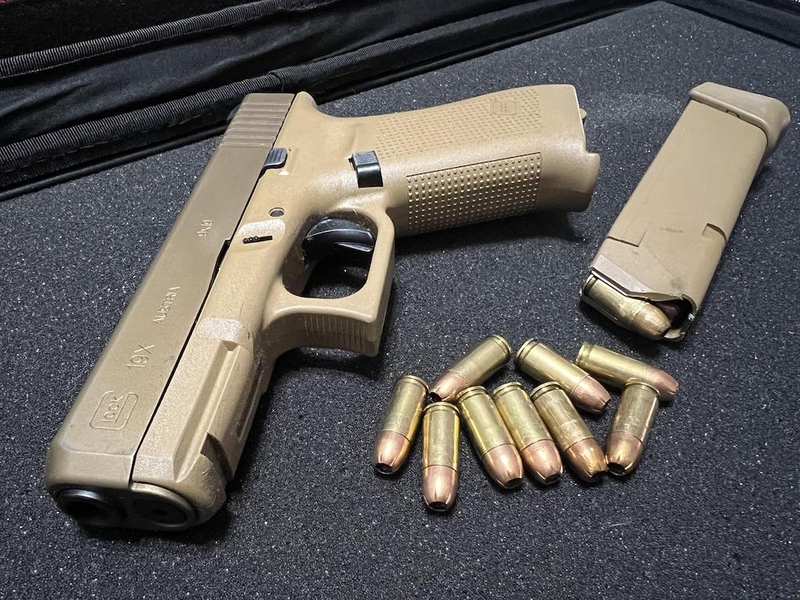
An unloaded Glock 19X handgun sits next to a magazine and 9mm ammunition at a gun range. (Photo by Amanda Watford/Stateline)
Gun-rights advocate Mark Pennak routinely warns lawmakers in Annapolis that gun legislation they’re proposing will land in court.
In the case of Senate Bill 344, he was right three times over.
That’s how many lawsuits have been filed against the law, which would ban the sale, manufacture or possession of any semiautomatic pistol with a “cruciform trigger bar,” which the bill’s backers say are particularly susceptible of being converted into machine guns with simple household tools.
Critics say the law is so broadly drawn that it would effectively ban an entire class of popular, safe handguns on the chance that they might be converted.
“What they’re punishing is the dealers and law-abiding Marylanders who purchase these extremely safe, reliable pistols because of actions of criminals, and that’s just wrong,” Pennak, an attorney and president of the gun rights group Maryland Shall Issue, said Tuesday.
Sen. Sara Love (D-Montgomery), the lead sponsor of the bill, said she is not worried about the challenges.
“I have confidence that the court will uphold the law,” Love said Tuesday. “We did a lot of research and review of Supreme Court precedence, and this bill falls squarely within them.”
The latest challenge was filed Friday in U.S. District Court in Maryland by Glock, which pioneered the cruciform trigger more than 40 years ago, other gun manufacturers that use the design, a shooting sports foundation and a Waldorf gun shop.
The bill became law on Oct. 1, but the ban on sale and manufacture of guns with a cruciform trigger bar is not set to take effect until Jan. 1. It says a person or a retail business cannot “manufacture, sell, offer for sale, purchase, receive, or transfer a machine gun convertible pistol.”
The bill wouldn’t apply to current law enforcement officers or those who are retired, and those in the military. Also, current gun owners who own a Glock would be allowed to keep them.
That pistol converter is commonly known as a Glock switch, most often used on the popular Glock handguns. Glock is not targeted in the law, but is a lead plaintiff in the suit that claims the law violates the Second Amendment.
“That is because the Second Amendment protects the possession and use of weapons that are ‘in common use at the time,’ full stop,” according to the suit. “Efforts to ban an entire class of ‘arms’ that is overwhelmingly chosen by American society for [a] lawful purpose – such as cruciform-trigger handguns – thus fail constitutional muster under any standard.”
The suit also claims the law would hurt the state’s economy by banning a type of weapons that last year saw “tens of millions” of sales of cruiciform-trigger guns. One of the plaintiffs, Shadow Systems, couldn’t sell its pistols in California after July 1 due to the passage of Assembly Bill 1127, which, like Maryland’s law, prohibits the sale, transfer and delivery of a “semiautomatic machinegun-convertible pistol.”
The suit claims California has loss nearly $3.8 million of annual revenue, which represents 11% of Shadow System’s overall business.
The 35-page suit was filed against the Office of the Attorney General and Maryland State Police. Representatives from both agencies declined to comment via email Tuesday.
Two separate lawsuits were filed in October challenging SB 334, but they were consolidated into one case in federal court naming the attorney general’s office, state police and Gov. Wes Moore (D) as defendants.
U.S. District Court Judge Richard D. Bennett last month declined to issue a preliminary injunction against the law in that case. His decision to let the law take effect was praised by Everytown for Gun Safety, which said in an Oct. 6 statement that convertors allow guns to shoot hundreds of rounds per minute.
“No matter how many reckless challenges the gun lobby launches in the hopes of selling more products, Everytown will always stand up for common-sense laws to keep Marylanders safe,” said John Feinblatt, president at Everytown for Gun Safety.
Pennak’s organization, Maryland Shall Issue, is one of the plaintiffs in the consolidated case. Pennak said Tuesday the case remains pending.
“We welcome their participation. I think it’s great that they’re there,” he said about the plaintiffs in Friday’s suit. “It may well be consolidated with other cases that are already brought and pending. So, we’ll see.”
Annapolis, MD