November marks largest dip in Oregon’s use of solitary confinement over past year, data shows
Nov 25, 2026 | 6:04 pm ET

Description
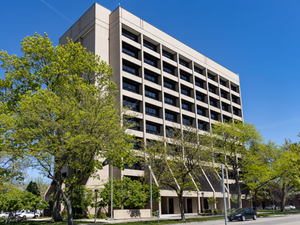
The Oregon State Penitentiary in Salem in June 2022. November came with the lowest number of incarcerated Oregonians reported in solitary confinement over the past year, according to state data. (Photo by Ron Cooper/Oregon Capital Chronicle)
Fewer incarcerated Oregonians will spend this year’s Thanksgiving in isolation as a form of punishment, according to state prison officials who recorded the lowest number of people in solitary confinement over the past year.
The state’s correctional facilities are holding at least 456 people in solitary confinement, according to the Oregon Department of Corrections’ disciplinary segregation dashboard, which was last updated at the beginning of November. It follows months of prison officials holding around 500 prisoners or more in isolated facilities since November 2025, when there were at least 475 people in solitary confinement.
Oregon’s administrative policies allow prisons to hold people in isolation for up to 90 days as punishment for misconduct, such as disobeying a prison guard’s order, though the corrections department says it doesn’t use solitary confinement for more than 15 days. It’s a practice the corrections department argues is necessary to protect all inmates while ensuring accountability.
But prisoner rights advocates have argued that the practice makes it far too difficult for prisoners to access disability accommodations and severely degrades their mental health. The Portland-based nonprofit Oregon Justice Resource Center, for instance, is part of a coalition of legal advocates who are suing the state prison system for its reliance on solitary confinement.
Bobbin Singh, the center’s executive director, told the Capital Chronicle that the dashboard figures are “not a reliable indicator of the practices” in state prisons, pointing out that isolated cells for prisoners who have committed assault in custody or have serious mental health or medical conditions are not reflected in the data. He referred to research such as a 2019 study linking placement in solitary to increased likelihood of death after release from prison.
“To be clear, there is no statutory mandate for its use; solitary confinement is wholly a creation of ODOC rules and practices, and it is simply being used as a practice in Oregon prisons at the discretion of ODOC,” Singh said in a statement. “ODOC and the state of Oregon are choosing to use this form of unnecessary punishment against its own residents.”
It’s too early to predict whether the decrease in November numbers is part of a long-term trend, said Amber Campbell, a spokesperson for the Oregon Department of Corrections.
She said prison officials have expanded educational and behavioral health resources for prisoners, tried to avoid using solitary confinement when unnecessary and considered when an inmate has been held for too long in isolation. At the same time, she cautioned that other factors such as construction and repairs at the Oregon State Penitentiary, which houses dozens of incarcerated people in solitary confinement, could explain the decrease.
The corrections department maintains that it does not use solitary confinement with little to no human contact for more than 15 days. Campbell said that’s not the same as segregating people for longer when “actions pose a safety threat to others” or they have unique medical needs.
“All placements are guided by the principle of using the least restrictive environment necessary to maintain safety and security,” she wrote in an email. “Placements are regularly reviewed, with the goal of returning adults in custody to less restrictive housing as promptly and safely as circumstances allow.”
Lawmaker plans 2027 legislation outlawing solitary confinement
The decrease in reported use of solitary confinement coincides with a broader push by criminal justice reform advocates in the Legislature aiming to use Oregon law to end the practice in the state entirely. Advocates for the push say that the tool has been used as a form of retribution and retaliation against inmates, including those who have assisted one another in pursuing legal claims against corrections officials.
Among those leading the effort to abolish solitary confinement in the state during the 2027 legislative session is Rep. Farrah Chaichi, D-Beaverton. Chaichi was part of a group of 13 state lawmakers who this summer asked the Oregon corrections department to adopt standards created by the United Nations on solitary confinement.
Those standards — named after the famous South African anti-apartheid activist Nelson Mandela, who served 27 years in prison — aim to limit stays in isolation to no more than 15 days. The current average stay in isolation is more than twice that length at about 33 days in Oregon prisons, according to the most recent October data from the state’s dashboard.
In an interview, Chaichi echoed the justice resource center’s concerns that state data offered limited insight into the extent of solitary confinement in Oregon. She said that there has still been a largely “steady” increase in dashboard figures since January 2024 when the state first recorded that there were 293 people in isolation.
She added that there do need to be opportunities for people to “re-regulate” after misconduct or mental health concerns, but that it’s excessive for people to be held in isolation up to a month or longer. Her legislation seeks to abolish solitary confinement in all its forms, including those the state dashboard does not track.
“We’re seeing that more people are experiencing this harm,” said Chaichi, who had once hoped to become a public defense attorney. “So I do think abolishing it is the right move, but I also have felt like that for most, if not all of my life.”
Salem, OR