Trump’s beef import plan: The trade off facing Missouri farmers and consumers
Sep 08, 2026 | 6:40 am ET
Description
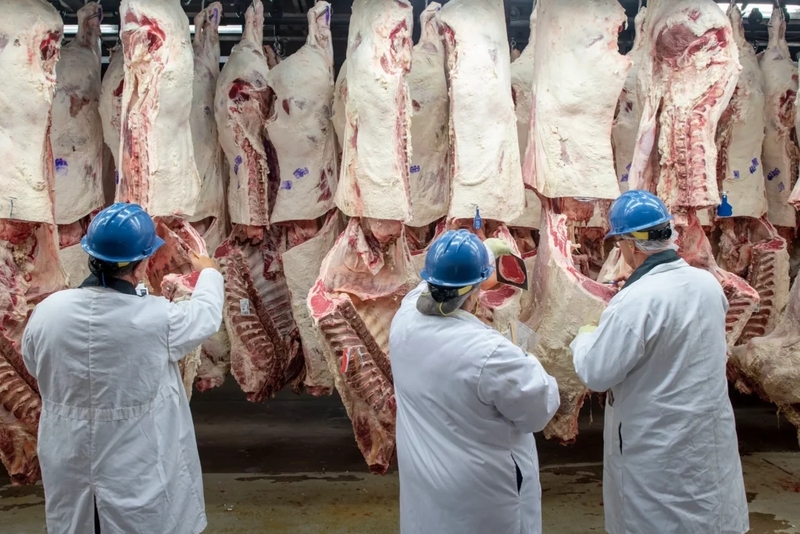
USDA Supervisory Agricultural Meat Graders at the annual national beef correlation event, Aug. 13, 2019. In 2019, the top four beef packers — Tyson Foods, JBS, Cargill Beef and National Beef — processed around three quarters of the nation’s beef in 27 facilities across the nation (Preston Keres/USDA).
President Donald Trump has announced a temporary plan to suspend tariffs on up to 300,000 metric tons of imported ground beef over 90 days. The administration hopes the additional imports will increase supply and bring down record-high beef prices.
For families facing record-high beef prices, any meaningful relief at the grocery store would be welcome. But in Missouri, which ranks among the nation’s top three states for beef cows and has about 3.85 million cattle and calves, the plan raises a broader question: Can more imports ease beef prices without disrupting Missouri’s fragile cattle-herd recovery?
Today’s high beef prices reflect tight cattle supplies years in the making. Drought forced many ranchers to reduce their herds as pasture and forage became scarce, while the cost of raising cattle climbed sharply. Because cattle herds take years to rebuild, supplies remain tight while consumer demand remains strong.
Missouri has experienced the same contraction. USDA data show that the state had about 4.11 million cattle and calves in January 2023, including 1.95 million beef cows. By January 2026, the cattle inventory had fallen to 3.85 million head, including about 1.81 million beef cows. In just three years, Missouri’s total cattle inventory declined by about 260,000 head, or 6%, while its beef cow herd fell by roughly 139,000, or 7%.
Cattle producers worry that the import plan comes just as the industry is showing early signs of recovery. National USDA data show that the number of young female cattle kept for breeding increased 3% from a year ago, an important step toward rebuilding the herd. But expansion requires significant financial commitment. According to USDA data cited by the American Farm Bureau Federation, operating costs for cow-calf producers reached a record $1,762 per head in 2025, more than $400—or nearly 30%—higher than in 2020.
The timing adds to those concerns. The Farm Bureau estimates that roughly 70% of spring-born calves are sold between September and November, overlapping with the administration’s 90-day import window. Producers worry that a rapid increase in imports during this important selling period could put downward pressure on cattle prices and make herd expansion less attractive. If that slows rebuilding, tight domestic beef supplies could persist longer.
The concerns of cattle producers should not obscure the problem facing consumers. Ground beef prices have reached record highs, putting additional pressure on families already facing high grocery bills.
Imports offer one way to increase supply relatively quickly. The United States already imports lean beef that is mixed with fattier American beef to make ground beef, a common practice in the U.S. beef industry. Additional imports could therefore help ease some of the pressure on prices.
This leaves policymakers with competing concerns: providing consumers relief from high beef prices while maintaining the conditions needed for cattle producers to rebuild domestic herds.
The policy should make the additional imported beef cheaper. But how much will consumers actually save? Normally, beef imported beyond certain quotas can be subject to a 26.4% tariff, which the plan would temporarily suspend. Because the additional 300,000 metric tons represent only a small share of the overall U.S. beef market, the effect on grocery-store prices may be more limited.
The increase in imports has also raised questions about food safety and traceability. Earlier this month, nearly 30,000 pounds of Argentine beef were recalled after entering the country without the required import reinspection. No illnesses were reported, but the incident illustrates why maintaining strong inspection and oversight remains important as imports increase.
The administration is now looking beyond imports for ways to bring down beef prices, an increasingly visible affordability issue heading into the midterm elections. On Friday, Trump announced plans to make it easier for farmers and ranchers to process and sell their own beef, while criticizing the concentration of the meatpacking industry. The beef-processing industry is highly concentrated, with the four largest meatpackers handling about 85% of U.S. steer and heifer purchases. More competition and processing options could give producers additional ways to reach consumers, although the details of the proposal are still emerging.
Consumers need relief from high beef prices, while cattle producers face the costly, years-long process of rebuilding their herds. Imports can help meet demand when domestic supplies are tight, while greater processing competition and a stronger domestic herd could expand supply over the longer term. The challenge is finding the right balance during this period of transition.
That balance matters especially in Missouri, where cattle production supports not only farmers but feed suppliers, veterinarians, livestock markets, equipment dealers, and other rural businesses.
What happens over the next 90 days will therefore be watched closely at both the grocery store and on Missouri farms.
Jefferson City, MO