In America’s most divisive era since the Civil War, Dolly Parton showed us a path forward
Sep 08, 2026 | 6:00 am ET
Description
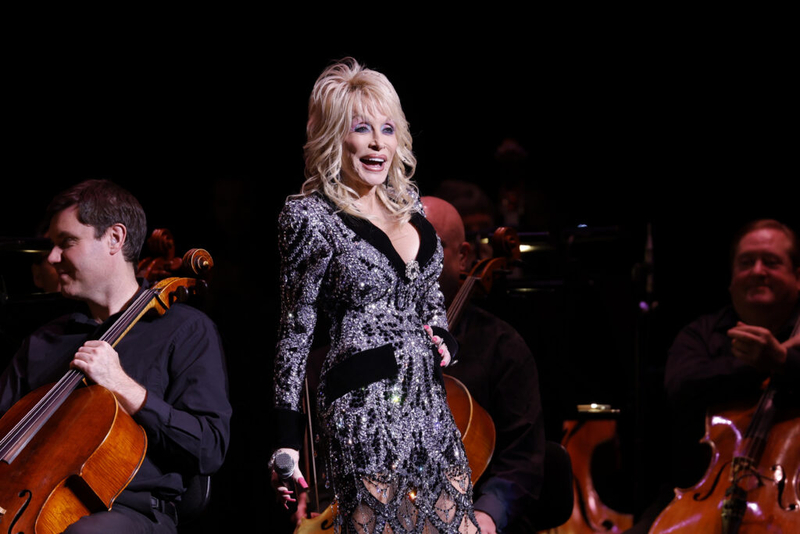
Dolly Parton, pictured in 2020, could have become a billionaire. Instead, she used her money to help others, including her native East Tennesseans and created a program to support childhood literacy. (Photo by Michael Ochs Archives/Getty Images)(Photo by Jason Kempin/Getty Images)
In a 1988 interview with Bill Moyers, Massachusetts Institute of Technology linguistics professor and intellectual Noam Chomsky discussed a common theme in his celebrated book “Manufacturing Consent.”
Chomsky observed that it is extremely rare within America’s class-based, hierarchical power structures for an individual to rise up out of the ordinary; enter a position of immense wealth, power and influence and then turn around and use that position to improve the material conditions for “the folks back home.”
Examples are not difficult to find. Amazon founder Jeff Bezos started the company in his garage, but now his delivery drivers must labor under conditions even more dangerous than those faced by law enforcement officers. Sam Walton’s family built Walmart from nothing, but now their workers are the largest cohort of employed Americans so underpaid they must rely on public assistance.
Mark Zuckerberg started Facebook when he was just 19 years old, but now his social media empire constructs algorithms that lead today’s 19-year-olds to internet addiction and even suicide. Elon Musk immigrated to the U.S. to pursue the American dream, but now he prevents others from that same pursuit by engaging in union-busting at Tesla, SpaceX and X.
Examine most American success stories, and we see Chomsky’s observation ring true again and again.
And yet, every rule has its exception, and in this case, the exception boasted a towering blonde wig, an hourglass frame bedazzled with rhinestones and a smile like you wouldn’t believe.
Dolly Parton began helping others immediately
There are many ways in which Dolly Parton broke the mold of the traditional capitalistic “rags to riches” success story. The first is how quickly she shifted her focus from advancing her career to helping others. Parton launched many charitable campaigns long before she became a centi-millionaire.
In 1988, when she was just 42, Parton created the Dollywood Foundation, which began as a local program to improve educational outcomes for children in Sevier County, where she grew up.
In 1990, Parton launched the Buddy Program, which paired seventh- and eighth-graders with an academic “buddy.” The program also pledged $500 to Sevier County students who graduated from high school. The combined measures led to dropout rates plunging from 35% to 6%.
In 2000, Parton’s Dollywood Foundation expanded by awarding $15,000 scholarships to five Sevier County high school students from each year’s senior cohort.
And that was just the beginning.
The Imagination Library
One would be hard-pressed to find a greater act of such pure goodness as Parton’s Imagination Library. In 1995, Parton founded the Library with the modest goal of putting one free book per month into the hands of every young child from birth to age five in Sevier County, regardless of family income.
Why focus on early childhood literacy? Because Parton connected the dots between illiteracy and poverty. Parton grew up in a modest cabin with her parents and 11 siblings, and her father was a poor sharecropper who could not read or write. Parton said that, despite his business savvy and work ethic, her father’s illiteracy prevented him from achieving his dreams.
In the early 2000s, Parton expanded the Library beyond Sevier County, taking it national. By 2003, the Library had distributed one million books. Twenty years later, it had gifted 200 million books. By the time of Parton’s death, the Library had sent out 332 million books to over 3 million children across the United States, Canada, the United Kingdom, Australia and Ireland.
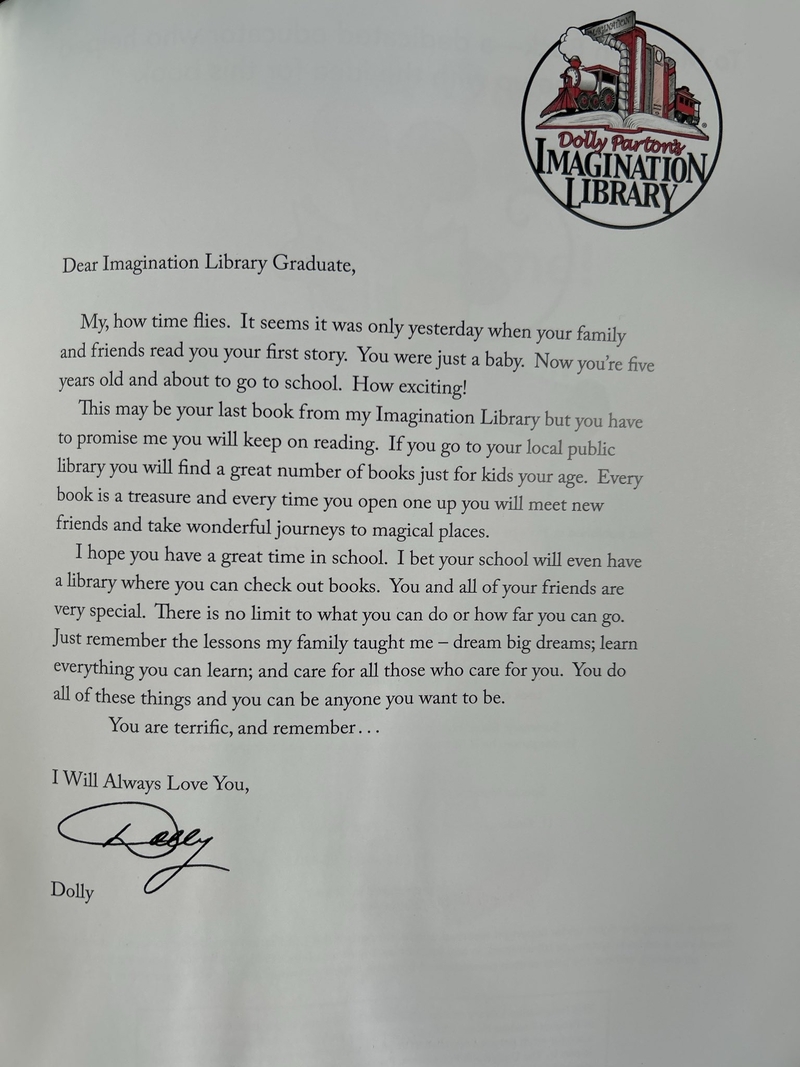
“Dear Imagination Library Graduate,” Parton wrote in a letter sent to every child as they turned five, graduated from the Library, and entered school. “My how time flies. It seems it was only yesterday when your family and friends read you your first story. You were just a baby. Now you’re five years old and about to go to school. How exciting! I hope you have a great time in school. I bet your school will even have a library where you can check out books. You and all of your friends are very special. There is no limit to what you can do or how far you can go. Just remember the lessons my family taught me – dream big dreams; learn everything you can learn; and care for all those who care for you. You do all of these things, and you can be anyone you want to be. You are terrific, and remember… I Will Always Love You.”
Breaking the mold
Parton cared more about you and me than she ever did about becoming exorbitantly wealthy. She could have become a billionaire, but instead she donated millions of dollars and thousands of hours of her time, first to helping the impoverished souls of the East Tennessee communities that raised her, then to helping those in need across the state, country and world.
In a nation where the wealthiest and most successful among us often turn around and pull up the ladder that helped them rise to the top, Parton spent her life reaching back down the ladder she had climbed, helping those the world had forgotten.
Parton broke every rule, both perceived and written, of American capitalism and success. And while her music might get us singing along and her colorful jokes might bring smiles to our faces, perhaps her best contribution was the road map she left for how we might all behave.
As America faces its most divisive period since the Civil War, perhaps “I will always love you” can be more than just a song lyric. Perhaps it can be a North Star for how we treat each other.
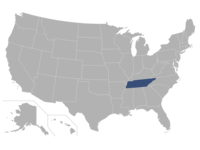
Nashville, TN