Trump stronghold feels healthcare cuts, but political shift remains unlikely
Aug 28, 2026 | 4:00 am ET

Description
Downtown Dallas, Georgia, about an hour outside Atlanta in the state’s 14th Congressional District. The district is a Republican stronghold that since 2021 had been represented by Rep. Marjorie Taylor Greene, a vocal ally of President Donald Trump before she split with him on economic issues and resigned from Congress in January 2026. (Briah Lumpkins/KFF Health News)
Amber Bates of Cohutta, Georgia, is one of thousands of people without health insurance in the 14th Congressional District, home to about 765,000 people in the northwestern corner of the state.
She and her husband have not had health coverage for the past two years, Bates said, because their employment is unsteady and they earn too much to qualify for Medicaid, the public health insurance for those with disabilities or low incomes.
When the GOP-led Congress allowed enhanced Affordable Care Act subsidies — which helped lower the cost of plans sold on the marketplace — to expire at the end of last year, Bates’ mother-in-law dropped her plan, too.
Bates and her husband have a 2-year-old son. The mother-in-law also cares for a son who has autism. They all live together in a trailer home, spending about a third of their family income on prescription medications and opting for trips to the emergency room — often their main destination for medical care, since they aren’t billed up front.
It’s stressful, Bates said. Yet despite their situation, she said she remains “all in” for President Donald Trump. But she also said she’s recognizing flaws in his leadership.
“He’s trying,” Bates said. “It’s just a lot more other things have his attention.”
Georgia’s 14th District is the most conservative in the state. It’s the district Marjorie Taylor Greene, who rose to prominence as one of Trump’s most vocal and loyal supporters, represented from 2021 to January 2026.

Greene made a notable pivot from the president last year when she publicly bashed Republicans’ handling of the enhanced ACA subsidies, which helped 74,000 people in her district — along with her own adult children, she said — afford healthcare.
The following month, after Greene publicly accused Trump of focusing too much on “foreign wars” and ignoring Americans’ economic struggles, the president attacked Greene on social media and said he would no longer support her. Soon after, she announced that she would be resigning from Congress.
Still, many others in this semirural, exurban district, like Bates, remain loyal to Trump, even as more people go uninsured and face rising costs as a result.
Bates isn’t alone in feeling the pinch of healthcare costs this year. Nationally, 37% of Republican voters surveyed in June for a KFF health opinion poll said healthcare costs were “extremely important.” More than half of Republicans and Republican-leaning independents who support the Make America Great Again movement said that Congress did the wrong thing by letting the enhanced subsidies expire, according to KFF poll data released in March. And 62% of ACA marketplace enrollees put the most blame for the expiration on Republicans (30%) or Trump (32%).
But, as the November midterm elections approach, policy experts don’t anticipate the issue of healthcare costs will lead to a major shift in how people vote in deeply conservative areas like Georgia’s 14th District, even as policies that once benefited them are rolled back.
“They’re willing to stick with the party line,” said Charles Bullock, a professor of political science at the University of Georgia. “As long as Donald Trump and other Republicans are saying Obamacare is bad, they’re going to continue to buy into that idea,” Bullock said, “even when it’s against their economic self-interest.”
Obamacare still a ‘dirty word’
When the ACA was passed in 2010, not a single Republican voted for it. Now, 16 years later, Obamacare is still a “dirty word” for many conservatives, said Jonathan Oberlander, a professor of social medicine at the University of North Carolina-Chapel Hill.
While previously the GOP’s goal was to “repeal and replace” the ACA, the current political strategy is “effectively rolling back some of the coverage gains,” he said.
According to a dashboard from NYU Langone Health’s Department of Population Health, nearly 14% of people younger than 65 living in Georgia’s 14th District were uninsured in 2024, which is higher than the national average. And in 2023, over 16% relied on Medicaid or the Children’s Health Insurance Program, known as CHIP, according to Georgetown University’s Center for Children and Families.
Last summer, Congress passed the One Big Beautiful Bill Act, which restricted ACA enrollment periods, added monthly fees, and imposed new documentation requirements for enrollees. The Congressional Budget Office estimated that the number of uninsured people in the U.S. would increase by about 15 million people over 10 years as a result of the new law, the expiration of the ACA subsidies, and other ACA changes. With the enhanced subsidies expiring at the end of 2025, ACA enrollment fell by nearly 3 million this year. In Georgia, enrollment dropped by more than half a million.
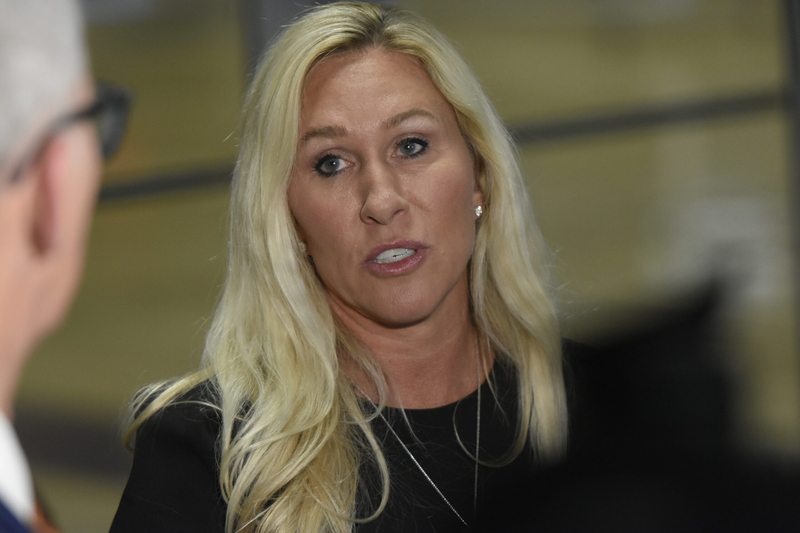
Greene’s not a fan of the ACA. She said her family’s health insurance premiums skyrocketed after it became law in 2010. But last year she surprised those on both sides of the aisle when she openly criticized her Republican colleagues over the subsidies.
“I’m going to go against everyone on this issue,” she wrote in an October post on X, “because when the tax credits expire this year my own adult children’s insurance premiums for 2026 are going to DOUBLE, along with all the wonderful families and hard-working people in my district.”
In a June interview with KFF Health News in Cumming, Georgia, Greene described the end of the subsidies as “catastrophic.”
“All over the country, people are constantly outraged over the cost of health insurance,” she said.
Like Greene, Bates has also wavered in her support for Trump. In addition to her frustration about the ACA subsidies expiring, she said the Iran war and inflation have also hit her wallet.
“I just don’t feel like he’s doing the best he could,” she said. “He did great his first term. But this term, it’s just not OK.”
While Republicans’ policies have made it more difficult for people to qualify for Medicaid and led to the end of the subsidies that made ACA marketplace plans more affordable, a clear plan to improve the U.S. healthcare system hasn’t emerged, Greene and policy experts say.
In December, House Speaker Mike Johnson championed the Lower Health Care Premiums for All Americans Act. Touted as an alternative to extending ACA subsidies, the bill was intended to lower premiums and increase healthcare access.
But the Congressional Budget Office found the bill would increase the number of uninsured people by 100,000 a year from 2027 to 2035. While the House passed the measure in December, eight months later the Senate hasn’t voted on it.
“It’s a Republican-controlled House, Republican-controlled Senate, Republican-controlled White House,” Greene said. “If Republicans had a plan, this was the perfect scenario to get it passed. You should have all the votes — get it done. And they’re not doing anything.”
Sticking to the party line
Despite such criticisms of Republicans for lacking a healthcare plan, voters in deeply conservative areas such as Georgia’s 14th Congressional District are sticking with Trump and his allies.
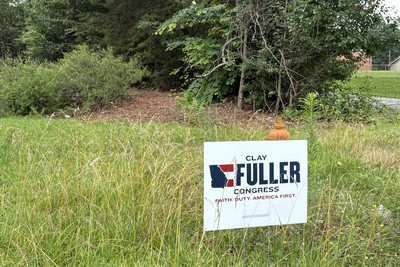
In April, the district elected Trump-backed Clay Fuller to replace Greene, though he won with smaller margins than she had. He’s up for election again in November for a full congressional term. The University of Georgia’s Bullock said flipping the district from red to blue is unlikely.
Fuller’s office did not respond to interview requests for this report. But in a Q&A with the Chattanooga Times Free Press ahead of his April runoff with Democrat Shawn Harris, Fuller said that the expanded ACA subsidies, introduced under the Biden administration during the covid pandemic, were not a “a long-term solution.” Lowering healthcare costs would come from increasing competition and reducing federal overreach, he said.
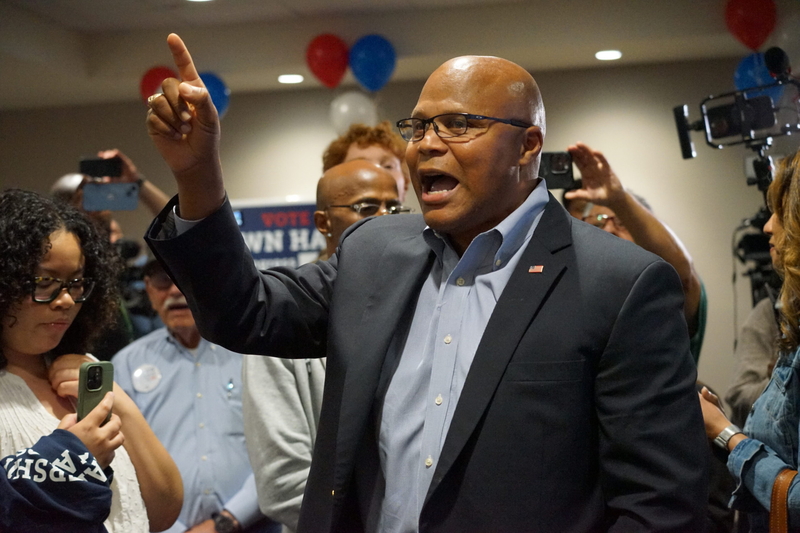
Harris, who’s facing off with Fuller again in November, told KFF Health News that the GOP strategy for the midterms is to continue to play off Republicans’ long-standing negative perceptions about Obamacare.
When people in the community are asked whether they support Obamacare, “they’re probably going to say no,” Harris said. But when asked about the Affordable Care Act, people tend to say, “‘Oh, yes, I need to have that,’” he said.
“They don’t realize it’s one in the same,” Harris said, adding that Republicans “sold everybody a bill of goods.”
As candidates campaign, they need to be in tune with their constituents, Greene said.
“That’s where I think they’re completely missing the mark,” she said. “They’re totally tone deaf to what Americans’ needs really are. And we need a serious solution.”
Bates considers healthcare among her top concerns. She said she doesn’t think anybody, including Trump, can make healthcare more affordable. But she hopes politicians will talk with people like her to better understand the burdens that consumers face.
“I honestly wish Congress would actually spend time in the life that we live,” she said. “They just sit behind their desks, and they don’t know what’s really going on in life, because they make so much money.”
Are you struggling to afford your health insurance? Have you decided to forgo coverage? Click here to contact KFF Health News and share your story.
KFF Health News is a national newsroom that produces in-depth journalism about health issues and is one of the core operating programs at KFF — the independent source for health policy research, polling, and journalism.

Atlanta, GA