Neronha urges state regulators to reject proposed health insurance premium hikes
Aug 27, 2026 | 6:17 pm ET
Description
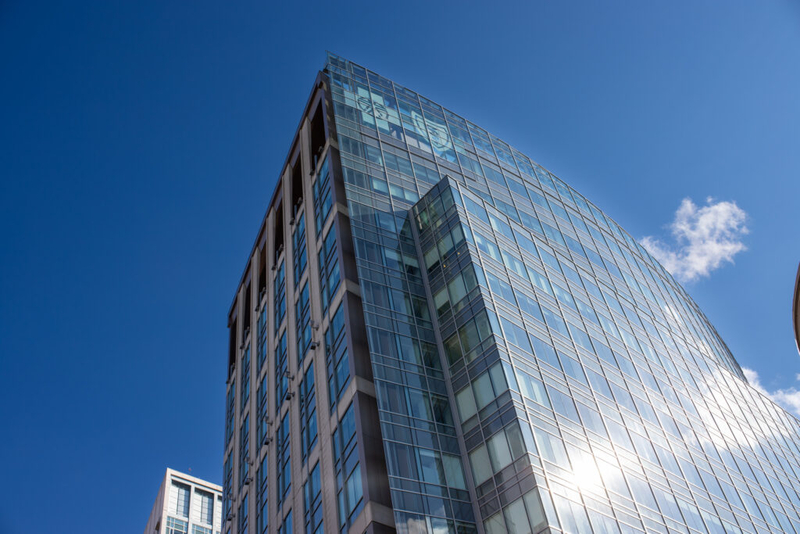
The Blue Cross & Blue Shield of Rhode Island headquarters in Providence. (Photo by Alexander Castro/Rhode Island Current)
Rhode Island Attorney General Peter Neronha is urging state regulators to reject two insurers’ proposed increases to premiums for individual health plans in 2027.
After a July administrative hearing by the state’s Office of the Health Insurance Commissioner (OHIC), Neronha’s office formally submitted a brief objecting to Neighborhood Health Plan of Rhode Island’s (NHP) request for a rate increase of 22.4%.
Premium increase requests are submitted annually by insurers, and this year they were submitted to the commissioner’s office on May 18. The agency then reviews the submissions and can accept, modify or reject them, with the final approved rates expected to arrive in September. Rate hike requests trigger a formal, public, administrative hearing if they exceed 10%.
So the health insurance commissioner’s office held a hearing for Neighborhood Health Plan but not for Blue Cross Blue Shield of Rhode Island, which requested a 9.8% increase. The AG instead submitted public comments encouraging the office to reject Blue Cross Blue Shield’s proposed rates.
Collectively, the two insurers cover more than 50,000 Rhode Islanders who purchase their individual plans through the state’s health insurance marketplace.
Health Insurance Commissioner Cory King heard two days of testimony on Neighborhood’s rate hike request in July. Comments came from Neighborhood, witnesses for the commissioner’s office, and an expert retained by Neronha’s office.
The proposed increases are not final and need approval from King’s office, which will review insurers’ submissions along with pricing assumptions, administrative charges and other information before taking action on the rates. Final numbers are expected sometime next month.
“The rate review process does not occur in a vacuum; health insurance rates are a major factor contributing to Rhode Islanders’ struggles to stay afloat financially,” Neronha said in a news release Tuesday. “While insurers continue to report multimillion dollar financial surpluses, residents of our state have not been so lucky.”
All good in the neighborhood?
Neighborhood initially sought a higher increase of 24.9% for its 34,555 individual market planholders. The insurer revised that request to 22.4% after state lawmakers created the Rhode Island Marketplace Affordability Program (RIMAP), which will take effect in 2027.
The program’s approximately $22 million in enhanced insurance subsidies is meant to partially replace enhanced federal premium subsidies that expired at the end of 2025. About $19 million of the Marketplace Affordability Program funding can be applied as direct subsidies for customers who purchase insurance on the state marketplace and earn less than 200% of the federal poverty level.
An analysis conducted by Brown University health economist Christopher Whaley, whom Neronha retained to scrutinize the rate filings and testify before the health insurance commissioner’s office showed that more than 90% of Rhode Islanders eligible for these subsidies would likely be within Neighborhood’s customer population, which he noted has “disproportionately lower-income enrollment…among the Rhode Island insurance market.”
One year after steepest premium increase in a decade, RI health insurers seek double-digit hikes
So Neighborhood subsequently tweaked its request to accommodate the anticipated uptick in enrollment — about 3,825 people, in Whaley’s estimate — and roughly $17.1 million in Marketplace Affordability Program subsidies expected to flow to its customers.
But Whaley’s analysis argued that Neighborhood’s new influx of subsidies could possibly support a premium increase of about 19%.
“In my opinion, these increases are harmful to Rhode Island consumers and threatens the stability of the Rhode Island insurance market, and NHPRI’s future viability,” Whaley wrote in an addendum to his analysis. “Consistent with my initial report, this increase far exceeds medical inflation and places many Rhode Island consumers in financial harm.”
Whaley suggested in his analysis that “Neighborhood’s recent premium increases are increasingly disconnected from the underlying costs of medical care.”
Neronha also argued that the insurer could do more. His written arguments sent to the health commissioner contend that Neighborhood has failed to fund primary care spending as outlined by the office’s affordability standards — a case of déjà vu for Neronha, who claimed the shortfall is then passed onto consumers via premium increases.
“NHPRI’s submission provides no credible plan to limit consumer cost growth,” Neronha wrote. “This deficit is glaring given this is the second year NHPRI has requested to increase rates over 20%.”
If approved, the rate would push the annual cost of a benchmark Neighborhood plan above $7,000, according to Whaley’s analysis — a cost Neronha thought untenable.
“It is hard to imagine how low- or even middle-income Rhode Islanders will be able to bear that increase,” the AG wrote. “Rather than shoulder the burden of another year of seeing their premium skyrocket another 20%, consumers will likely choose to forego coverage.”
Gail Leach Carvelli, a spokesperson for Neighborhood, wrote in an email Thursday that the rates “reflect a number of trends such as rising medical and pharmacy costs, including required hospital rate increases tied to inflation, and the growing cost of prescription drugs — particularly high-cost specialty medications entering the market.”
“Even with the requested 2027 rates, Neighborhood continues to offer the lowest-cost plans on HealthSource RI and is focused on delivering value to its members,” she wrote.
A smaller increase for Blue Cross amid larger costs
Blue Cross, meanwhile, wants a 9.8% increase for 2027, which would apply to its 16,138 individual-market customers. It’s a much smaller ask than last year, when the commissioner’s office approved a 22% increase for the insurer.
Still, Neronha objected to the payor’s request partly because of Blue Cross’ recent financial performance. Whaley’s analysis cited an increase of about $54 million in the company’s individual market premium revenue when compared to the same period last year, even with an enrollment drop of roughly 2,000 people.
Blue Cross’ first-quarter results, Whaley projected, could generate a more than $50 million positive difference between premium revenue and claims expenses in the individual market for 2026.
“Where BCBSRI has ample reserves to protect itself prudentially, asking consumers to pay up further is antithetical to the public interest,” Neronha wrote in his comments.
He argued that the company has not demonstrated any consideration of alternative pricing that might make its pricing more affordable for consumers.
Still, the payor’s request is much slimmer than last year’s initial request of 28.9% for individual plans, and its 9.8% request for 2027 was also the lowest among Rhode Island insurers offering individual plans. Blue Cross’ proposed increases for small- and large-group plans were likewise smaller than their competitors this year.
When asked for a response to Neronha’s objections on Thursday, Blue Cross spokesperson Rich Salit described via email the “affordability crisis” Rhode Islanders face, “with the cost of food, housing, energy, and healthcare all extremely high, with little relief on the horizon.”
“While our requested 2027 rate increases are substantially lower compared to last year, we understand the cost of coverage is still difficult for many individuals, families, and employers to absorb,” Salit wrote. “Unfortunately, even as we work to better manage medical and prescription drug costs and reduce our operating expenses, overall healthcare costs continue at unprecedented levels.”
Salit added that Blue Cross is working to reduce its operating expenses and more deftly manage its expenses amidst higher medical and prescription drug costs, but maintained that premiums still need to adequately cover the underlying costs of care.
“Adequate rates to cover the cost of care are critical to protecting coverage for all our members,” Salit wrote, adding that the payor is also seeking to “better support complex members [and deliver] more proactive care in Rhode Island, which improves their experience and reduces their total cost of care.”
In March, the insurer reported a $78 million normalized operating loss for 2025 — better than the $115 million loss the year before — with the vast majority of its premium revenue, 90.4%, going toward medical, prescription drug and dental claims.
Providence, RI