Pennsylvania measles deaths prompt concerns for NJ health leaders
Aug 27, 2026 | 3:55 pm ET
Description
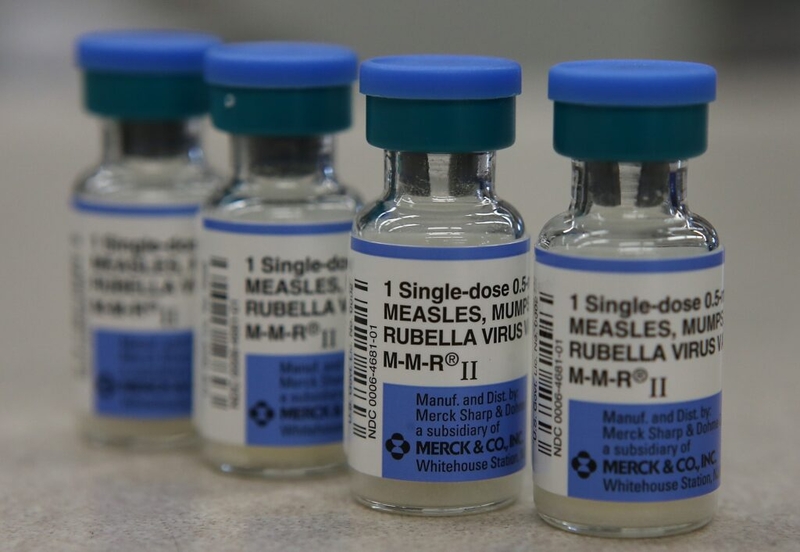
New Jersey Health Commissioner Dr. Raynard Washington is urging people to stay up to date on immunizations in the wake of two measles-related deaths of unvaccinated individuals in Pennsylvania, the nation's first such fatalities this year. (Photo by Illustration Justin Sullivan/Getty Images)
New Jersey’s health commissioner is urging residents to ensure they are immunized against measles after Pennsylvania announced earlier this week that two unvaccinated people there had died from the highly contagious and preventable disease.
Pennsylvania has not reported a measles-related fatality in at least 35 years, state officials there said, and the deaths are the first nationwide that have been tied to measles in 2026. Both were residents of Lancaster County, some 50 miles west of Philadelphia.
New Jersey is not experiencing a measles outbreak, but people “must remain vigilant” because of how contagious it is, New Jersey Health Commissioner Dr. Raynard Washington said in a statement.
Dr. Denise Rodgers, a family medicine expert and public health leader in Newark, said parents should understand the need to get their kids vaccinated, adding that there is “significant and incontrovertible evidence” that the measles vaccine is safe.
“No childhood vaccines have been found to cause autism and yet misinformation is causing thousands of children to be at risk because they are unvaccinated,” Rodgers told the New Jersey Monitor.
People who are unvaccinated are more likely to spread the disease to others, even if they don’t show symptoms themselves, experts note. Rodgers, previously a leader at Rutgers University’s biomedical programs, said this can be particularly dangerous for children and adults who have underlying immune issues.
“For example, children with asthma who get measles are more likely to have an asthma attack that could lead them to be hospitalized. I would hope that we take public health precautions that not only protect those that we love, but also protect our friends and neighbors,” Rodgers said.
Washington said the measles virus, which is spread when an infected person breathes, coughs, or sneezes, can hang in the air for up to two hours, making it easy to transmit to others. If one person has measles, 9 out of 10 people who are in close contact with them will also become infected if they are unvaccinated, according to the federal Centers for Disease Control and Prevention.
“So my ask is simple: Please, check your immunization record and your children’s, especially if you are planning to travel internationally or to areas in the United States currently experiencing an outbreak,” Washington said.
New Jerseyans can ask their doctor if they are up to date. If you have signed up for myHealthNJ.com, a free software tool available under a partnership the state launched last year with the tech firm Docket, you can review your immunization record there.
Nationwide, nearly 2,800 measles cases have been reported from dozens of states in 2026, according to the CDC, which confirmed just under 2,300 cases last year. Active outbreaks continue in multiple states, including Pennsylvania, which has identified 424 cases in 2026, including more than 30 over the past week. New York has reported 29 cases this year, while New Jersey logged just one so far, in April, after confirming a dozen cases in 2025.
The recommendation from Washington, a public health specialist, comes a week after he urged parents to ignore President Trump’s executive order calling for fewer childhood vaccines, a shift Washington said would increase infectious disease and death nationwide. Trump and U.S. Health and Human Services Secretary Robert F. Kennedy Jr have taken multiple steps to reduce the use of vaccines, despite extensive research proving they are safe and effective.
Washington encouraged families to continue to follow state guidance, which is based on recommendations from professional organizations and public health collaboratives. The state backs the combined MMR vaccine — which guards against measles, mumps, and rubella — something Trump said should be split into three separate shots and given one at a time. MMR is considered 97% effective after the two-dose course.
Measles first shows up as a high fever, cough, and runny nose, followed in three to five days by a rash that spreads downward from the head. The virus can be spread even before symptoms appear. While some people recover, others experience pneumonia, brain swelling, deafness, or even death.
“When more than 95% of a community is protected, the virus runs out of people to infect, and an outbreak cannot take hold,” Washington said.
Federal data shows just 92% of kids in New Jersey had at least one MMR shot by age 2. In all, New Jersey requires eight different vaccines for kids to attend school.
Immunizations are generally covered by insurance and are also available at low or no cost from local health departments. The state also maintains a list of community health events that includes back-to-school vaccine clinics. Shots are also available from most doctors’ offices and many drug stores.
Trenton, NJ