Trump plan would bar millions of Americans from voting by mail, states tell Supreme Court
Sep 09, 2026 | 6:31 pm ET
Description
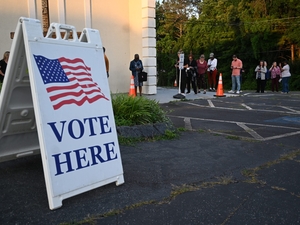
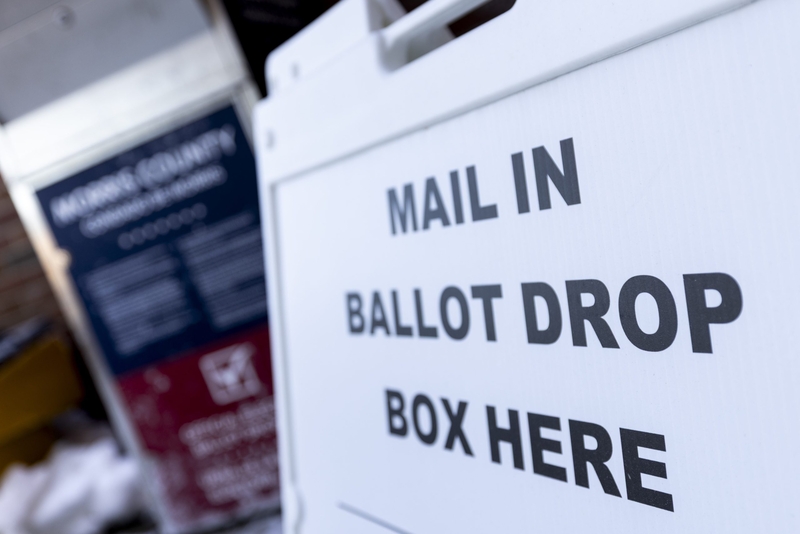
People vote in a special election to replace Mikie Sherrill in the House of Representatives in Morristown, New Jersey, on Feb. 5, 2026. (Photo by Anne-Marie Caruso/New Jersey Monitor)
The Democratic-led states and voting rights groups suing to block enforcement of President Donald Trump’s executive order to restrict mail-in voting warned in briefs to the U.S. Supreme Court on Wednesday the policy would have disastrous consequences for the upcoming midterm elections if it is allowed to move forward.
Less than two months before the Nov. 3 elections, at least two states have already begun sending ballots to voters, and officials in several others have voiced serious concerns that complying with the U.S. Postal Service rule this election cycle is impossible, opponents said.
The Democratic attorneys general of 23 states, the District of Columbia and the governor of Pennsylvania told the high court they strongly object to the Trump administration’s request that justices allow the rule to move forward.
“Whatever else may be said of USPS’ new rule, it would wreak havoc on States and their voters if it takes effect at this late point—when some States, including North Carolina and Wisconsin, have already begun to mail out ballots,” they wrote.
Only Democratic state officials have sought to challenge the rule in court, but Wednesday’s brief noted that top elections officials in the Republican-led states of Utah, Florida and Ohio have also warned the rule would cause “catastrophic harms.”
The suit, now at the Supreme Court, was brought by the attorneys general of California, Massachusetts, Nevada, Washington, Arizona, Colorado, Connecticut, Delaware, District of Columbia, Hawaii, Illinois, Maine, Maryland, Michigan, Minnesota, New Jersey, New Mexico, New York, North Carolina, Oregon, Rhode Island, Vermont, Virginia and Wisconsin, along with Pennsylvania Gov. Josh Shapiro.
“Allowing USPS’ new rule to take effect would be virtually certain to prevent many millions of Americans from casting mail ballots in this fall’s elections,” opponents wrote.
The record in the Massachusetts federal court that issued the preliminary injunction blocking the rule’s enforcement that the administration is seeking to overturn includes “unrebutted evidence” that “establishes that compliance with USPS’ rule would be impossible ahead of the midterms,” the state officials wrote.
Spokespeople for the White House, Postal Service and U.S. Department of Justice, which is representing the Trump administration in the case, did not respond to messages seeking comment Wednesday.
The case is on what’s known as the court’s emergency docket, and it’s not clear when a decision on whether or not to keep the preliminary injunction in place will be issued.
Voting rights groups echo Dems
A coalition of voting rights groups also filed a response Wednesday, making similar arguments.
The groups, led by the American Civil Liberties Union, emphasized the likelihood of disenfranchisement for many of the roughly 50 million voters set to receive ballots from the states challenging the rule.
Even if the mail specifications under the rule could be met in time for the election, the online portal the Postal Service has rushed to develop is not ready, the challengers wrote.
Several friend-of-the-court briefs also made that argument, including the federal employee whistleblower who reported last week that the portal’s rushed development would lead to numerous errors if used this election.
As of late last week, states had not yet been given access to the portal, which is supposed to be the mechanism for verifying compliance with the rule, even as some began mailing ballots.
“USPS’s Rule gives states mere weeks to implement sweeping changes to their election systems—even though USPS has not yet established the necessary infrastructure to administer its new requirements,” they wrote. “The Rule would disrupt the administration of mail voting mid-election and disenfranchise eligible voters nationwide, including voters in all-mail states like Colorado and Utah and elderly, rural, and disabled voters who must vote by mail.”
Beyond Postal Service power
In addition to the impossibility of states’ complying with the Postal Service rule, which places new requirements on ballot mail and requires states to transmit voter data to the federal government, less than two months before Election Day, the regulation impedes states’ constitutional authorities and oversteps the executive branch’s powers, the state officials and groups wrote.
The U.S. Constitution specifies that administering elections is a state responsibility, though Congress may pass laws governing certain elements. The executive branch has virtually no role unless specifically delegated by Congress, the rule’s challengers wrote.
And Congress never passed a law to give the Postal Service the kind of power over election mail that the rule claims, they said.
“To the contrary, Congress has exhaustively enumerated the types of materials that USPS can lawfully refuse to deliver,” the state officials wrote. “Ballots are not among them.”
The rule bans postal workers from delivering ballots that do not meet any of the conditions specified in the rule, including pre-approval of envelope designs and lists of eligible voters that the administration plans to check against a citizenship database maintained by the Department of Homeland Security.
Outsiders weigh in
A flurry of 17 friend-of-the-court briefs hit the Supreme Court docket Tuesday and Wednesday.
None sided with the administration.
The briefs, representing bipartisan former governors, state and local election officials, military voters, the Postal Service workers’ union, good government organizations, Democratic campaign groups and others all said the rule was impossible to comply with at this point in the election cycle.
“The late-breaking USPS Final Rule—which was promulgated mere months before the November 3, 2026 general midterm elections, and which mandates sweeping, costly, and burdensome changes to mail-in voting procedures—would prove disastrous for election officials and election administration,” local officials and the pro-democracy group Center for Election Innovation wrote. “And it would seriously undermine the upcoming elections.”
In another filing, a bipartisan group of current and former local and state election officials said it was impossible to comply with the rule this year.
Their brief noted that many of their members were Republicans or represented Republican-majority districts and emphasized that they took no position on the rule’s legality.
But they said implementing it now was infeasible and ran afoul of a Supreme Court principle that changes in election policy should not happen during or close to an election.
“The principle rests on incontestable facts about voters and about the people who run elections: that late changes breed confusion, that confusion keeps eligible voters from voting, and that a chaotic election erodes confidence in the result,” they wrote. They “therefore suggest only this: that the November 3, 2026 general election be conducted under the rules that were in place when the election’s administration began.”
All States Newsroom content is free to republish. Read our republishing policy for more information.