Trump administration urges states to expand childcare; Morrisey says WV program could see cuts
Jul 13, 2026 | 6:00 am ET

Description
An employee at Cubby’s Childcare Center in Bridgeport, West Virginia, plays with two infants on July 6, 2026. The center serves 450 infants and young children. (Photo by Amelia Ferrell Knisely/West Virginia Watch)
On Mother’s Day, the Trump Administration sent a letter to governors encouraging the expansion of affordable childcare. While President Donald Trump announced a childcare reform package, the letter encouraged states to use federal anti-poverty dollars to bolster childcare assistance programs.
Temporary Assistance for Needy Families dollars, or TANF, could be utilized to expand childcare access and “respect parents’ childcare choices,” wrote Alex J. Adams, assistant secretary of the federal Administration for Children and Families.
“Now more than ever, American families should have access to affordable childcare options that serve their needs and preferences,” he said.
Gov. Patrick Morrisey has said that West Virginia’s childcare subsidy program could see cuts as he reviews the use of TANF dollars that pay for the program. Morrisey said TANF faces a $43 million structural deficit due to increased COVID-era spending by the state.
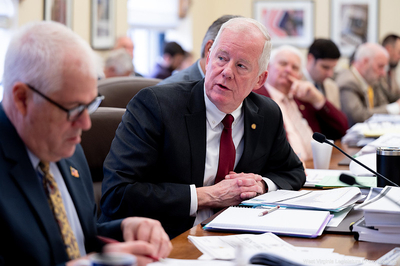
Del. Bob Fehrenbacher, R-Wood, has championed childcare legislation in the House of Delegates, touting the benefits for the state’s economy.
In response to the Trump administration letter, he said, “The basic message is that the Trump administration is supporting childcare.”
“To me, this is a step forward for childcare, and I will be curious to see how West Virginia responds to that because … (there’s) an expectation that they will devote more funds to childcare through TANF,” Fehrenbacher said.
Morrisey’s office confirmed that the governor received the letter from the Trump administration.
Lars Dalseide, the governor’s communications director, said, “Supporting economic development and healthy families through access to childcare is a vital need in West Virginia.”
“However, those programs must make responsible use of taxpayer dollars and avoid running at a deficit. In general, the goal of all social support programs should be to provide an upward slope to gainful employment and self-sufficiency for individuals in need, rather than to function as a permanent crutch,” he wrote in an email June 24.
West Virginia’s childcare assistance program provides financial assistance to working parents or, in some cases, parents attending school, to cover the costs of certified family-based or licensed center-based childcare. The state also uses this program to pay for childcare for children in foster care while they’re in a foster home.
The childcare assistance program has helped more than 12,000 children access childcare, according to 2024 data.
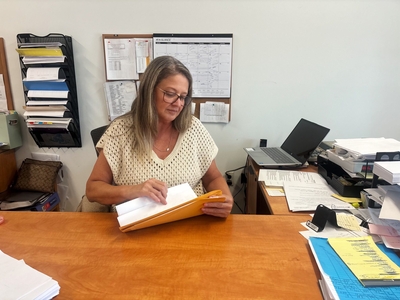
Jennifer Trippett runs Cubby’s Childcare Center in Bridgeport, West Virginia, where 200 young children and infants use the childcare assistance program. Nurses, receptionists, Target employees and single mothers who work rely on the assistance program, Trippet said.
A cut to the subsidy would impact the local economy, she explained.
“Like the ripple effect that would have not just on the childcare businesses, but all the other businesses, it’s kind of crazy,” she said.
Any potential cuts to the childcare assistance program aren’t likely to be well received by lawmakers, who overwhelmingly passed their first hallmark childcare bill earlier this year. The measure, sponsored by Fehrenbacher, included better support for the childcare subsidy program, and supporters hoped it would expand childcare slots in the state by better supporting providers.
Morrisey let the bill become law without his signature and did not publicly support it.
Del. Kayla Young, D-Kanawha, a mother and childcare advocate in the House, said she wasn’t “remotely surprised” that Morrisey had signaled potential cuts to the childcare assistance program.
“We have seen time and time again, he either completely ignores programs that help children like public education and never ever mentions them, or he is just trying to take from them to fund whatever failed programs he thinks should exist, which happen to coincide with people that that donate to him politically,” Young said.
“ … We want to make sure that we are putting children in the best possible position to be successful adults, and it’s the government’s responsibility to do so,” she added.
Childcare assistance program relies on federal funding
The state’s childcare assistance program is funded through state funding, but largely relies on federal funds from TANF and the Child Care and Development Block Grant. TANF currently funds only a small portion of the childcare assistance program; a state may use up to 30% of its annual TANF grant to carry out childcare development funding.
West Virginia had $32.9 million dollars eligible to be transferred from TANF to the Child Care and Development Block Grant as of Fiscal Year 2024, according to the federal government.
At the beginning of the year, former state Department of Human Services Secretary Alex Mayer told lawmakers that the state was using around $41 million in excess TANF funds to support the childcare assistance program. He never mentioned that TANF faced a looming deficit; Morrisey announced the issue in May.
“Eliminating the TANF deficit before the carryover fund is depleted is vital to ensuring that the TANF block grant can continue to provide vital services to children and families across the state for years to come. We are committed to coordinating closely with the Legislature to ensure that necessary adjustments are made responsibly,” Dalseide said.
A Trump administration memo to governors said that an “additional amount of (Child Care and Development Block Grant) funding could support childcare for a significant number of additional children” and encouraged states “to consider transferring the maximum amount authorized by law to childcare Development Block Grant, rather than transferring TANF funds to Social Services Block Grant or using TANF funds directly for childcare within the TANF program.”
“ … Doing so would help the state better support families with young children and expand childcare access,” the memo said.
According to Dalseide, West Virginia doesn’t transfer directly from TANF to the Child Care and Development Block Grant, but TANF funds do support the grant’s functions.

Childcare connection to workforce growth
Trippett noted that other states invest more state dollars into childcare. New Mexico became the first state to offer universal childcare assistance regardless of income; the state is paying for it with a mix of state dollars generated from taxes on oil and gas and federal funds.
“Every state surrounding West Virginia puts in a lot of state money to keep their childcare programs running, which is evidenced by the fact that they pay their providers more,” Trippett said.
Fehrenbacher said the Legislature may need to increase state funding into childcare if West Virginia wants to address its economic challenges.
“I believe we have to step up to it and figure out what are we going to do? Because the solution is not to reduce the amount of childcare that is provided in the state,” he said. “If the state is truly going to encourage job creation and provide support to that, I believe childcare is an element of how we can provide a workforce. (Our) workforce participation is the lowest in the nation.”
A related memo from the Trump administration to governors on Mother’s Day also clarified that Child Care and Development Block Grant funding can be used for faith-based childcare providers, along with family, friend and neighbor childcare.
Dalseide said West Virginia “is already ahead of the game on many of the recommendations therein. (DoHS) currently allows relatives to care for a family member’s child outside of the child’s home and allows faith-based organizations to participate as licensed providers.”
Despite the memo, Young worried about the future of federal childcare assistance under the Trump administration.
“It’s absolutely clear that the federal government wants to wean us off and wean all states off of federal funding entirely,” Young said. “These funds aren’t being used for wealthier families. They’re being used for low-income people in the first place, and the federal dollars for all of those programs is going away with the expectation that the states can afford it, and our state has put in less funding than we ever have for childcare, not more.”
Charleston, WV