True local control means neighbors write the rules, not tech lobbyists
Jul 09, 2026 | 6:00 am ET
Description
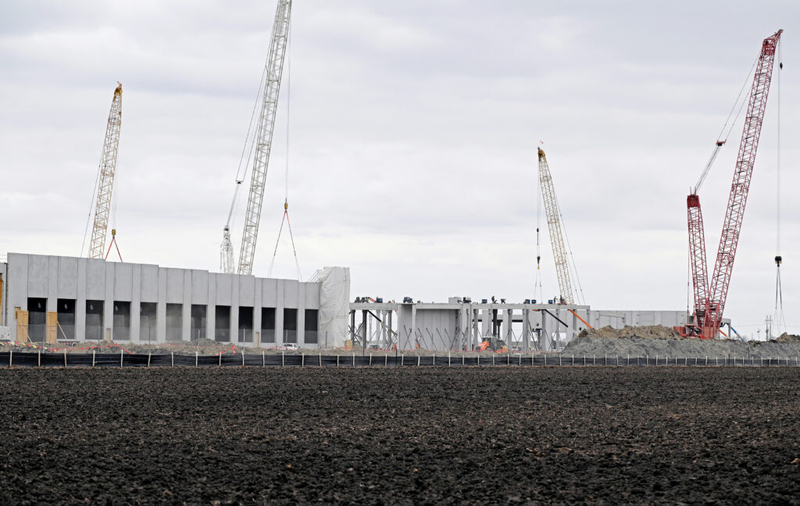
The Applied Digital data center is under construction in Harwood, N.D., on May 6, 2026. (Photo by Dan Koeck/For the North Dakota Monitor)
As former chair of Dakota Resource Council, which works with communities facing proposed or existing data centers, I read Terry Effertz’s guest piece in the North Dakota Monitor with interest. She wrote, “We should demand transparency, genuine local input, and skepticism of proposals that don’t serve our communities.” On that point, we agree, local zoning is central to the debate over North Dakota’s future. But we disagree with her claim that, when it comes to data centers, “we’re actually doing this work.” The “we” in her guest piece includes data center industry representatives, and representatives of TechND. Although TechND’s website does not publicly list its full membership, its core champion members include Applied Digital, Core Scientific, Dakota Carrier Network, Geronimo Power, Midco and Microsoft.
Our disagreement is with the idea that the “model ordinance”— co-authored by tech lobbyists through TechND and big business groups such as the Greater North Dakota Chamber, is a victory for local democracy. It is not. It is a preemptive defensive strike designed to give industry a predictable path to government approval. True local control means county commissioners and township boards should treat this model as a bare-minimum floor, not a ceiling. North Dakotans have already seen model zoning ordinances, such as the concentrated animal feeding operation model zoning ordinance, become embedded in state law, including Senate Bill 2174 from the 2025 legislative session, weakening local authority over the siting of industrial facilities. The same risk exists here. The industry template has three fatal flaws: the “by-right” fast track, the “ghost town” risk, and toothless noise and resource enforcement.
Flaw 1: The “by-right” fast track silences neighbors. The model framework allows data centers to bypass public hearings if they locate in general industrial zones. But a data center is not a typical warehouse; it is a massive resource-intensive facility with countywide impacts. No project over one megawatt should receive automatic approval. Communities should require conditional use permits and public hearings for every facility, regardless of zoning classification.
Flaw 2: The “ghost town” risk leaves taxpayers exposed. The industry model is silent on what happens when a crypto or AI venture fails, relocates or becomes obsolete. Rural North Dakotans have seen this pattern before with extractive industries. If a company abandons a massive, windowless concrete shell, taxpayers should not be responsible for demolition or cleanup. Communities should require upfront decommissioning bonds so developers, not local taxpayers, pay for future site restoration.
Flaw 3: Toothless noise and resource enforcement offers no real protection. The template relies on pre-construction acoustic reports signed by the developer’s engineers. But paper promises do not prevent a 24/7 low-frequency hum from disrupting nearby livestock, farm families and rural residents. Information alone is not protection. Communities should require continuous third-party monitoring at the property line, backed by automatic daily fines and immediate shutdown provisions for violations.
Our broader concern is protecting local water resources and electrical grid capacity. These mega-projects consume enormous amounts of North Dakota’s water and electricity. Our aquifers and electrical grid should serve local agriculture, residents and existing businesses before powering hyperscale data demands.
Our advice to county commissioners as they write their AI zoning ordinances is to not let a model AI zoning ordinance promulgated by AI/tech/energy interests establish a maximum ceiling, but instead they should regard it as a bare-minimum floor.
The Dakota Resource Council welcomes economic growth, but only on North Dakota’s terms. Our recommendation to county commissioners is to take the industry’s model zoning ordinance, rip it open, and insert the structural guardrails necessary to protect your communities, your taxpayers, and your quiet way of life.
Bismarck, ND