A timeline of Operation Metro Surge
Feb 20, 2026 | 7:00 am ET
Description
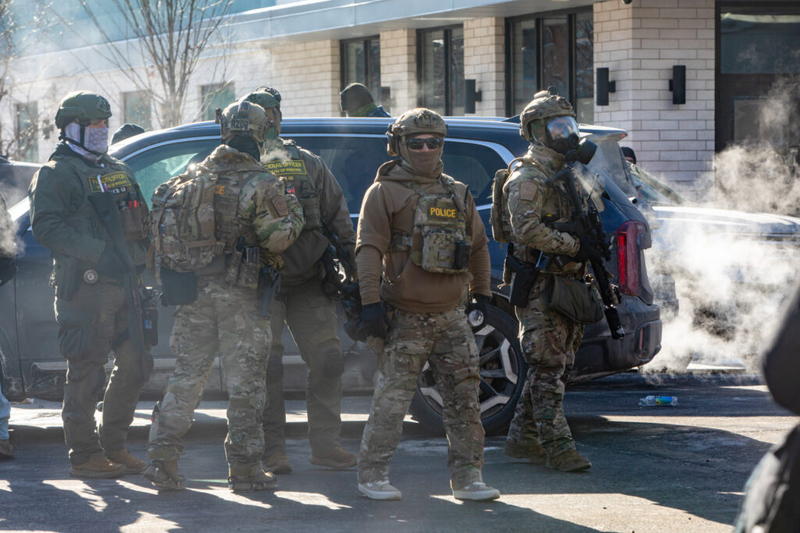
Federal agents gather near the scene of 26th Street and Nicollet Avenue, where federal agents shot and killed Minneapolis resident Alex Pretti Saturday, Jan. 24, 2026. (Photo by Nicole Neri/Minnesota Reformer)
“Operation Metro Surge,” the incursion of 3,000 federal immigration agents into Minnesota in what the Department of Homeland Security called “the largest DHS operation ever,” began in December, when Minnesota became the focus of President Donald Trump’s deportation efforts.
Trump had turned his attention to Minnesota after a right-wing media outlet published unsubstantiated allegations that Somali Minnesotans were funding terrorism with money stolen from government programs. The immigration enforcement surge purported to target Somali immigrants, the vast majority of whom are citizens or legal permanent residents.
Since December, immigration enforcement agents have shot three people, killing two; racially profiled people, asking them to produce proof of legal residency; detained legal immigrants and shipped them across state lines, including young children; caused numerous car crashes; deployed chemical irritants on public school property; smashed the car windows of observers and arrested them before releasing them without charges; charged journalists and activists while stymieing investigations of federal agents, leading to an exodus of prosecutors from the U.S. Attorney’s Office, among other high-profile incidents.
Federal officials said they arrested roughly 4,000 people during the operation, though U.S. border czar Tom Homan could not say how many were targeted arrests of people deemed a safety threat. Many arrests were documented by onlookers, journalists and a large decentralized movement of people committed to observing and disrupting ICE operations. Car horns and whistles became a constant in parts of the Twin Cities, alerting immigrants to lock their doors and citizens to come out and film when ICE was active. Still, an untold number of immigrants were quietly arrested without cameras and whistles.
The siege also ignited a relief effort on the scale of a natural disaster response, albeit under the glaring eyes of the federal government. Churches, schools, coffee shops and stores, including a Minneapolis sex toy shop, became pop-up collection centers for food and other necessities distributed to immigrants sheltering at home out of fear of ICE.
Homan arrived following the killing of Alex Pretti by federal agents, replacing U.S. Border Patrol commander-at-large Greg Bovino and signaling a change in federal tactics. He announced on Feb. 12 that the surge would quickly wind down.
A week after the announcement, people tracking ICE reported significantly less federal immigration activity, though reports of ICE activity continue. On Wednesday, Hennepin County Attorney Mary Moriarty said in a press conference ICE “continues to terrorize” community members.
Here is a timeline of major events during Operation Metro Surge.

Saint Paul, MN