There’s another aspect of the AKLNG project Alaskans should consider
Jul 07, 2026 | 6:00 pm ET
Description
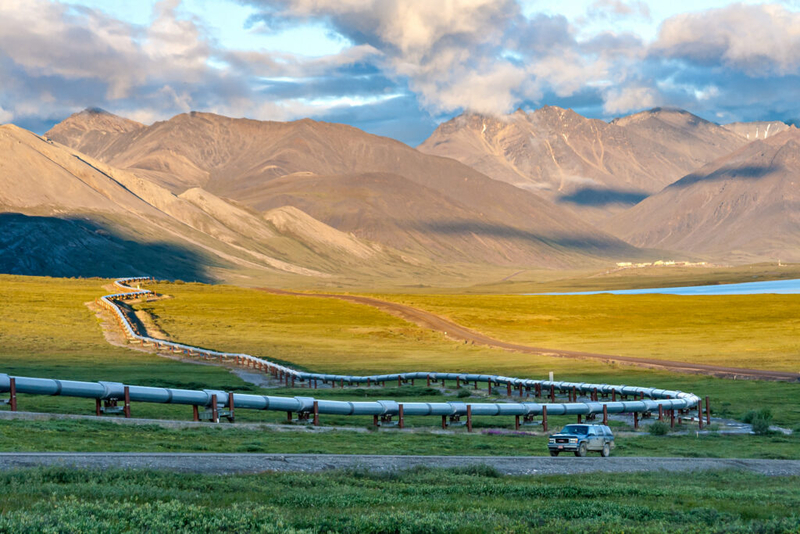
A vehicle drives past the trans-Alaska pipeline near Galbraith Lake on the Dalton Highway, Alaska. Pump Station 4 is visible in the background. (BLM Alaska photo by Craig McCaa)
During the current discussion about the public-private Alaska liquefied natural gas project, known as Alaska LNG, lawmakers and the public have focused on the many unknowns surrounding the financing and cost of the project. But a more important question may be who ultimately controls whether the project gets built.
The three major North Slope oil and gas producers – ExxonMobil, ConocoPhillips and Hilcorp Alaska – still hold all the cards, as they have for decades. They control the gas and have the financial resources, technical expertise and marketing capacity needed to build a project of this scale. The bottom line is clear: the companies that control the gas can also control the project if it is in their interest to do so.
For now, the producers have agreed to supply gas to the Alaska LNG project through confidential gas sales precedent agreements — sale terms and any conditions for reaching a final shipping contract are unknown. Historically, the gas producers have declined to supply gas for a project in which they did not have an ownership stake and that did not meet the terms they requested from the state.
In 2009, ExxonMobil conditionally partnered with a private developer on a different North Slope natural gas pipeline proposal. In a Petroleum News article at the time, an ExxonMobil representative said full producer participation depended on the state providing “predictable and durable fiscal terms.” As the failed 2006 Stranded Gas Fiscal Contract and the 2014 Alaska LNG Heads of Agreement between the state and producers show, “predictable and durable fiscal terms” have meant fiscal certainty, tax reductions, regulatory certainty and other conditions the producers believe are in their interest. For example, the property tax reduction legislation now before the legislature is one of the conditions producers have previously sought before committing to a gas project.
The Alaska LNG public-private project structure does not preclude the producers from joining the project in the future and assuming control over its development . According to an April 2025 Alaska Gasline Development Corporation fact sheet, ExxonMobil, along with Goldman Sachs, introduced AGDC to the private developer Glenfarne. ExxonMobil may have an incentive to control a gas project because it holds the majority of rights to the gas-rich Point Thomson field. If Alaska LNG cannot move forward without greater producer involvement, ExxonMobil, ConocoPhillips and Hilcorp Alaska will be in a position to decide whether, when and on what terms they step in.
Unless Glenfarne and AGDC have found a solution that has eluded other gas project proponents over the years, it is doubtful the Alaska LNG project can succeed without the producers taking on a larger role beyond supplying gas. Before advancing legislation that could shape Alaska’s finances and energy future for years to come, lawmakers should require full disclosure of the North Slope producers’ expected role in Alaska LNG, the terms they seek from the state and the risks the state could be asked to assume. Many Alaskans want a successful gas project, but it should not come at the cost of giving away much needed public revenue or making concessions to the detriment of Alaskans’ interests.

Juneau