Tennessee taxpayers could foot bill for some SNAP costs if state’s error rate doesn’t improve
Jun 29, 2026 | 6:03 am ET
Description
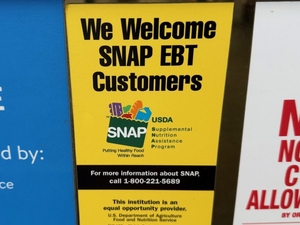
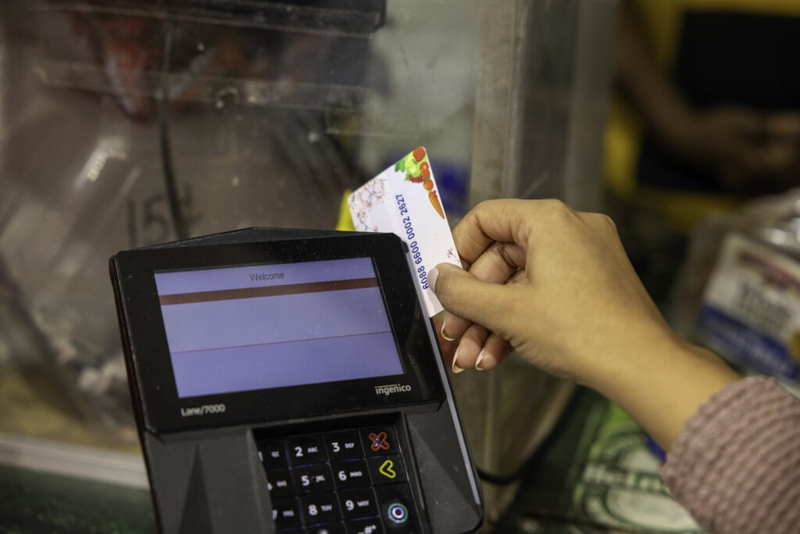
Tennessee could be on the hook for tens of millions of dollars in Supplemental Nutrition Assistance Program funding by October 2027 under a new rule imposed by the One Big Beautiful Bill Act, unless the state improves its SNAP payment error rate. (Photo: U.S. Department of Agriculture)
Tennessee could be on the hook for tens of millions of dollars in Supplemental Nutrition Assistance Program funding next year unless the state improves how it manages the program.
Tennessee’s SNAP payment error rate — a measure of the number of households that receive either more or less food assistance than they are entitled to — came in at 9.44% in the 2025 fiscal year, according to data released by the U.S. Department of Agriculture Wednesday.
Tennessee’s overpayment rate for 2025 was 7.84%, and its underpayment rate was 1.60%, according to the USDA.
Under the One Big Beautiful Bill Act, states with error rates that exceed the 6% goal set by Congress will be financially penalized starting in October 2027. States with error rates between 8% and 10% could be required to pay 10% of the state’s SNAP benefit costs, which are historically federally funded.
That could mean Tennessee’s state budget will have to find room for an additional estimated $162 million to $171 million to fund its portion of the program, according to an analysis by The Sycamore Institute, a nonpartisan public policy research center. These estimates assume that Tennessee will continue to issue the same amount of benefits as it did in 2024 or 2025.
The USDA specifies that SNAP error rates are not indicative of fraud in the program, which helped feed 682,128 beneficiaries in Tennessee as of June 2025, according to department data. In Tennessee, many rural counties have the highest SNAP participation rates.
“Payment accuracy errors in SNAP are largely unintentional” and are due to administrative mistakes or errors in eligibility, the USDA states on its website.
“These payment error rates are further proof that state accountability is severely lacking in SNAP,” Agriculture Secretary Brooke L. Rollins stated in a news release. “USDA has taken historic action to help interested states curb SNAP waste, and I hope other states, regardless of political leadership, prioritize needy families and the American taxpayer over politics.”
The Tennessee Department of Human Services, which manages SNAP in the state, did not respond to a request for comment.
States can choose to use error rates from either 2025 or 2026 to calculate how much they’ll need to contribute. If Tennessee manages to slash its payment error rate to below 6% by the end of the 2026 fiscal year in September, the state won’t be required to put up matching funds.
States with error rates between 6% and 8% must cover 5% of their recipients’ costs. States with error rates between 10% and 13.34% will be responsible for 15% of program costs. A handful of states whose error rates top the 13.34% threshold will be given an extra year to improve administration before the cost-sharing requirement takes effect.
What does this mean for SNAP recipients in Tennessee?
Robin Yeh, policy director at The Sycamore Institute, said the new cost-sharing rules won’t necessarily change the amount of benefits people receive.
“It might change exactly how the state verifies that they’re eligible for those benefits, especially if the Department of Human Services is thinking of ways to lower that payment error rate or have better quality control in their processes,” she said.
The Tennessee Justice Center, a nonprofit advocacy organization and law firm, assists people whose SNAP benefits have been denied or underpaid.
“We have seen a lot of people being underpaid recently, but occasionally the state does overpay individuals, and when they do this … the state will go back to that individual and claw that money back in one way or another,” said Signe Anderson, the Tennessee Justice Center’s director of nutrition advocacy.
After One Big Beautiful Bill Act, 100,000 Tennesseans’ lose SNAP food aid
Individuals may be required to pay back overpaid funds on a payment plan, or could be banned from the SNAP program if they can’t return the money. But when the state underpays a SNAP recipient, it’s up to the recipient to catch the error and make an appeal.
Anderson said the new cost-sharing requirement doesn’t minimize the error rate problem.
“Will the state be able to afford and pay the millions of dollars that are going to be necessary to get people the benefit amount that they deserve and that they’re entitled to? It’s unclear as to whether or not the state will provide that money in the budget.”
Anderson said the SNAP program is “complicated and weedy,” and prior to the One Big Beautiful Bill Act’s passage, changes to SNAP work requirements without detailed guidance from the USDA further muddied the process. The changes meant people who once had waivers for work requirements — like families with children, seniors, veterans, unhoused individuals, children aging out of foster care — were no longer exempt.
“When you add all these layers of bureaucracy and paperwork, it’s more work to check, and when you have more administrative burden to check, it makes it difficult to get to the end of an individual case without making errors,” Anderson said.
Since those changes, Tennessee has seen more than 100,000 people lose access to SNAP, Anderson said.
“It’s not because jobs are readily available and people are doing just fine. Inflation continues to be at an all-time high, jobs and employment has remained pretty much the same,” she said.
Nashville, TN