As temperatures soar, so do calls for help paying utility bills
Jul 06, 2026 | 5:12 pm ET
Description
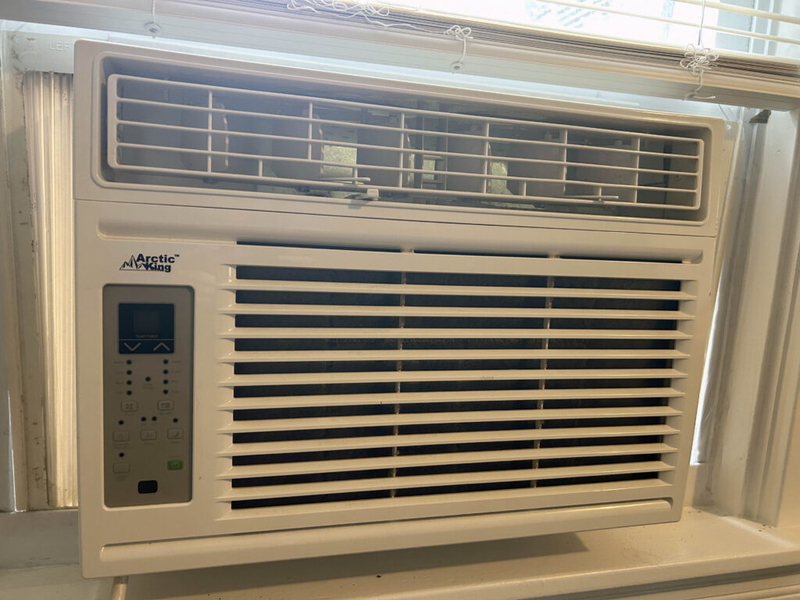
Inflated energy costs and record heat are putting more pressure on ratepayers who must pay their bills — or else lose power. (Photo by Nancy Lavin/Rhode Island Current)
The George Wiley Center’s voicemail inbox can no longer handle all the after-hours calls from seniors, single-parent families and other residents in danger of losing electricity due to unpaid bills — or already without it.
“People are in crisis,” Camilo Viveiros, executive director for the Pawtucket consumer advocacy group, said in an interview Monday. “At this point, it’s not unusual that we come in the morning and we have 40 messages of folks that have called overnight.”
The Wiley Center inbox is just reaching its 40-message limit. But Rhode Island’s supply of natural gas has long been under infrastructure constraints that put the Ocean State toward the undesirable top of the list of highest state electricity prices.
Now that protections against utility shutoffs during cold weather months have ended, inflated energy costs and record heat are putting more pressure on ratepayers who must pay their bills — or else lose power.
More than 2,700 Rhode Island Energy customers already had their electric or gas service shut off in May due to nonpayment, according to monthly reporting submitted to the Rhode Island Public Utilities Commission. Another 50,000 gas and electric customers were sent letters warning of shutoffs if they didn’t pay. Electric customers who were disconnected in May had an average balance of $3,250, while the average balance for gas customers who lost connection was $3,835.
Consumer advocates estimated in September 2025 that 5,000 residents were at risk of utility shutoffs if Rhode Island Energy stopped its pandemic-era practice of giving customers more time to pay overdue bills. State regulators agreed to the company’s request to phase out flexible debt repayment options starting Jan. 1, but customers were still shielded under the six-month winter moratorium, which prevents shutoffs from Nov. 1 to May 1 each year.

The end of moratorium protections coincided with a surge in calls, both to the George Wiley Center and to the United Way of Rhode Island’s 2-1-1 hotline. The latter reported more than 5,700 energy-related calls to its 24/7 support line in May and June — nearly five times the 1,184 utility bill-related calls in May and June of 2025, even though the same shutoff protections ended May 1, 2025.
What changed?
Electric bills usually drop during the summer due to more favorable market prices, but this year, seasonal rate reductions for Rhode Island Energy customers were offset by higher fees and the expiration of one-time discounts during the first three months of the year. The war in Iran also drove up oil prices.
“It’s a little bit of a perfect storm in a lot of ways,” Cortney Nicolato, United Way president and CEO, said in an interview Monday. “It’s a combination of all of these factors that really made for the current crisis we’re in.”
Viveiros fears the problem will only intensify as hot weather persists and ratepayers reach their financial limits. Seniors and people with medical conditions are especially vulnerable to serious health consequences if they lose power during a heat wave, Viveiros said.
“We think of people freezing in the winter if they can’t afford to pay their bills, but because of the state moratorium, we’re able to protect most people,” Viveiros said. “Summertime is really the biggest problem. AC is just not something that’s optional anymore.”
We think of people freezing in the winter if they can’t afford to pay their bills, but because of the state moratorium, we’re able to protect most people. Summertime is really the biggest problem. AC is just not something that’s optional anymore.
Lawmakers proposed giving more time to people who are disabled or seriously ill, as determined by a doctor, to pay overdue utility bills before risking shutoff. But the pair of bills by Sen. Meghan Kallman and Rep. Cherie Cruz, both Pawtucket Democrats, never advanced out of committee. Other legislative attempts to keep energy bills in line for vulnerable residents, such as a discount program that limits total costs for the lowest-income ratepayers, have also stalled in recent legislative sessions.
The push for a Percentage of Income Payment Plan, a long-held priority of the George Wiley Center, may come to fruition anyway. Rhode Island Energy as part of its proposed increase in gas and electric service charges — separate from market-led supply prices — has also suggested reworking the discount program. A tentative settlement signed by state regulators, Rhode Island Energy, and various stakeholders including the George Wiley Center, sets up a five-tier discount program that caps electric bills at roughly 6% of total income for the lowest income-ratepayers, based on federal poverty guidelines.
But the proposal, which also requires approval by the Rhode Island Public Utilities Commission, calls for a March 1, 2027, start date. Which means little relief for those struggling to stay ahead of a looming shutoff this summer.
Short-term relief
Recognizing the increased need for help, the United Way is extending the deadline for low-income ratepayers to apply for grants to help pay their energy bills until July 31. The Good Neighbor Energy Fund, sustained by philanthropic donations including from Rhode Island Energy, offers one-time grants of up to $600 for gas and electric bills, or $825 for oil and propane costs, for income-eligible applicants.
The original deadline to apply was June 30 — already extended one month from the typical May 30 sunset, Nicolato said. The program was intended to help offset winter energy costs, but organizers tried to accommodate increased demand for summer bill relief this year — an “easy decision,” she said.
The United Way has distributed nearly $216,000 in energy grants to 937 applicants since January, with more than half of funds distributed in May and June, according to information provided by United Way. There is more than $150,000 left in the Good Neighbor Energy Fund as of Monday, July 6.
Rhode Island Energy also offers assistance programs, including debt forgiveness, discount rates, and payment plans for customers — demand for which has also increased in recent months, said Michael Dalo, a spokesperson for Rhode Island Energy.
“We recognize that affordability remains a challenge for many Rhode Islanders, and we encourage customers who are having difficulty paying their bills to contact us as soon as possible to find the right solution for their situation,” Dalo said in an email Monday.
But, often ratepayers don’t know about the help until it’s too late, Viveiros said.
“Unfortunately most people only find out about what’s available to them until they’ve had their utilities shutoff,” Viveiros said.
In addition to online education and weekly, in-person meetings, the George Wiley Center offers semi-regular “Know Your Utility Rights” clinics with lawyers from the Rhode Island Center for Justice to help ratepayers understand existing laws and programs meant to protect them against shutoffs. Recent clinics have drawn nearly twice the number of attendees — up to 30 — compared with last year, again pointing to heightened affordability pressure, Viveiros said.
The United Way has done a “significant” media campaign to make people aware of the Good Neighbor Energy Fund, including traditional radio and TV ads, along with digital ads, Nicolato said.
- 5:29 pmUpdated to include information on utility shutoffs and warnings as of May 2026.
Providence, RI