Supreme Court orders Maine House to restore voting rights to legislator censured for anti-trans post
May 20, 2025 | 4:04 pm ET
Description
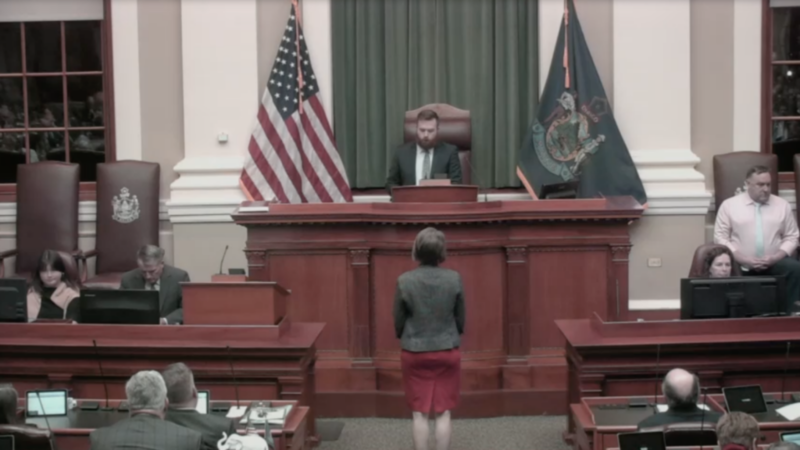
Speaker of the House Ryan Fecteau (D-Biddeford) reads the censure resolution to Rep. Laurel Libby (R-Auburn) in the well of the House after the majority of the chamber voted for the formal reprimand on Feb. 25, 2025. (Image via Maine Legislature live stream)
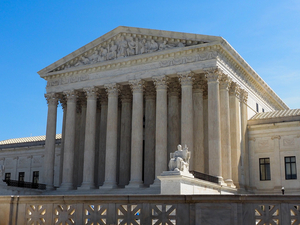
The U.S. Supreme Court on Tuesday granted an injunction overruling the Maine House of Representatives’ decision to block Maine Rep. Laurel Libby from voting or speaking on the chamber floor after she was censured for posting personal information about a transgender student on her legislative Facebook page.
In a statement, the Republican from Auburn said the ruling was “a victory not just for my constituents, but for the Constitution itself.”
“The Supreme Court has affirmed what should never have been in question — that no state legislature has the power to silence an elected official simply for speaking truthfully about issues that matter,” she said.
Libby has been barred from speaking on the chamber floor since late February, when the House voted 75-70 along party lines in favor of the censure, which would have ended if the legislator apologized to the body, which she has declined to do.
Libby petitioned the high court last month after the 1st U.S. Circuit Court of Appeals denied her motion for an expedited appeal to end the censure, which she argued disenfranchised her constituents.
The ruling was issued by the so-called “shadow docket,” which is traditionally how the court handles procedural matters and does not involve extensive hearings or arguments, and the decisions often come with little-to-no explanation. There was no opinion issued in Libby’s favor.
However, Justice Ketanji Brown Jackson penned a dissenting opinion, arguing that the case raised a number of important questions about the rights of state legislatures to enforce its rules that the court “neither addressed nor answered.” She also questioned whether Libby’s appeal actually warranted emergency relief.
“Not very long ago, this Court treaded carefully with respect to exercising its equitable power to issue injunctive relief at the request of a party claiming an emergency,” Jackson wrote. “Those days are no more. Today’s Court barely pauses to acknowledge these important threshold limitations on the exercise of its own authority. It opts instead to dole out error correction as it sees fit, regardless of the lack of any exigency and even when the applicants’ claims raise significant legal issues that warrant thorough evaluation by the lower courts that are dutifully considering them.”
“Also, as a practical matter, it is plainly prudent to reserve our emergency docket for applicants who demonstrate that they truly need our help now,” Jackson added.
Justice Sonia Sotomayor also said she would have denied the application.
The Facebook post at the heart of the dispute is credited with kicking off a firestorm that has since led to the U.S. Department of Justice suing Maine over its protections for transgender students.
Days after Libby’s viral post, which contained the name and image of a transgender student athlete, President Donald Trump threatened to withhold funding from the state for not complying with his executive order seeking to ban transgender women from competing in sports that correspond with their gender identity.

Augusta, ME