Supporting Alaska’s children means supporting Alaska’s schools
May 06, 2026 | 7:30 pm ET
Description
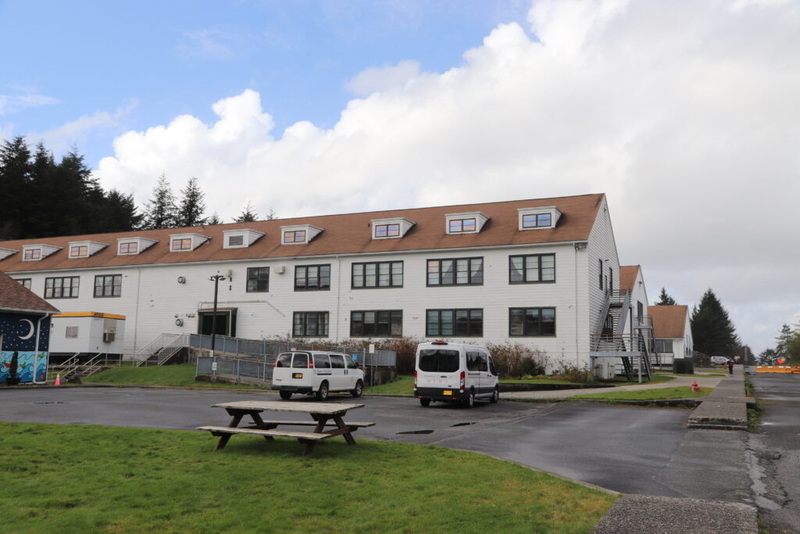
Mt Edgecumbe High School student dormitories are seen on Oct. 6, 2025 (Photo by Corinne Smith/Alaska Beacon)
We are a Kodiak family with four children, ages 9 to 17, and have experienced a wide range of educational options in Alaska. Our experiences show me that Alaska’s schools need support to better serve our children.
Our children have attended private Catholic and Christian-based schools, local public schools and boarding school at Mount Edgecumbe. I have also worked in roles that gave me direct experience with private and tribally led preschools.
We watched as enriching programs disappeared due to budget cuts, and saw situations where students lacked consistent access to basic necessities because of safety concerns, with no real solution on how to help them receive the necessities being blocked from them because of poor staffing.
In the classroom, we encountered teaching that ranged from uninformed to openly harmful. There were moments of ignorance, and others marked by clear racist undertones and blatant misinformation. When concerns were raised, responses were often minimal, not always from a lack of care, but because the systems in place made meaningful follow-through difficult.
I could write an entire separate piece on what our children experienced, some of it frightening, much of it unacceptable. But it is important to say that in every school, there were teachers and caregivers who still showed up every day for their students and did their best. Too often, their hands were tied by limited resources, and competing demands.
In the end, to keep our children safe and supported, we felt we had no choice but to homeschool.
Like many of us this is not theoretical for our family. This is lived.
What we have learned is that the challenges in our schools are not isolated. They are not limited to one district or moment in time. They reflect something deeper in how our education system was built and how it continues to function today. To understand where we are now, we must look at that foundation.
Alaska’s education system was shaped by the boarding school era and the “Kill the Indian, Save the Man” philosophy, coined by Richard Henry Pratt, which used schools to strip identity and enforce compliance. English-only policies were enforced throughout much of the early and mid-twentieth century under federal schooling systems established after the Nelson Act of 1905, and it was not until 1978, with the Indian Child Welfare Act, that the forced removal of Indigenous children from their homes began to slow.
This isn’t detached history. Its structures still echo through our schools today, in how they function and in the harm that continues to ripple through our communities.
Alaska’s people come from thousands of years of sovereignty; systems of knowledge and education are rooted in the land. These knowledge systems were intentional, place-based, and designed to raise capable, connected humans. Unfortunately, these knowledge systems were replaced by structures never intended to serve Alaska’s children.
That truth can be difficult to face, but it explains why the challenges we see today persist. Many of Alaska’s broader issues are deeply connected to education. When children are required to be in a system from a young age, that system has the power to support them or harm them. Too often, when harm occurs, the response prioritizes compliance over understanding.
When students are failed by the school system, we have to ask what system they are pushed into next.
My work as a cultural educator centers Indigenous histories and the next generations of children. It is grounded in the belief that supported children grow into capable adults. These issues do not only affect Indigenous students. They affect us all.
So, the question becomes, how do we move forward?
It starts with real support. We need honest conversations about past decisions, current funding and long-term change. At the most basic level, schools need enough resources to safely support children. When they do not, harm occurs and is too often left unaddressed due to understaffing and a lack of support systems.
We must also move away from one-size-fits-all solutions. Alaska is vast. Our communities are distinct, and the impacts of colonization vary. Each community holds its own knowledge, its own Elders and its own ways of caring for its people. Decisions made from a distance often create barriers for both teachers and students.
Teachers need space and support to grow in ways that meet their communities. Students need access to activities that keep them connected and engaged. Cultural learning should be recognized as meaningful and essential, not elective.
We also need to face a difficult truth. Teachers are being asked to serve as educators, caregivers, counselors and first responders for children facing abuse, neglect and hunger, while being paid less than many who shape education policy. This is not sustainable. It is not just.
If we continue this path, the consequences will grow — showing up in addiction, incarceration and a workforce unprepared for a changing world. When we talk about the health of our communities, we are talking about our children.
This cannot be fixed in a single legislative session or with one budget decision. It requires long-term commitment, even when the conversation fades.
The decisions being made now ask whether we are willing to invest in our future while facing the uncomfortable truth. That the system we have been funding since the beginning of American schooling in Alaska was not built with Alaska’s best interests in mind.
Our teachers are intelligent, creative and deeply committed. We cannot keep asking them to give more while taking away the resources they need.
If we are serious about supporting our children, we must do more than maintain what exists. We must be willing to change it.
Because our children and teachers deserve a system that genuinely supports them, not one that feeds the private agendas of others.
Juneau