‘Super El Niño’ could make Arizona’s already brutal summers even worse, climate scientists warn
May 28, 2026 | 11:24 am ET
Description
(Photo by Getty Images)
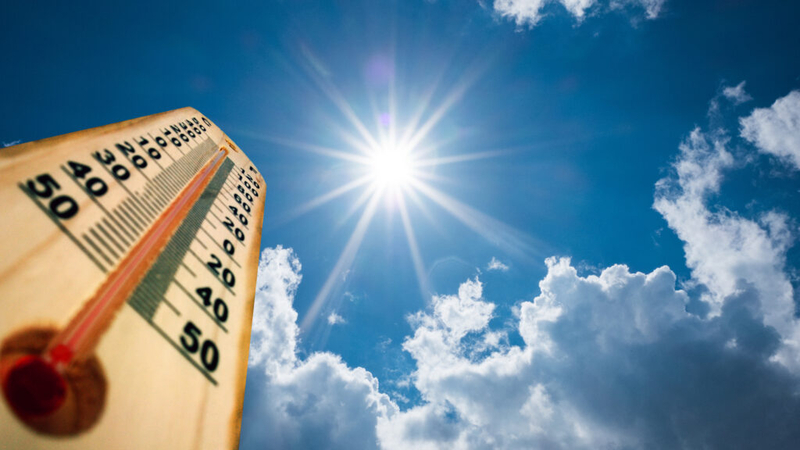
Experts say that Arizona this year is likely to see more of the record-breaking heat, deadly flooding and intense wildfires that have marked recent summers — and it could be even worse, thanks to the strong El Niño expected.
“It has been one of the biggest weather stories we have seen,” Shel Winkley, a meteorologist at Climate Central told reporters Wednesday about the “Super El Niño” that has been forming in the Pacific Ocean. Winkley, along with other climate scientists, spoke with reporters as part of a panel put on by Climate Action Campaign.
El Niño is the term used for a climate pattern that forms in the Pacific Ocean associated with warming of ocean temperatures in the central and eastern Pacific that impacts weather worldwide. A strong El Niño is often associated with dryer and warmer conditions in the northern United States, while causing increased flooding in the Gulf region and Southeast.
The El Niño currently forming is breaking all records and could be the largest ever, potentially creating unprecedented weather extremes. The last significant El Niño was in 2023, which saw record-breaking summer heat; those records were later shattered in 2024 when the max temperature in Phoenix sat at or above 100 degrees for approximately 30% of the year.
In 2024, Phoenix experienced 113 consecutive days of 100 degrees or hotter, the longest run ever recorded. The next highest run was 76 days in 1993, followed by 66 days in 2023.
The state itself has seen a 3.4 degree Fahrenheit shift in the annual average temperature since 1970, according to Winkley and Climate Central. That upward trend has also been associated with a sharp decrease in annual precipitation, which has dropped 2.7 inches in the same time frame.
Forecasts for this summer show that the state is likely to experience drier and hotter temperatures, with a potential for increased precipitation towards the tail end of the summer.
“We are waiting on pins and needles to see how this comes together,” Michael Crimmins, a climate science professor at the University of Arizona, told reporters, adding that the precipitation outlooks have offered a “little hope.”
While the predictions suggest that Arizona could see higher precipitation in June, July and August, Crimmins said he believes that it is likely to be delayed to late August or early September, based on his analysis of past El Niño years.
In 2023, when the state was breaking heat records the state was experiencing a “moderate El Niño,” which was much less intense than this year’s “Super El Niño” that climate scientists anticipate will have far-reaching global effects.
These extreme weather events have real world consequences for Arizonans.
Just last year, Globe experienced major flooding that killed four people and devastated the small mining community. The town has been trying to get state funds to repair the damage as the Federal Emergency Management Agency has refused to assist the tiny town.
That lack of help from FEMA is part of why people like Juan Declet-Barreto with the Union of Concerned Scientists are calling this summer the “triple danger season.”
“We are seeing a compromised (National Oceanic and Atmospheric Administration) that is still reeling from staffing cuts and shortages,” Declet-Barreto told reporters, noting that FEMA and other federal agencies have seen deep budget cuts at President Donald Trump’s direction.
NOAA has largely been responsible for helping predict large storms as well as other climate related events, including in space. Trump’s administration has proposed to cut the agency by 40% ahead of hurricane season.
Extreme weather, attacks on the scientific community and adding in a lack of affordability for housing or energy creates that “triple danger” that Declet-Barreto is worried about for Arizonans heading into the summer months.
Climate change and the increased heat, drier conditions and stronger storms will have other impacts, as well.
Vector-borne illnesses — those transmitted by mosquitoes, ticks and fleas — are seeing a rise due to man-made climate change. Shifting climate patterns have allowed for the insects that carry diseases to spread farther and wider than ever before, impacting new populations.
Illnesses like malaria, Lyme disease and the West Nile virus have all seen their numbers increase, with climate change being cited as a major contributing factor.
Add to Arizona specifically that more heat, less rain and more construction also translates to an increase in coccidioidomycosis, also known as Valley fever, which is caused by an airborne fungus. Its spread is exacerbated by heat, dry conditions and construction in desert areas.
Those impacted by those diseases may get little reprieve as well as wildfires, made more aggressive by the drier conditions created by climate change, are likely to get bigger. And the number of days that the state is at risk of wildfire has increased between 40 to 60 extra days a year due to those drier conditions, Winkley said.
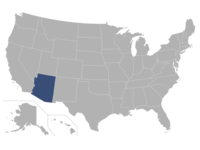
Phoenix, AZ