New law will enhance emergency response for people with disabilities
May 28, 2026 | 5:26 am ET
Description
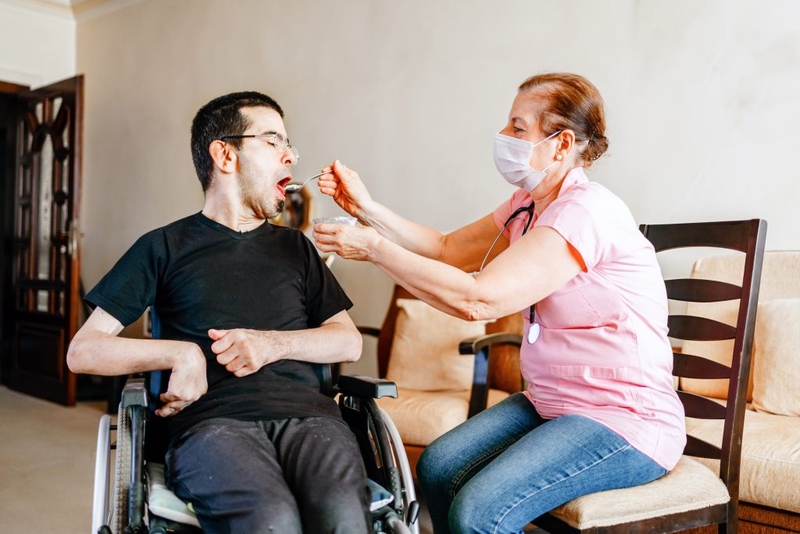
A caregiver feeds a disabled man in a wheelchair. (Photo by Getty Images)
Two things inspired Del. Leslie Mehta, D-Chesterfield, the most when she sought public office: her now-deceased eldest daughter Brooke and her passion for healthcare policy. Both converged in the first piece of Mehta’s legislation to be signed into law by Gov. Abigail Spanberger.
House Bill 1370, she said, is about “making sure that those with disabilities and those who are caregivers of people with disabilities have regulations in place to be prepared for emergencies.”
The bill directs the Department of Behavioral Health and Developmental Services to adopt regulations requiring certain healthcare providers to conduct regular simulations so that employees are extra prepared to identify and respond to emergencies experienced by people with disabilities under their care.
A 2025 report by the Disability Law Center of Virginia that had explored gaps in oversight or emergency response for people with intellectual or developmental disabilities galvanized the legislative effort, Mehta added.
The report examined sudden and unexpected deaths of people receiving services licensed by DBHDS, which found that in nearly half of reviewed cases, staff delayed or failed to perform CPR or call 911.
“In the majority of cases that we reviewed, emergency response was delayed due to the panicked and chaotic response of staff, who sometimes failed to call 911, called their supervisors first, or even left the house in panic,” a press release from the center stated.
“(The new law) can save about seven lives per month,” Mehta said the center estimated. “I’m incredibly excited about that fact.”
Mehta navigated disability-related healthcare hurdles personally for five years as Brooke coped with Rhett’s Syndrome, a rare neurological disease.
Brooke’s disability made her eligible for Medicaid, which the family used to offset costs related to her care and mobility devices that improved her quality of life before her death.
As the freshman delegate’s youngest daughter, Blair, watched her mother’s first bill signing on Tuesday, Mehta said healthcare policy continues to be a priority for her, fellow lawmakers, and the governor.
Spanberger also signed HB 225 by Del. Patrick Hope, D-Arlington, last month. That bill will convene a task force to evaluate the effectiveness of the state’s Marcus Alert system.
The statewide framework for crisis response, which has taken years to implement in localities, stemmed from a 2018 incident where Richmond resident Marcus-David Peters was killed by a police officer while in the throes of a mental health crisis.
Other healthcare bills that crossed the finish line this year range from health insurance reforms to maternal health and mental health support.
Lawmakers have proposed millions in healthcare funding in the next state budget, which must be finalized by the end of June and is set to take effect July 1.
Richmond, VA