SupCo ruling on AG holds court can discipline lawyers elected to office
Jan 02, 2026 | 6:59 pm ET
Description
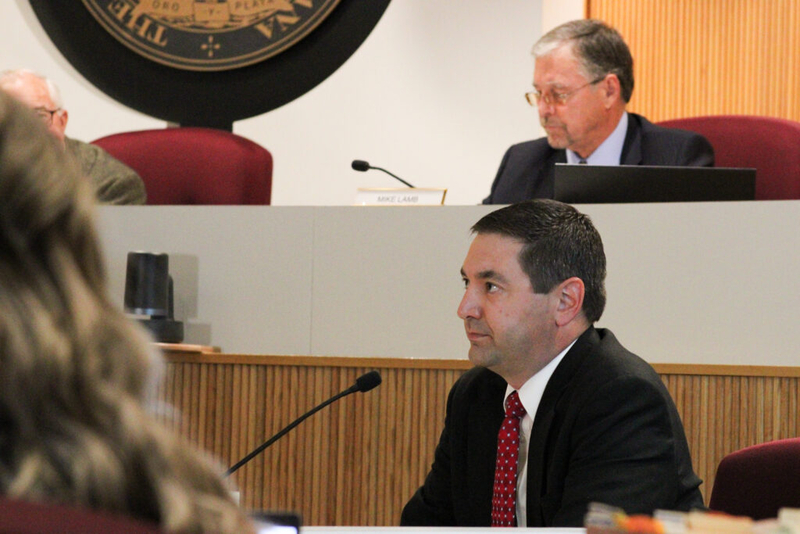
Attorney General Austin Knudsen on the stand at his Commission on Practice disciplinary hearing on Oct. 9, 2024. (Photo by Blair Miller, Daily Montanan)
Although a majority ruling by the Montana Supreme Court dismissed a larger professional misconduct case against Attorney General Austin Knudsen, the court opinion created a new precedent in stating that the Attorney General “is subject to regulation under the Commission (on Practice) and this Court’s authority to regulate the practice of law.”
The case against the AG has stretched back to a 2021 dispute between the Legislative branch and the state Supreme Court and ultimately embroiled all three branches in murky allegations of impropriety, focusing on Knudsen’s actions while defending the Legislative and administrative branches.
In 2023, the Office for Disciplinary Counsel, which handles discipline for members of the state bar, filed a complaint alleging Knudsen broke rules of professional conduct in 41 separate counts — which Knudsen’s lawyers described as a “political stunt.”
Subsequently, in 2024, the Commission on Practice, which regulates lawyers, recommended the state Supreme Court suspend him for 90 days. Knudsen is a Republican in his second term as AG.
In an order Wednesday, the Supreme Court, which included five district court judges as a majority of the state’s highest court recused themselves, dismissed the recommendation to suspend Knudsen, citing in part violations to his due process rights, although Justice Katherine Bidegaray dissented.
But the court had to grapple with a number of points in its deliberations, including arguments that Knudsen, as an elected official in the executive branch, couldn’t be regulated by another branch of government.
The court opinion, written by Chief Justice Cory Swanson, created precedent in stating that the Attorney General is subject to the Commission on Practice and ultimate jurisdiction of the Montana Supreme Court.
In recent years in Montana, Republicans including Knudsen have been highly critical of the judiciary.
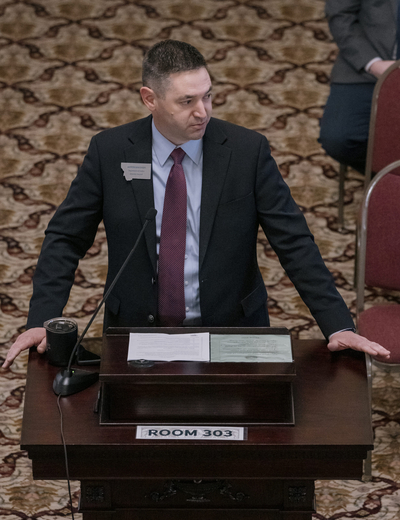
While the court asserted its own jurisdiction and dismissed much of the case against Knudsen, Swanson wrote that Knudsen’s actions “throughout the saga of 2021 were beyond what we have seen any competent attorney, let alone the Attorney General, do.”
Swanson added that the opinion of the court “suffices as the Court’s public admonition regarding the rule violations.”
“Moreover, we plainly warn all Montana attorneys, including Knudsen and his subordinates, to obey lawful orders of all courts,” the opinion said.
In the opinion, the court also addressed whether Knudsen had been afforded due process, and whether the allegations against him were factual.
In addressing the specific complaints against Knudsen, mostly related to disobeying court orders and making statements critical of the Supreme Court, the ruling found that Knudsen violated two rules of professional conduct, but that the Commission “failed to provide legal justification” and proof that he had violated three other rules of professional conduct.
However, the court also found several instances where Knudsen successfully argued that his due process had been violated.
In one instance, the Commission excluded an expert witness without allowing Knudsen time to respond to a motion, while in another the court stated that the Commission issued “inadequate conclusions of law.”
“This due process violation alone is sufficiently serious to vacate the Commission’s decision and remand it for a new proceeding or entry of an amended decision explaining its conclusions of law,” the ruling stated. But, “given the time, expense and turmoil that have exceeded all expectations in this proceeding, we have no intention of remanding this matter for another round.”
The majority opinion used those instances as reasoning for dismissal and for not disciplining Knudsen for the actions that were proven violations of the Rules of Professional Conduct, a justification Bidegaray described as “unprecedented” in her dissent.
In a statement, Knudsen expressed his appreciation for the Supreme Court “bringing this frivolous complaint to a long-overdue conclusion.”
“We’ve said it from the very beginning, this was nothing more than a political stunt,” Knudsen said.
DISSENT
While the five district court judges appointed to hear the case agreed with Swanson, Supreme Court Justice Katherine Bidegaray, one of the court’s newest members, dissented, arguing that finding a lawyer broke rules of conduct but refusing to discipline them weakened the court’s authority and erodes confidence in the legal system.
Bidegaray said the court record, and state precedent, don’t justify nullifying Knudsen’s disciplinary record “or insulating an elected attorney from professional accountability.”
While she concurred with much of the majority opinion, she added that she would hold Knudsen violated a third professional rule of conduct by disobeying a court order that “was prejudicial to the administration of justice.”
She also pushed back against the conclusions that Knudsen’s due process rights were violated by the Commission, and that none of the actions taken resulted in substantial prejudice against him — indeed a two-day hearing, plus the Supreme Court’s ability to review the written decisions, gave Knudsen his due process, she wrote.
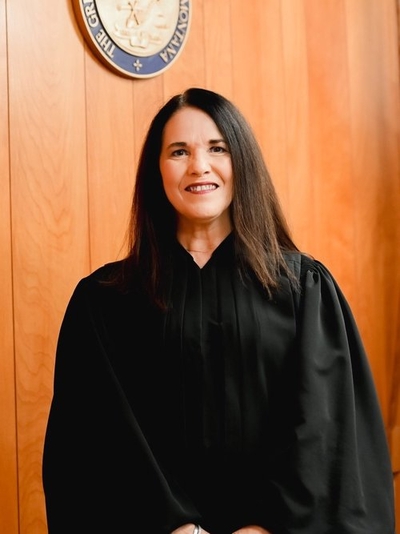
But Bidegaray’s biggest dissent came from the “unprecedented and extraordinary decision” to not discipline Knudsen for the professional violations the court agreed Knudsen committed.
“There has never been a case where this Court dismissed a disciplinary action while also holding that the attorney committed proven misconduct,” she wrote. “Until today.”
She added that dismissal ultimately nullifies the entire proceedings of the case, and “such a remedy is incompatible with our constitutional obligation to regulate the bar and protect the public.”
Bidegaray also pointed out some irregularities in how the Supreme Court handled the case, comparing them to ones made by Commission that were considered egregious enough to warrant due process violations.
“The Court appears to have a different standard for adherence to its own procedural rules in these proceedings,” she wrote.
Bidegaray wrote she would impose a public censure, a 30-day suspension and require Knudsen to pay for litigation costs.
“Discipline is not punitive; it is protective—of the public, the courts, and the profession—and serves to preserve confidence in the fair and orderly administration of justice,” she wrote.
In the majority opinion, Swanson noted Bidegaray’s dissent and stated that while her arguments could be correct, the failings by the Commission throughout the process — with due process requirements, and inadequate findings of fact and conclusions of law — precluded such a conclusion.
“When an attorney — from the newest associate in the smallest firm to the elected official who supervises more lawyers than any other in the state — faces a potential loss of professional licensing, then we expect the proceeding to carry the burden of persuasion and uphold the procedural due process standards written in the rules and in our caselaw,” Swanson wrote. “The Commission failed to do so in numerous respects here, and we only weaken our regulation of the practice of law if we overlook those violations.”
2025-pr-23-0496-0
Helena, MT