Michigan officials flag improper interactions between DOJ election monitors and poll workers
Nov 03, 2026 | 5:10 pm ET
Description
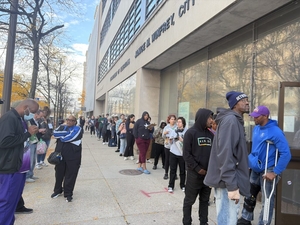
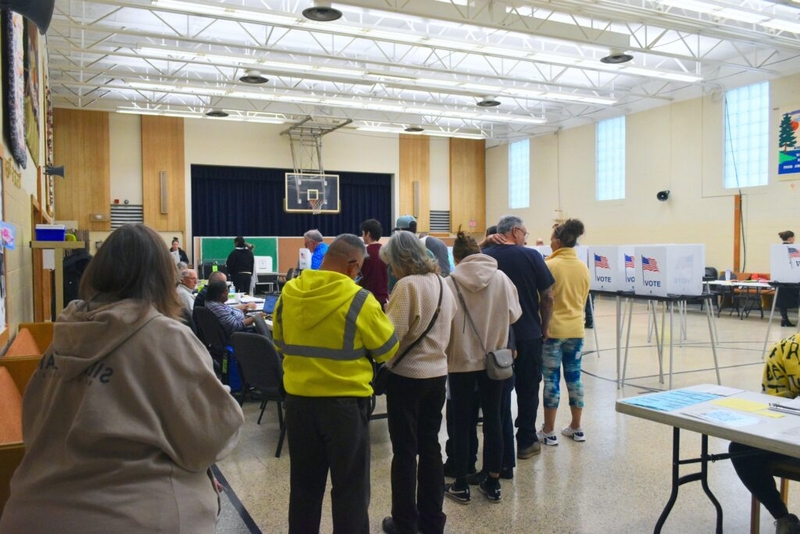
Voters wait in line on Nov. 3, 2026, at Bethlehem Lutheran Church in Lansing, Mich., one of several local polling places in Ingham County. (Photo by Ben Solis/Michigan Advance)
Michigan election officials say they contacted the U.S. Department of Justice on Tuesday after receiving reports that federal election monitors in Dearborn and Flint had questioned poll workers about their training, conduct which state officials said was outside the monitors’ legal authority.
Kim Bush, a spokeswoman for Michigan Attorney General Dana Nessel, said DOJ monitors in Dearborn asked poll workers for copies of their training materials, while monitors in Flint asked questions about how poll workers were trained.
The Michigan Department of State and Attorney General’s Office contacted the DOJ’s Michigan election monitor coordinator, who acknowledged the reported conduct was inconsistent with the monitors’ training and said the department would speak directly with monitors to clarify what they are permitted to do.
“That coordinator confirmed that this activity that the monitors were engaging in is not consistent with how the monitors were trained. and that they would follow up with the monitors on the ground in Dearborn to remind them of what they are not permitted to do and what they are permitted to do,” Angela Benander, spokesperson for the department of state, told reporters.
A request for comment was sent by Michigan Advance to the DOJ, but has yet to be returned. This story will be updated when a response is received.
Under Michigan law, DOJ monitors are generally limited to observing election procedures. They cannot question poll workers about their training or handle election materials. They also cannot enter a polling location without permission from the local clerk.
State officials said they had also received reports of DOJ monitors speaking with voters in Lansing but had no concerns about those interactions. The law permits monitors to speak with voters outside polling locations after they have cast their ballots, provided voters are told they are not required to participate, which the monitors reportedly did.
As of Tuesday afternoon, state officials said they had received no additional reports of concerning conduct by DOJ or congressional election observers and had not identified any significant problems beyond routine Election Day issues, such as equipment malfunctions.
“We have, it sounds like, pretty consistently high turnout,” Benander said during a 3 p.m. briefing. “But at this time, the report that we have to share is that things are running smoothly.”
Seventy-one DOJ monitors were assigned to polling locations in Detroit, Dearborn, Hamtramck, East Lansing, Grand Rapids, Flint and Warren.
Lansing, MI