Spending deal freezes Trump proposal to gain power over federal grants, extends highway law
Description
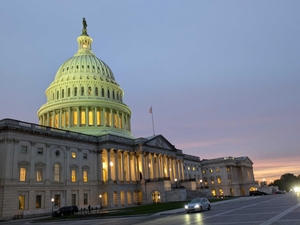
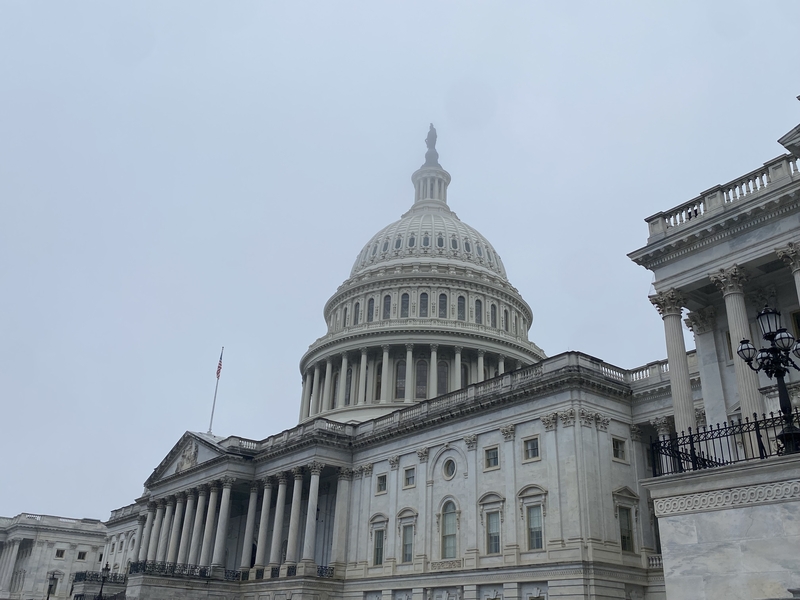
The U.S. Capitol building in Washington, D.C., amid fog on Tuesday, Dec. 10, 2024. (Photo by Jennifer Shutt/States Newsroom)
WASHINGTON —The U.S. Senate voted Monday to advance a bipartisan measure to keep the federal government funded through Dec. 11 and pause the Trump administration’s effort to add controversial new criteria for federal grants.
The agreement — which Senate Appropriations Chair Susan Collins, a Maine Republican, and Vice Chair Patty Murray, a Democrat from Washington state, released Sunday — would avoid an Oct. 1 government shutdown and keep federal spending at current levels, punting debates about full-year spending past the midterm elections. It would also extend authorization for the federal fund for highway and transit.
The Senate bill, which advanced 89-4, differs considerably from the more partisan stopgap spending measure the House passed last month, with Republicans providing nearly all the votes in support.
The Senate was scheduled to take a procedural vote Monday evening to advance the bill and, if that attracts more than 60 yes votes, would likely consider final passage this week.
In a statement, Collins said she worked with committee members of both parties and that the measure, known as a continuing resolution, or CR, excludes provisions that would doom its chances in the consensus-driven Senate.
“This CR is straightforward,” Collins wrote. “It continues current government funding levels until December 11th and includes necessary adjustments for programs like the Special Supplemental Nutrition Program for Women, Infants, and Children (WIC), vital national security programs, including shipbuilding across multiple vessels, and the Disaster Relief Fund. The CR also avoids any poison pills.”
Murray championed Democrats’ success in blocking provisions of the House bill that would increase spending for military action in Iran and allow transfers for immigration enforcement, while adding sections to extend housing and food assistance programs and a section blocking the proposed rule on grant funding.
“This bill includes important extensions and language that House Republicans’ CR did not, and it rejects Trump’s frivolous war spending wish list,” Murray wrote. “Importantly, we closed the loophole in House Republicans’ CR that would have allowed the Trump administration to transfer funding provided for other programs to Border Patrol, which desperately needs reform, not more money.”
The Senate bill would keep nearly all federal spending steady until Dec. 11, which would save lawmakers from the painstaking work of cobbling together the 12 annual spending bills — and taking potentially difficult votes on them — while freeing more time to campaign ahead of the November elections.
OMB proposal paused
It would also freeze until Dec. 11 the White House Office of Management and Budget’s proposed rule that Democrats have criticized for giving immense decisionmaking power to executive branch political appointees who would be empowered to confirm that federal grants align with the administration’s policy priorities.
House Appropriations ranking Democrat Rosa DeLauro said she was pleased to see the Senate bill block the rule from taking effect into December, but wanted a more permanent ban.
“While the bill temporarily blocks the proposed OMB rule, the fight must continue,” she wrote Sunday. “The Senate bill forces OMB to continue reviewing the half-million comments that were submitted, but Congress must permanently prevent this corrupt, harmful power grab before the new deadline of December 11.”
A draft of the rule, posted May 29, said the policy aims to downplay criteria based on diversity, equity and inclusion goals “and make merit-based decisions.”
Some Democrats, including those in Maryland’s congressional delegation, criticized the policy, saying it would create “arbitrary standards that are ripe for abuse” and “seeks to prohibit freedom of association, speech, and … international collaboration.”
More broadly, Democrats and some moderate Republicans objected to the power the rule would centralize in OMB and other executive agencies.
“The proposed rule would systematically politicize federal funding and allow Trump officials to cancel grants at any time for any reason,” Murray wrote. “Enabling this rule would only give Trump the greenlight to take even more federal funding hostage.”
In a July letter to OMB Director Russ Vought, Collins said she agreed with the principles of awarding grants based on merit, but that the rule would add a level of bureaucracy to grants that have already been approved by the scientific community and weaken Congress’ power over spending decisions.
“While I agree these principles should guide the administration and oversight of Federal funds, the rule would impose new, burdensome requirements on award recipients that would harm small and rural communities, undermine scientific and biomedical research, and conflict with Congress’ control over the federal funding process,” Collins wrote.
Road funding extended
The stopgap measure would also extend the major federal transportation trust fund through the duration of the bill.
The Highway Trust Fund sends set funding to state departments of transportation and local authorities to finance road and transit infrastructure.
Its authority to collect revenue, mostly through the federal gas tax, and send it to states is set to expire at the end of the fiscal year on Sept. 30. The continuing resolution would keep in place the contract authority level, about $80.2 billion per year, Congress approved in a 2021 law.
It would not, however, include the “advance appropriations” from the 2021 law that provided additional funding to several Transportation Department programs that disperse money to states and local governments.
Murray said she sought to have the $36.8 billion annual program extended, but was rebuffed by committee Republicans.
White House spokespeople did not immediately return a message seeking comment Monday.
All States Newsroom content is free to republish. Read our republishing policy for more information.