Trying to get the Stratos data center on the ballot, locals are now appealing to a judge
Jun 04, 2026 | 7:02 am ET
Description
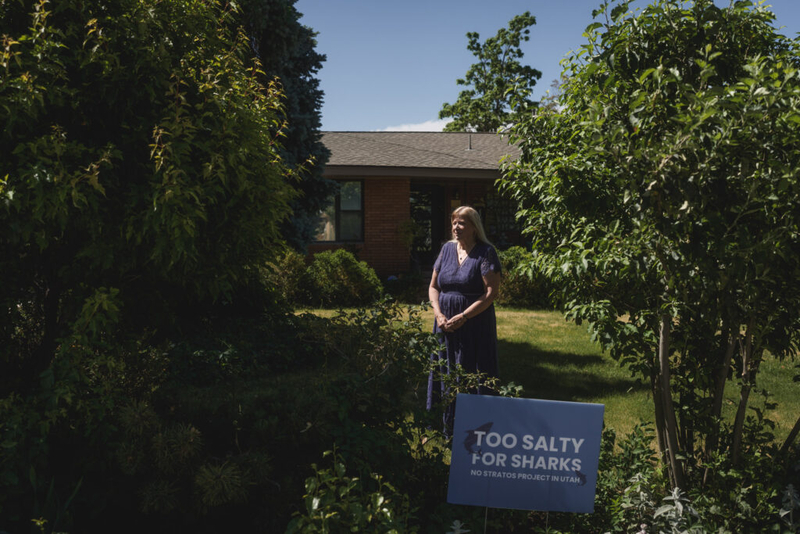
Brenna Williams, an organizer with Box Elder Accountability Referendum, which is opposing the Stratos Project data center, poses for a photograph outside her home in Brigham City on Thursday, May 28, 2026. (Photo by Spenser Heaps for Utah News Dispatch)
The group of citizens fighting a proposed hyperscale data center in their rural northern Utah county are taking their case to court.
The Box Elder Accountability Referendum group, or BEAR, wants voters to choose whether the project should go ahead after it got the green light from the county’s governing commission.
The citizen group on Wednesday filed an appeal in Brigham City’s 1st District Court, arguing the Box Elder County attorney got it wrong last week when he concluded he had to deny their applications for a referendum. BEAR alleges he did so “as counsel loyal to his client, the commission.”
“We told you all this fight isn’t over, and we meant it,” Brigette Cottam of BEAR said in a statement shared Wednesday.
In the eyes of County Attorney Stephen Hadfield, none of the resolutions the three commissioners approved can go to a referendum because they were administrative actions, rather than newly created laws. The attorneys for BEAR disagree, arguing the resolutions carried the force of law and involved matters of land development, property tax revenue and the environment.
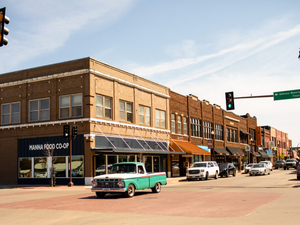
The plans for the massive Stratos project, backed by celebrity businessman Kevin O’Leary, flew high and fast before they crashed into Box Elder County, home to about 65,000 people. Thousands protested at the county commission’s May 4 meeting where the three-member panel voted in support of the data center project after first relocating to a private room to get away from shouting and disruption.
The proposal caught many Utahns by surprise after clearing a first round of approval from the Military Installation Development Authority, or MIDA, in a process free from significant public scrutiny. Its 40,000-acre footprint raised questions about impact to the environment and to northern Utah neighborhoods that were a focal point in protests at the Capitol and in community forums.
Box Elder County residents won’t get to vote on data center referendum, county attorney says
The idea of a massive data center with its own natural gas power plant amplified existing worries about a shrinking water supply and the drying Great Salt Lake. Sprawling Box Elder County, bordering Idaho to the north and Nevada to the west, holds a larger portion of the lake than any other county in the state.
Brenna Williams, one of the referendum backers, said Wednesday the project will have “consequences that will affect the lives of all of us, our children, and our grandchildren in communities across Box Elder County and beyond for many years to come.” She continued to say in a written statement that Utah’s constitution and legal precedent “give us the right to place this important decision back in the hands of the people — where the power should be — through the referendum process.”
Two top state leaders who championed the project’s promise in April have since traded in their enthusiasm for caution. After sustained public outcry and as he runs for reelection, seeking to fend off two Republican challengers, Utah Senate President Stuart Adams announced Monday he’s calling for the project to be scaled back by 75%.
The pivot by Adams caught O’Leary by surprise because the two had made a deal, the businessman of “Shark Tank” fame told The Salt Lake Tribune this week. O’Leary told the newspaper that Adams is “asking us to do a tasting kitchen. I’m not against it if it solves this problem.”
Adams had voted in favor of the project in April as a board member of MIDA, which is overseeing the project’s development. A spokesperson for the authority said Wednesday that “MIDA continues to respect the process and has no further comment.”
Gov. Spencer Cox fiercely defended the proposal in an April news conference before tempering his stance and announcing a phased approach to the project in May. The governor went on to sign an executive order last week that he said would raise the bar for how data center plans are evaluated by agencies under his purview, which include the Department of Environmental Quality.
A hearing in the appeal on the referendum has not yet been scheduled.
Salt Lake City, UT