Southeastern explains reasons for removal of Lake Maurepas researcher
Sep 30, 2025 | 3:22 pm ET
Description
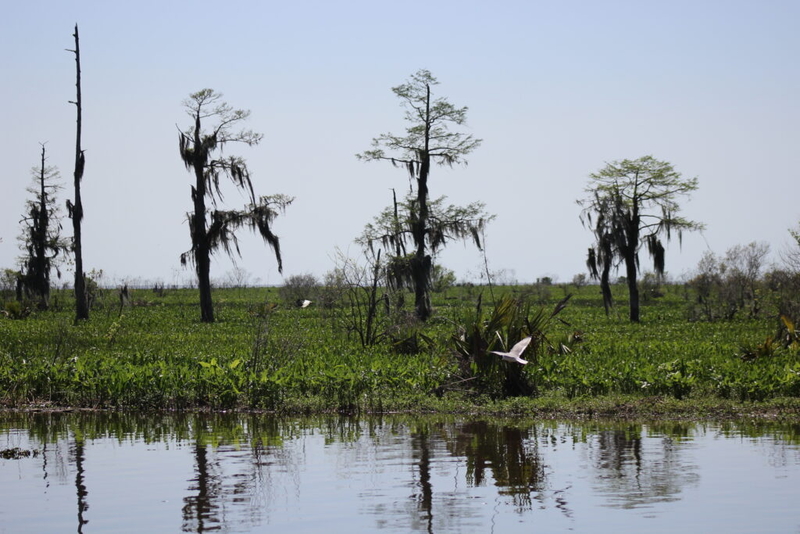
Cypress trees remain in the wetlands and swamps of Lake Maurepas. (Wes Muller/Louisiana Illuminator)
A professor who Southeastern Louisiana University administrators pulled from a project looking into water pollution was removed for not completing her work on time, according to internal documents and interviews with university personnel.
The researcher, Fereshteh Emami, an associate professor of analytical chemistry, was removed from the Air Products Lake Maurepas Monitoring Project this summer. The decision sparked backlash against the university because Southeastern didn’t immediately explain her removal, creating speculation she was removed because of her findings or outside influences. Air Products is pursuing a carbon sequestration project that would store the gas under the lakebed.
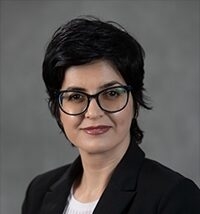
But Emami’s research never implicated Air Products in pollution of the lake, and the university stands by her findings, which were published in two open-source academic journals, Environments and ACS Omega. Rather, documents and emails indicate she was removed because she and researchers she supervised had fallen behind on sample analysis and stopped regularly visiting monitoring sites. Additionally, her boss claims she did not hire employees needed to complete the work and refused help from an administrator.
Other documents show Emami made complaints against her bosses stemming from a late revision to her research budget and an administrator’s payment request that she felt crossed an ethical line.
A little over a week after she learned of her removal, Emami received a letter from project director Kyle Piller, explaining his decision with a list of objectives and deadlines he said she failed to meet as a principal investigator on the project. At the time of her removal, Piller didn’t provide Emami with a reason for the decision.
“Southeastern Louisiana University’s decision to remove you from the Air Products Contract–Grant are strictly related to project management and execution of the project in a timely manner,” the letter stated.
The university denied the Illuminator’s public records request to see Piller’s letter, but Emami’s attorney William Most provided a copy of it and rebutted several of its claims.
“Almost a week after the university removed Dr. Emami from the project, she was told that the removal was for issues such as delays in data collection,” Most said. “It is implausible that this is the university’s true motivation: abruptly removing a project’s leader with no replacement does nothing to speed things up. We are working to determine the real reason for Dr. Emami’s removal and whether it is consistent with the university’s academic freedom principles and the law.”
Over the past three years, Emami led a team of researchers who analyzed 400 water and sediment samples collected throughout Lake Maurepas. The results set off alarm bells in communities around the lake because they showed high levels of pollution and heavy metals such as arsenic, cadmium and lead, among others.
Emami hasn’t yet taken legal action over her removal. She remains employed as a tenured professor at Southeastern.
In an interview, Piller said he wanted to give her an explanation but believed it was against university policy. When public outcry intensified over news of Emami’s removal, Piller got permission to provide her the information, he said.
Southeastern has monitored Lake Maurepas since early 2023. Air Products plans to use carbon capture technology to trap emissions from its hydrogen plant in Ascension Parish and inject them about a mile underneath Lake Maurepas. Many community residents, advocacy organizations and political leaders have voiced strong opposition to the plan from the start.
When the university refused to explain Emami’s removal, social media users began speculating without evidence that Piller and the university conspired with Air Products to suppress Emami’s research. Southeastern President William Wainwright called out the misinformation in a public message, and Piller criticized the Illuminator’s story on Emami’s dismissal for perpetrating a false narrative, which he described as impugning his reputation.
At the time of publication, the Illuminator was aware of some of Emami’s disputes with coworkers and possible reasons for her removal but did not explore these reasons in its initial story.
Factors for removal
Piller’s Aug. 4 letter to Emami detailed five factors that led to his decision to remove her.
The first was that in meetings the previous year in which administrators expressed concern over her lack of progress and staffing, Emami told them she didn’t have enough time to manage the project, Piller wrote. One of the administrators offered to help manage her team, but she declined, Piller wrote.
That administrator, Daniel McCarthy, then Southeastern’s dean of research, had offered to help Emami on a volunteer basis, emails show. Emami said she never refused his help and pointed to subsequent emails showing they collaborated for about two months until she noticed someone changed her research budget by adding a pay stipend for McCarthy.
In a recent interview, McCarthy said the added expense was the idea of Pat Moyer, then dean of the College of Science and Technology. Moyer insisted the research dean be paid a stipend from the project budget, McCarthy said.
It’s not unusual for grants to include supplemental pay for researchers affiliated with the project, though Emami said she never approved this expenditure. The dispute continued through March when McCarthy submitted a pay request for dates and times Emami claimed he never worked. She returned the request with a note asking him for clarity but got no reply, so she met with the university provost to try to resolve the matter, records show.
McCarthy said he wasn’t in that meeting and never saw Emami’s note, but he withdrew his pay request and his offer to help.
“We had gone out of our way to help her,” McCarthy said. “We agreed I would take a fairly modest payment … Then she rejected it, and I backed off.”
McCarthy is now the college dean, having replaced Moyer, who left Southeastern over the summer. Moyer didn’t respond to a request for comment.
‘Missed opportunity’
For the second point in his letter, Piller cited what he called a “severe delay” in Emami’s sampling and chemical analysis.
He said her last completed water and sediment analysis was in December, noting Southeastern’s grant contract with Air Products requires the researchers to demonstrate adequate progress on data collection.
Third, he cited three vacancies on Emami’s research team — one post-doctoral researcher and two full-time technicians. Funds were pulled from other budgets to help pay for the extra personnel, he wrote.
“Dr. Emami did advertise the positions and had many applicants, but ultimately Dr. Emami never hired anyone,” Piller wrote.
When the Illuminator first interviewed Emami for a June 19 article about her research, she mentioned concerns about a statewide hiring freeze Gov. Jeff Landry ordered. Emami said she didn’t seek a waiver to the freeze because she believed it would take too long. Documents the Illuminator obtained from the Division of Administration showed it quickly approved waivers submitted by universities. Southeastern did eventually get a waiver, but the freeze still slowed down the hiring process, Emami’s attorney said .
Fourth, Piller referenced Emami’s absence from a May 22 meeting to discuss the project and Air Products’ funding modification. The company wanted Emami to perform more monitoring of the rivers that flow into Lake Maurepas.
“All of the other principal investigators were in attendance, and Dr. Emami’s lack of a response or participation in the meeting is further evidence of her noncompliance on this project,” Piller wrote.
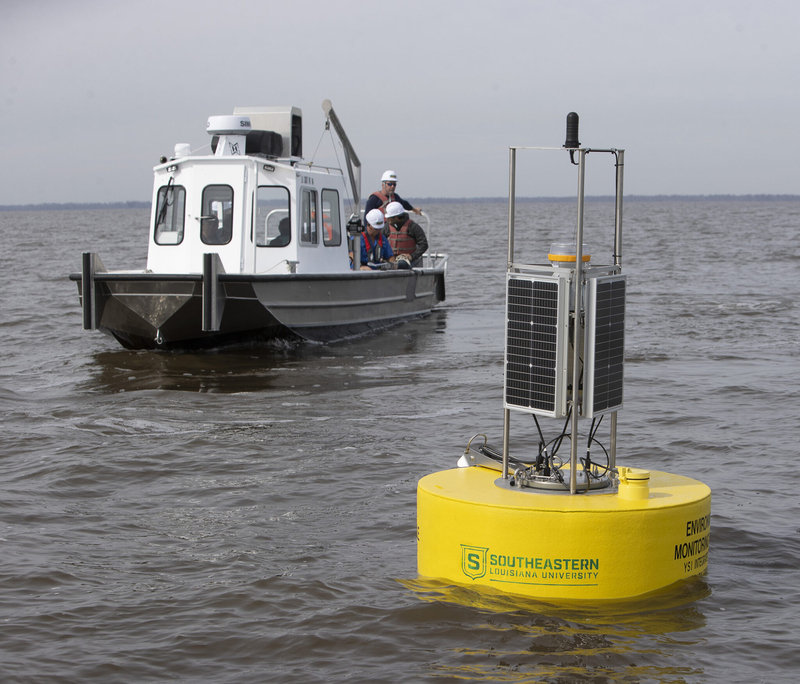
For his final point, Piller cited boat and vehicle logs from Southeastern’s Turtle Cove Research Station, located on Lake Maurepas, that showed little activity in the late spring and summer months. Most of the sampling locations are accessible only by boat. The logs, obtained through a public records request, show her team last checked out a boat on April 22 and last used a truck on July 16.
Piller also said Emami was behind on analyzing animal tissue samples he and other researchers had collected. This analysis would’ve allowed them to determine if crabs and fish in Lake Maurepas were suffering from heavy metal poisoning as physiological signs on crab shells were indicating, he said in a phone interview.
Emami said the student on her team trained to pilot the boat left Southeastern. She said bad weather derailed some of her site visits but said her sampling and analysis never stopped.
Chris Murray, a biologist and another principal investigator on the project, described his relationship with Emami as a “missed opportunity” to collaborate.
“It was not the same as with the other [principal investigators],” Murray said. “She was kinda removed. We called meetings and tried to share information, and I wasn’t getting much back.”
Piller offered a similar take.
“She was sort of isolated, but I just want to be clear — we didn’t isolate her,” he said.
Emami said she was under stress during the spring semester from the situation with McCarthy.
During that period, she exchanged several messages with a colleague at LSU for advice on how to handle the situation, telling him she felt pressured by the “power dynamics” of being asked to approve pay for a superior that she felt was wrong, emails show.
“I am very uncomfortable with this situation,” she wrote to her friend.
Piller said he never addressed Emami’s work delays directly with her through any type of performance review or warning, and he acknowledged her removal may cause further delays but said it was in the long-term interests of the project.
Grievance unrelated to removal
Emami was involved in a separate workplace dispute this year in which someone filed a grievance against her, though administrators said it wasn’t a factor that led to her removal from the Lake Maurepas project.
The grievance arose after Emami sent a curt email to another professor’s employee because the employee refused to hand over a fuel card to Emami’s research assistant.
Moyer found the employee’s refusal to hand over the fuel card in line with state policy. Although the employee requested the grievance be escalated, the provost closed it on July 3 without disciplinary action, according to emails shared by Emami’s attorney.
Emami was also scolded by an administrator for purchasing a vial of diluted uranium standard without proper approval. Uranium standards are used for calibrating lab equipment and do not emit harmful radiation.
Piller and McCarthy said Emami’s removal from the Lake Maurepas project had nothing to do with either incident. They said they had no direct knowledge of the grievance.
Kelly Benjamin, spokesman for the Association of American University Professors, said Emami could use the grievance process to protest her removal and suggested she contact a local AAUP chapter to explore the option.
She could also bring the matter to Southeastern’s Faculty Senate to which Emami was recently elected, though Alan Cannon, a math professor who chairs the senate, said the body can only make recommendations and has no authority to reverse her removal.
Most, Emami’s attorney, said they plan to look into those options.
Another removal
Gary Shaffer, a biologist at Southeastern, was one of the original four principal investigators on the Lake Maurepas monitoring project until Piller removed him last year with“absolutely no warning,” he said. Piller told him his team’s annual report was too short and two weeks past his deadline, Shaffer said.
“When our in-house report was late, Piller got annoyed because he had to edit it over Christmas break,” Shaffer said.
Piller said he removed Shaffer for the same reason he removed Emami.
“The work wasn’t coming in on time,” he said.
Matt Ginder-Vogel, a biogeochemist and director of the University of Wisconsin’s Sustainability Research Hub, said removing a principal investigator is typically only done in cases of deliberate research misconduct. He is not affiliated with Southeastern or its researchers, and he questioned whether any unstated reasons could be at play in Emami’s removal.
“I’ve been in academics a long enough time to understand how petty the people can be,” Ginder-Vogel said.
Baton Rouge, LA