South Dakota keeps teaching scholarship open to all, but special education gets priority
Oct 15, 2026 | 5:44 pm ET
Description
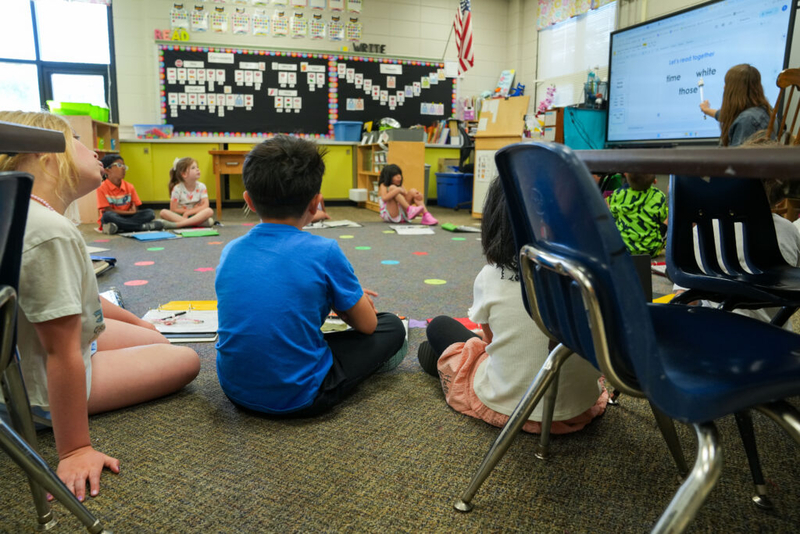
A Sioux Falls School District educator teaches students reading at Lowell Elementary during the 2024-2025 school year. (Courtesy of the Sioux Falls School District)
A South Dakota board voted Thursday to keep a critical needs scholarship open to all prospective K-12 teachers while prioritizing special education and language arts.
Demand for special education teachers is expected to grow over the next decade, creating a need that outpaces other teaching positions in the state, according to data presented Thursday by state Education Secretary Joseph Graves during a teleconference meeting of the Critical Teaching Needs Scholarship Board.
Graves pointed out that special education has been consistently near the top of the list in turnover and need. Turnover is likely attributable to burnout, Graves said, due to the profession’s more demanding nature.
“If these numbers are correct — and they are projections, you never know — in special education, we’re seeing a lot of openings in those areas compared to the number of positions there are. That’s going to remain a hot field,” Graves said.
‘I plant seeds’: Harrisburg teacher named South Dakota teacher of the year
Graves said programs including the state’s Teaching Apprenticeship Program — which allows full-time teacher’s aides to earn their teaching degree while continuing to work — and the critical needs scholarship are designed to address the shortage.
Language arts was the second priority, the board deemed. The profession had lower turnover and vacancy numbers than special education, though still higher than other specialized teaching positions.
State lawmakers created the scholarship program in 2013 to encourage South Dakota high school graduates to earn their teaching degrees in South Dakota and remain in the state after graduation. The board expanded the scholarship from targeted subjects to all teaching positions last year in response to teacher shortages.
Awardees sign an agreement to stay and work in a high-need teaching position in South Dakota for five years after graduation. If they do not complete the requirement, the scholarship is converted into a low-interest loan, with repayments going back into the scholarship fund.
Anna Schwan, vice president for academic affairs at Northern State University in Aberdeen, told board members the scholarship motivates college students “to keep going.”
“It’s the tie at the end that really helps push them, especially during their student teaching semester where they virtually have no income to pay for tuition,” Schwan said.
State officials presented data showing persistent turnover and vacancies across nearly all teaching disciplines. At the end of the 2024-25 school year, public school districts reported 1,178 full-time teachers no longer employed, and at the start of the current school year, 137 full-time teaching positions were unfilled statewide.
Teaching vacancy rates have fallen in the years since South Dakota’s peak teacher shortage after the COVID-19 pandemic, Graves said.
“The crisis is not over. We still have a problem, but it is not the severity we saw three years ago,” Graves said.
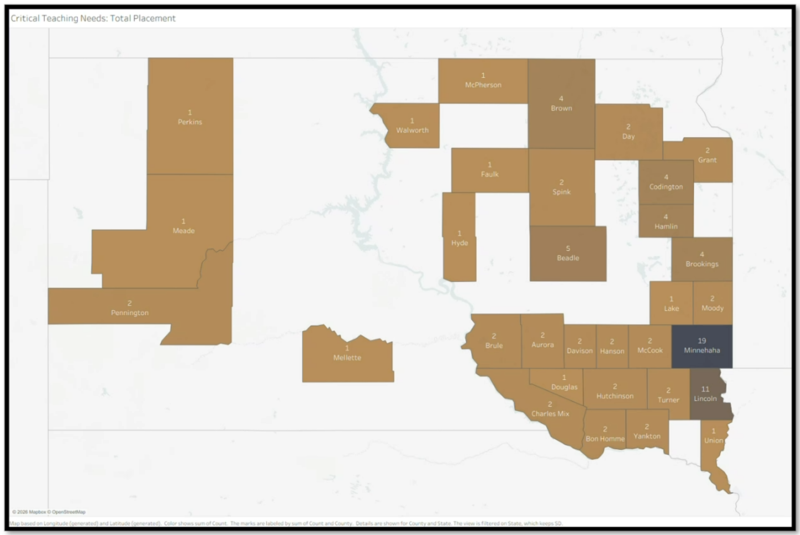
After the board opened the scholarship to all teaching positions in the state, there were 86 applications, South Dakota Board of Regents System Academic Program Manager Molly Weisgram said. It was a “significant increase” in applications over previous years, but board members said they wish there were more. Schwan told board members some students might be afraid of committing to working in the state for five years.
“That’s something we’re struggling with,” Schwan said. “They stay — traditionally speaking, they don’t leave South Dakota — but it’s a shame. There are a lot of supports available, but they’re very intimidated by that expectation.”
Nineteen students were awarded and accepted a combined total of $101,946 in scholarships for the 2023-24 school year, averaging about $5,300 per student. The program has awarded 148 scholarships worth about $1.4 million since 2014, funded by interest earned on the state’s Education Enhancement Trust Fund — a dedicated state account for education spending.
Thirty-one awardees so far did not complete the program requirements, resulting in $291,663 converted to loans repaid into the fund.
The Critical Teaching Needs Scholarship application window opens Nov. 1 and closes Dec. 15.

Pierre, SD