Moore orders review of campus sexual assault policies following Cornell case
Oct 15, 2026 | 6:12 pm ET
Description
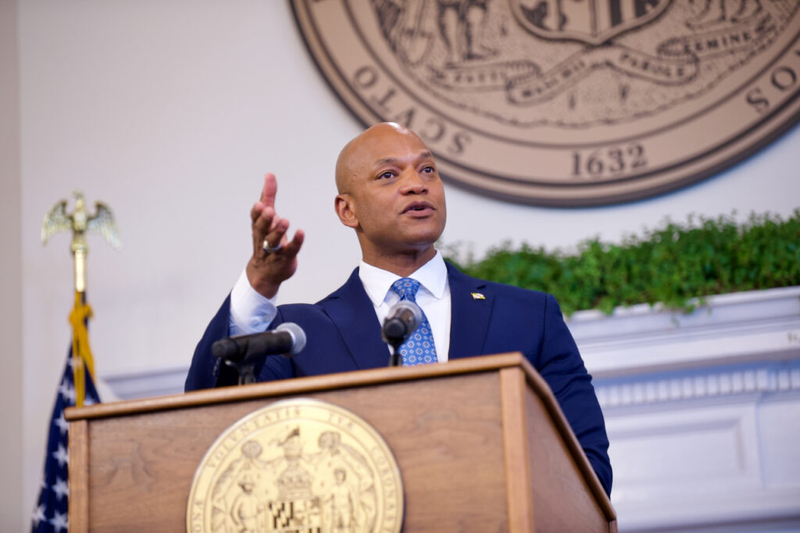
Maryland Gov. Wes Moore (D) during an August 2026 meeting with reporters in the Maryland State House. (Photo Bryan P. Sears/Maryland Matters)
Maryland Gov. Wes Moore (D) is asking an independent state agency to take a closer look at sexual assault policies on college campuses in Maryland amid a national reckoning caused by allegations of a gang rape at Cornell University.
In a directive on Thursday, the governor asked the Maryland Higher Education Commission to make recommendations for improving campus sexual assault policies within 90 days, meaning the recommendations could arrive just as Maryland’s next General Assembly session is beginning in mid-January.
Moore’s order comes in the wake of an accusation of sexual assault that has stirred the nation. Last month, a former Cornell University student, identified as Jane Doe filed a lawsuit accusing seven male students at the university of raping her over a period of seven hours while she was under the influence of ketamine at an October 2024 fraternity party.
At the time, local law enforcement officials in New York declined to pursue charges in response to her report, although several of the young men faced sanctions from the university, including suspension and expulsion.
“Deeply troubling accounts have emerged in recent days of how students outside of Maryland have bravely come forward to report sexual assault and have been failed by the institutions that are supposed to ensure their safety,” Moore wrote in his directive.
In addition, the Trump administration last month rescinded a set of Biden-era Title IX rules, which sought to extend protections to LGBTQ+ students, but had faced significant legal headwinds.
“This is a call to action,” Moore wrote. “In Maryland, we will continue to identify opportunities to enhance the safety of our college campuses and to ensure accountability when these efforts fail.”
The formal rescission may not change much for schools, since Trump’s Department of Education had already been enforcing a prior set of guidelines from the first Trump administration, which set a stricter definition of sexual harassment and gave more due process rights to the accused.
Though the federal higher education landscape is “currently evolving,” Moore’s order is “designed to provide stability,” said the commission’s interim secretary Elena Quiroz-Livanis in a statement on Thursday.
“Our approach is not about waiting for Washington to finalize every rule; it is about establishing a gold standard right here at home,” Quiroz-Livanis said. “By partnering with the Office of the Attorney General, MHEC is ensuring that regardless of how federal regulations shift, Maryland institutions will have a solid, statewide framework that holds offenders accountable, protects survivor rights, and provides our campus leaders with the clear, consistent guidance they need.”
In a statement, a spokesperson for the University System of Maryland, which includes the University of Maryland, Towson University, Bowie State University and a number of other public campuses, said its institutions “routinely evaluate these policies and programs.”
“The USM is committed to creating safe environments on our campuses where all students can learn and thrive. This includes having strong sexual misconduct policies, educational programs and resources for students, faculty and staff,” read the statement from Michael Sandler, a spokesperson for the university system.
Maryland’s Higher Education Commission — which is responsible for setting statewide policies for Maryland’s 14 public four-year institutions, 16 community colleges, 32 private institutions, and more than 140 private career schools — already studies campus sexual assault on a biennial basis.
Campuses in Maryland are required to adopt written sexual misconduct policies, keep track of misconduct cases and conduct a student survey focused on the subject.
In a report released in August 2026, which aggregated data from 49 different Maryland colleges and universities, the commission found 3,435 incidents of sexual misconduct dating back to 2024. Of those, 92% were reported at the state’s four-year colleges.
Some 476 incidents during the two-year period were considered sexual assault I, the most serious type of incident. But in many instances, the colleges either didn’t have any authority over the suspected perpetrator, or the victim declined to move forward with an investigation.
Those sexual assaults resulted in 53 formal investigations, 20 of which were still underway at the time the report was issued.
But campuses did offer a wide array of accommodations for victims, including alternative housing, academic aid such as test rescheduling and referrals to counseling and other services.
Annapolis, MD