Central Arkansas congressional candidates debate independence from Trump, cost of living
Oct 15, 2026 | 6:48 pm ET
Description
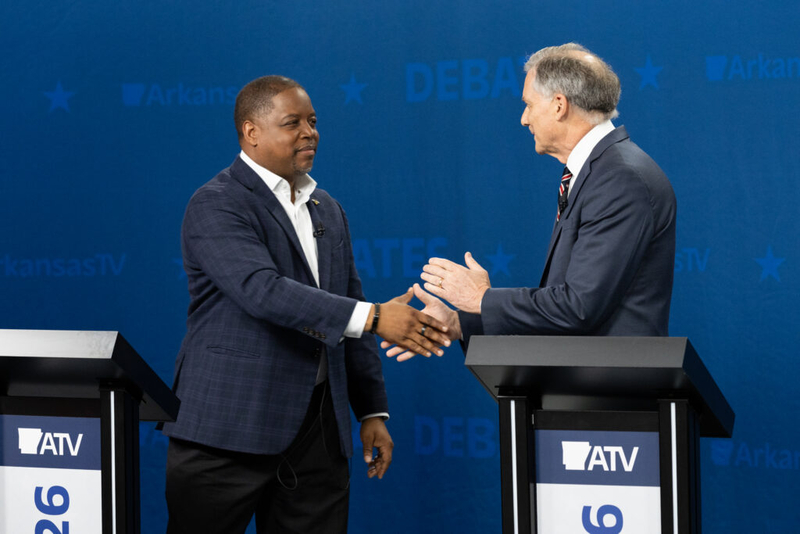
U.S. Congressional District 2 candidates Chris Jones (D) and incumbent Rep. French Hill (R) shake hands after the debate at the Arkansas TV studios in Conway, Arkansas on Thursday, Oct. 15, 2026. (Photo by Katie Adkins/Arkansas Advocate)
Democrat Chris Jones said Republican U.S. Rep. French Hill is too closely aligned with President Donald Trump as the two rivals running for a central Arkansas congressional seat that’s gaining national attention debated Thursday.
Hill argued that Congress has attempted to check Trump’s power during his two non-consecutive terms. Jones disagreed, pointing out that the six-term congressman’s voting record has almost always matched Trump’s priorities.
“That’s not holding him accountable,” Jones said. “That’s letting him have free reign for [his] reckless decisions.”
The candidates for Arkansas’ 2nd Congressional District butted heads over a variety of issues, including the war in Iran, the $40 trillion national debt and the affordability of healthcare and housing.
Hill is a banker who chairs the House Financial Services Committee. Jones is a pastor and scientist whose first foray into politics was his unsuccessful 2022 bid for Arkansas governor.
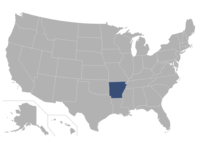
The 2nd District includes all or part of eight counties, including part of Little Rock, where Jones and Hill both live.
The race has drawn endorsements and spending from both major parties. An August Talk Business & Politics poll indicated a tight race.
The Democratic Congressional Campaign Committee has included the 2nd District among the GOP seats it aims to flip in November. Political forecasters Larry Sabato and the Cook Political Report have recently moved the race in Democrats’ favor, from safe to likely Republican.
Democrats still face long odds in a state where the party’s nominees haven’t been elected to statewide or federal office since 2010. Hill’s campaign has also outraised and outspent Jones, who would be Arkansas’ first Black member of Congress if he wins.
Hill has split with Trump on some issues, including opposing the president’s plan to allow more beef imports into the U.S. He mentioned Thursday that earlier this year, Trump abruptly canceled plans to sign bipartisan housing legislation that Hill championed.
“President Trump said it wasn’t a good bill, and I told President Trump no,” Hill said.
Cost of living
Trump ultimately allowed the 21st Century ROAD to Housing Act to become law without his signature. The law removed some of the regulations on housing manufacturing and bank loans for homebuyers. Jones said the law had some good qualities but did not go far enough to make homeownership more affordable.
Jones has repeatedly criticized Hill’s support for the One Big Beautiful Bill Act of 2025, a sweeping budget bill Trump signed last year that is expected to cut Medicaid and food stamps by more than $1 trillion over the next decade.
More than 800,000 low-income or disabled Arkansans rely on Medicaid, and work requirements for able-bodied enrollees are expected to cut thousands of people from the Medicaid rolls when they go into effect Jan. 1.
Hill defended his support for the work requirements and touted the $50 billion Rural Health Transformation Fund created by the One Big Beautiful Bill Act. Arkansas has received and distributed more than $200 million from this pot of money so far this year.
Low reimbursement rates force Arkansas hospitals to scale back services
The Rural Health Transformation Fund supports new healthcare initiatives but isn’t meant to alleviate the costs of hospital operations. Jones said the fund is a net loss for Arkansas hospitals, which already receive low reimbursement rates from Medicaid and from private insurers. Hospitals have cut services in response, including in Jacksonville, which no longer has an emergency room.
Jones said the costs of healthcare, groceries and gasoline have been voters’ primary concerns throughout his campaign. The cost of gasoline has risen since February, when Trump started the ongoing war in Iran.
Hill defended his support for the effort “to once and for all eliminate a nuclear weapon in Iran” in response to Jones’ criticism.
Both candidates said they oppose Trump’s plan to purchase diesel fuel from Russia. Jones said the move will keep gas prices high, and Hill said he would instead support waiving the federal diesel fuel tax.
Access to elected officials
Jones and Hill also clashed during the debate over Hill’s availability to the public.
Hill said he visits the 2nd District weekly, responds to constituents’ letters consistently and holds town halls via phone. Jones said he’s heard a different story on the campaign trail.
“How many of you all have had an opportunity to not only say something to Mr. Hill, but to get an authentic response back?” Jones said. “I’ve talked to folks who have not. They’ve tried time and time again.”
In his closing statement, Hill said he has “a servant’s heart,” citing his past experience as Little Rock Rotary Club president.
“I ask everyone, in this semiquincentennial year of America, to reject this far-left, big-government approach, vote for common sense [and] support centrist policies like I’ve offered in my leadership in the House,” Hill said.
Little Rock