Some inconvenient truths about an inconvenient subject
Sep 15, 2026 | 6:00 am ET
Description
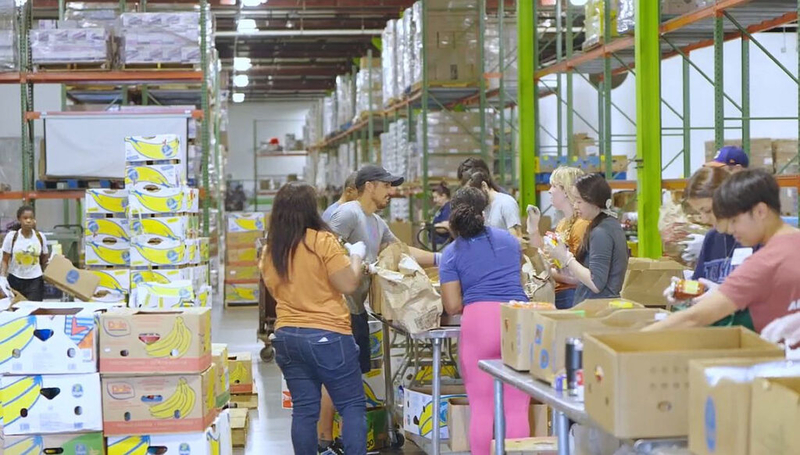
Volunteers box up food donations at the Food Bank of Central and Eastern North Carolina. (Courtesy: FBCENC)
There are many reasons that a heck of a lot of people in 21st Century North Carolina – a modern, wealthy, high-tech society of more than 11 million – regularly face a harsh reality usually associated with impoverished third world nations: hunger and malnutrition.
Topping the list: poverty. More than 12% of North Carolinians live below the absurdly low official poverty line. When one looks at what it really takes to get by, the number of folks in need is vastly higher.
And then, of course, there are an array of other related and contributing factors,
There’s the fact that a big chunk of the population is either very young or very old and typically dependent upon someone else – family, friends, public assistance, charity – to help them secure the calories they need. At last count, roughly a quarter of the population was either age 17 or younger or 85 or older.
There’s the fact that as many as a third of adults and more than 200,000 children have a disability (i.e., a physical, sensory, cognitive, or mental health condition – many of which make day-to-day living more difficult).
There’s the fact that as many as a fifth of North Carolinians do not live in close proximity to a real grocery store – what the U.S. Department of Agriculture (USDA) classifies as a “food desert.”
There is the fact that many people of modest means – like their wealthier neighbors – find themselves in personal crises. They live in households harmed by a natural disaster, unemployment, a health emergency, or a broken marriage.
There is the undeniable fact that in some households, the situation is made worse by destructive human behavior – be it substance abuse, gambling addiction, domestic violence, or just plain old poor choices.
And arching over all of this – particularly during the last several months — is the fact that prices for all kinds of basic goods have soared at rates far in excess of wage growth.
Together, all these factors and others have combined to create what can only be described as a truly scandalous situation and crisis for one of the wealthiest societies in human history. According to the most recent USDA data – which actually predates the rampant inflation of 2026 – more than 1.5 million North Carolinians, including one of every five children and teens – lived in a “food insecure” home. What’s more, the numbers have skyrocketed in recent years and now exceed where they stood during the depths of the COVID-19 pandemic.
So, what gives? How did we work ourselves into this dreadful situation and what can and should we do about it?
I recently posed these questions to a pair of nonprofit leaders and experts who’ve spent many years on the frontline in the hunger wars – Amy Beros, President of the Food Bank of Central and Eastern North Carolina, and Liz Reasoner, Chief Executive Officer of the Food Bank of the Albemarle – and their overarching answer may come as a surprise.
Yes, dramatically increasing public and private support for groups like theirs — food banks, food pantries and other charitable anti-hunger nonprofits — would help. Both Beros and Reasoner told me that their organizations have been struggling mightily in recent months to keep up with soaring demand from people in need even as their costs for things like the fuel that goes into their trucks has forced them to pinch pennies like never before, and in some instances, reduce services. September is Hunger Action Month, so if you can contribute to a food bank, please do so.
But what both leaders also made plain in our conversation (listen to the full interview by clicking here) is that the only remotely plausible source of a real solution to the current hunger crisis is the federal government. For as much amazing and impactful work as the food banks and other charities do, it pales in comparison to the impact of the federal SNAP (formerly food stamps) program.
As Beros told me, “For every one meal a food bank provides, SNAP provides nine.” What’s more, thanks to massive cuts inflicted on SNAP (which takes up a little more than 1% of the federal budget) by the Trump administration and its congressional allies, the situation has gotten much worse of late. Beros reports that more than 100,000 North Carolinians have been dropped from the SNAP program in just the past year.
Now add to this that the federal cuts have cost food banks around 15% of the food they used to receive from the USDA – not to mention the damage inflicted on a lot of farmers and retailers by shrinking their markets – and the connection between the current mess and the situation in Washington becomes even clearer.
The bottom line: Food insecurity in 2026 North Carolina is a vexing and complicated problem, but any meaningful effort to address it simply must involve restoring, and ultimately, dramatically increasing federal funding for SNAP and similar programs. Pretending that we can make any meaningful difference without doing so is simply delusional.
Raleigh, NC