Solar power expected to soon be cheaper than natural gas power in Anchorage
May 27, 2026 | 9:30 am ET
Description
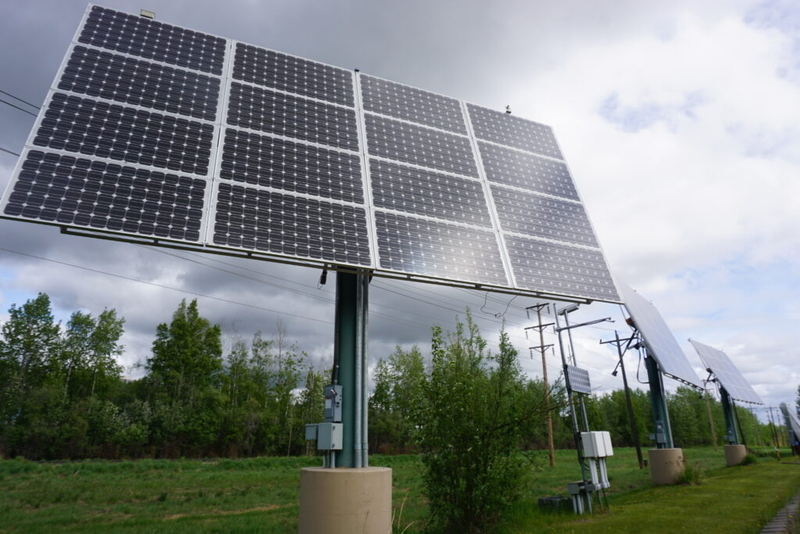
Solar panels at the Cold Climate Housing Research Center campus in Fairbanks are seen on June 5, 2025. (Photo by Yereth Rosen/Alaska Beacon)
Alaska’s largest planned solar farm, expected to break ground west of Anchorage this summer, is likely to deliver cheaper electricity than possible with imported natural gas, according to information the state’s largest electric utility shared with state lawmakers this month.
In a May 14 hearing of the Alaska House Labor and Commerce Committee, Chugach Electric government affairs manager Trish Baker said power from the project should cost about the same as power produced from natural gas at current prices.
“We have not brought that project before the (Regulatory Commission of Alaska) yet, but that’s our estimate,” she said.
Because gas prices are expected to rise in coming years amid a growing shortage in Cook Inlet, the solar project is poised to become cheaper than power generated by imported natural gas.
That’s only for the months when solar is an option. In the winter, during peak demand for heating and home electricity use, solar produces minimal energy in much of Alaska.
Solar energy costs are declining rapidly, and in parts of rural Alaska it is cheaper to operate both solar and diesel power plants than diesel plants alone, despite the cost of operating solar only seasonally. Red Dog Mine, near Kotzebue, is planning a large solar farm.
Natural gas power is cheaper than diesel power, but the economics are driving in the same direction, said Rep. Zack Fields, D-Anchorage, during the May 14 hearing.
“The previous Cook Inlet prices, gas was cheaper. With price escalation, the lines cross and some of these small renewable projects are cheaper. That seems to be the economic environment that we’re in,” he said.
Julie Hasquet, manager of corporate communications with Chugach, said solar power costs “are expected to be comparable to thermal generation costs, resulting in essentially no meaningful impact to electric rates over the life of the project,” she said. A key benefit of the solar project is that it supports diversification in generation which reduces long-term risk and reliance on natural gas.”
She added that she doesn’t see a scenario where Chugach “could rely on all renewables for summer months without some new, major hydro coming online.”
Chugach has begun preliminary planning for four smaller hydropower projects in Southcentral Alaska.
Fields had proposed exempting two of those hydropower projects and the solar project from regulatory commission approval. The RCA has authority over most electricity rates in Alaska.
Other legislators opposed Fields’ proposal, which did not advance.
“I guess I haven’t seen that renewables really bring the cost of anything down,” said Rep. Julie Coulombe, R-Anchorage. “They’re very subsidized,” she said.
Chugach plans to start construction on the Beluga solar project before July 4 in order to stay eligible for federal tax credits that would reduce the overall cost of the project.

Juneau