Arizona added jobs in April, but its employment rate has been stuck at 2024 levels for 2 years
May 26, 2026 | 6:12 pm ET

Description
Photo by Joe Raedle | Getty Images
After seven months of lower employment rates than last year, Arizona’s job market finally saw positive growth in April, according to the latest data from the Bureau of Labor Statistics.
A recent report from the Common Sense Institute, a conservative economic think tank, analyzed federal data and found that Arizona’s inability to top last year’s figures ended last month, when the state added 8,100 new jobs. The state’s unemployment rate also stopped increasing for the first time in several months, though it remains higher than the national average. Arizona’s unemployment rate is at 4.7%, while the national rate is slightly lower, at 4.3%.
Arizona’s poor job market isn’t unusual, as job growth rates across the country have been slow. Glenn Farley, the report’s author, noted that the Grand Canyon State’s performance has nonetheless been steadier than the national average. While at the national level, job losses spiked in February, Arizona has been able to maintain a steady increase in its employment rate since October.
“Arizona has consistently added jobs (again on a monthly basis) since October 2025,” Farley wrote. “But growth has been unusually and persistently slow.”
While the increase marks an improvement over last year, Farley warned that it doesn’t amount to much more than a temporary change in the market’s long term health. That’s because Arizona’s job rate has been flat for two years, stuck at 2024 employment levels.
“The job market in Arizona remains weak on any historical basis,” Farley wrote.
Along with jobs, wages saw some growth in April. The average hourly wage grew by $0.62 from month-to-month, and has increased by $1.33 since last year. The average hourly salary for private sector workers is now estimated to be $36.02, a more than two dollar increase from this time last year. But that number still lags behind the national average, which sits at $37.41 an hour.
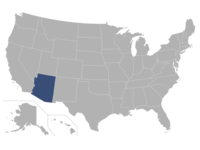
Phoenix, AZ