The SNAP funding back-and-forth, explained
Nov 10, 2025 | 5:40 pm ET
Description
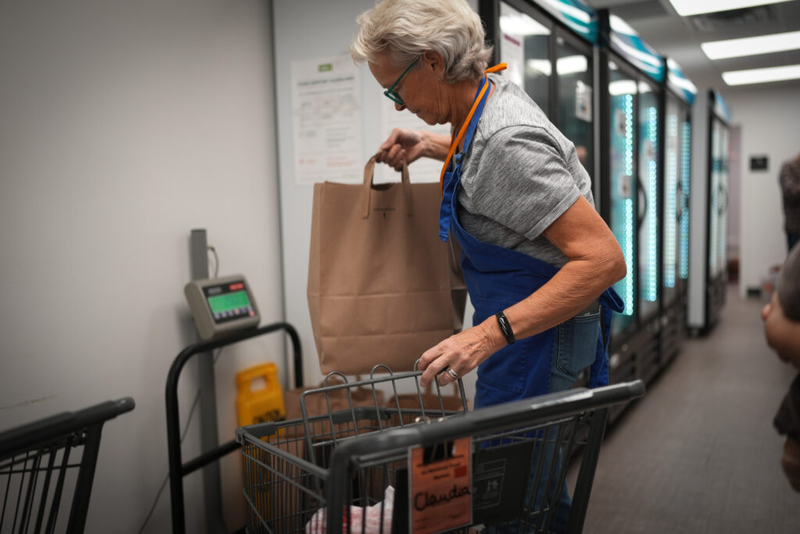
Volunteer Julie King helps a client check out at Neighborhood House food market in St. Paul on Monday, Nov. 3, 2025. (Photo by Glen Stubbe/Minnesota Reformer)
Minnesota officials said Sunday they will not yank back food assistance that was distributed to recipients in recent days, despite a weekend Trump administration order to do so.
Here’s how we got to this point:
It starts with the shutdown
Funding for the Supplemental Nutrition Assistance Program, or SNAP, expired at the end of October. Around 440,000 Minnesotans, most of whom are children, elderly or disabled, use SNAP to help pay for groceries.
SNAP recipients turned to food shelves in late October and early November as their monthly credits ran out and weren’t re-upped; at one food shelf, the Reformer witnessed volunteers turning away families for the first time, because there wasn’t enough food.
Minnesota and others sued, but then USDA pulled a slow one
At the end of October, advocates and some state attorneys general, including Minnesota Attorney General Keith Ellison, filed two separate lawsuits to force the federal government to use contingency funds to pay for SNAP during the shutdown.
The judge in the advocates’ suit in Rhode Island ordered the U.S. Department of Agriculture, which oversees SNAP, to pay out full benefits by Nov. 3 or partial benefits by Nov. 5. The USDA sent states a methodology for calculating partial benefits on Nov. 3, but that process would take weeks or more to implement.
The Minnesota Department of Children, Youth, and Families last week couldn’t provide a timeline for when the benefits would be distributed according to the methodology provided by the USDA.
Judge got mad, told USDA to pay up; Minnesotans got their credits
Then, on Thursday, the judge found that the USDA hadn’t complied with his earlier order — given the lengthy implementation timeline — and issued a new order requiring the Trump administration to send states the money to cover November SNAP benefits by Friday. The administration complied, sending out the full funding for the month, which Minnesota immediately distributed to recipients.
SNAP recipients contacted by the Reformer confirmed that they received their benefits over the weekend.
The state even sent some benefits earlier than planned to “protect Minnesotans during the uncertainty of potential future court orders.”
You knew this was coming: Roberts Court says, ‘hold up’
State officials knew the U.S. Department of Justice was appealing the federal judge’s order on behalf of the USDA. Late Friday night, the U.S. Supreme Court issued an emergency ruling pausing the requirement that the Trump administration pay out full benefits.
USDA says ‘pay us back’
No longer bound by the court order, USDA sent out another memo Saturday ordering states to only pay out 65% of recipients’ November benefits, and to “immediately undo” any actions that had been taken to make full payments.
Minnesota says ‘nah’
The Department of Children, Youth, and Families said in a press release the agency was “appalled” at Saturday’s instructions to claw back the payments.
“Minnesota does not have any mechanism for taking money back from SNAP recipients. We also believe it would be unjust to yank back these funds that are needed to feed families,” the press release reads.
Ellison confirmed Monday that “the money is flowing” in Minnesota.
“If there was one throughline here, it is that Donald Trump and his administration have been fighting tooth and nail not to feed hungry Americans,” Ellison said in a press conference alongside other blue state attorneys general involved in litigation over the program.
Seems like shutdown might — might! — be coming to a close, ending SNAP uncertainty
The U.S. Senate took preliminary steps Sunday night to pass a spending bill that would reopen the government — without Democrats’ key demand, to extend health insurance subsidies that are scheduled to expire at the end of the year.
The package that passed a key Senate procedural hurdle Sunday would fund the government, including SNAP, through January.
But long term, Republicans have cut food aid
As the funding fight carries on, larger changes are happening to SNAP. A GOP mega-law signed into law by President Donald Trump on July 4 will cut funding for SNAP by around 20%, or $187 billion over 10 years.
The SNAP cuts come from expanded work requirements for parents of teenagers and people who can work and are between the ages of 55 and 64; changes to how utility and internet bills are counted against an applicant’s income when determining benefits; and cost shifts to the states.
The law also eliminated the SNAP-Ed program, which educated SNAP recipients on healthy eating and how to lead a physically active lifestyle, resulting in 60 layoffs at the University of Minnesota.
The expanded work requirements took effect Nov. 1.

Saint Paul, MN