SLC may increase sales taxes to fund a downtown stadium and entertainment district
Feb 22, 2024 | 11:08 pm ET
Description
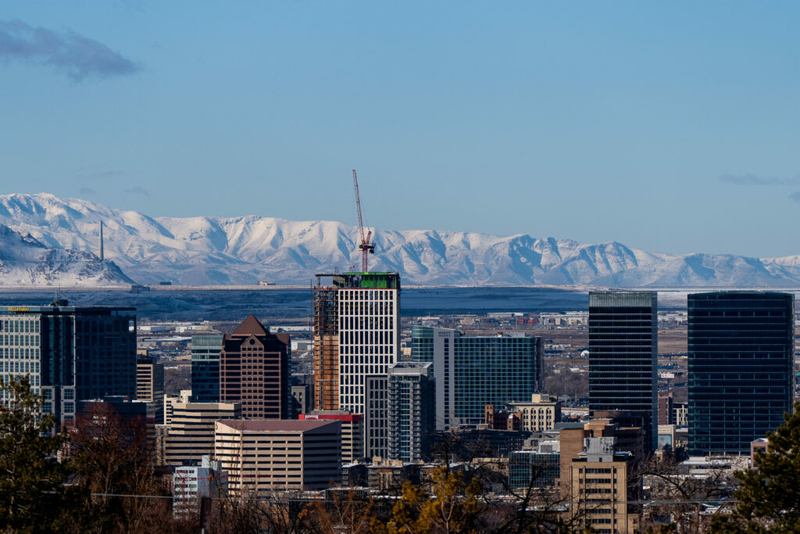
The downtown Salt Lake City skyline is backdropped by fresh snow on the Wasatch Mountains on Monday, January 15, 2024. (Photo by Spenser Heaps for Utah News Dispatch)
Utah has big hopes for sports in its capital city. Its bid to host another Olympic Games is strong. Designs for a potential Major League Baseball stadium have been drawn. And now, the state has found a way to fund a new arena that could host the Utah Jazz and a National Hockey League team.
The state may impose a 0.5% sales and use tax increase in Salt Lake City to fund a stadium in addition to an up to 50-acre sports and entertainment area to host the franchises in the downtown area, reads SB272, Capital City Reinvestment Zone Amendments, sponsored by Sen. Dan McCay, R-Riverton.
The tax collection, over 30 years, would raise about $1 billion, McCay told reporters on Thursday. The Senate Revenue and Taxation Committee voted unanimously to recommend the Legislation for full Senate consideration.
The location of that district is still uncertain and it’s something the Smith Entertainment Group, the parent company of the Utah Jazz, and the city should determine, McCay said. But, there are opportunities to improve the area that surrounds the Delta Center, and expansion possibilities on the west side of the Salt Palace Convention Center.
The west side of the downtown area, McCay said, “is not the economic bastion that the east side is.” To change that, downtown needs to undergo a “dramatic change of landscape.”
“We’re trying to figure out, can we expand that? And that’s why when you look at the amount of resources, you’ve got a lot of existing buildings and facilities that are already in that area that have to be repurposed, (or) demoed,” he said. “A lot of things have to change in order for that environment to function.”
In his presentation to the committee, McCay asked to think of the project as a broader vision for the city.
“I hope that we don’t think of this as a subsidy but more of an investment in Utah’s economic future,” he said. “The difference between a subsidy in investment is that taxpayers will reap a return. That return comes in the form of an amenity-rich urban center that continues to retain and attract human talent.”
The city government would have to approve that tax. And the City Council would have to approve a resolution to designate the project area as a “public infrastructure district,” something the city said it has the appetite for.
“What this bill enables will be truly transformative for Salt Lake City, for Salt Lake County and the state of Utah,” Salt Lake City Mayor Erin Mendenhall said to the committee on Thursday, “changing not only our arts and entertainment offerings but reconnecting our city from the east to west side and the downtown core, elevating our convention industry and welcoming the world.”
Mendenhall added that the bill should be looked at as a model of how to do transformational projects in the city, as the legislation was built upon redevelopment tools the city has tried, besides respecting the role of municipal governments in land use decisions.
“It keeps our elected leaders that our residents of Salt Lake City have selected in the driver’s seat of governance and taxation, while still empowering Smith Entertainment Group to build the future anchor of entertainment for our city and state,” she said.
Ryan Smith, CEO of the Smith Entertainment Group, said during the committee hearing that the opportunity to have multiple sports downtown could be transformative for the city.
“With this bill what we have a chance to do is create an experience not only inside of the arena but outside the arena,” Smith said, “where it’s a consistent experience of downtown, one that we’re proud of, one that we want, one where there is preparation to (host) the Olympics, one that is great for all ages and and families to come and appreciate the heart of the state that we love so much.”
The Legislature made the bill public just a day after another bill was revealed with a plan for a Major League Baseball team stadium, funded in part by a hotel and car rental tax increase.
A tax increase, McCay said, is a way to make both projects viable.
“We didn’t want to stack the taxes for Major League Baseball and everything else, we didn’t want to stack those together so that those became unlivable environments for those who are paying the tax,” he said. “And at the same time, the sales tax was something we weren’t capitalizing on, but provided the opportunity for all of us, really, to accomplish a very similar investment in a very simple way.”
Senate Minority Leader Luz Escamilla, who is a west-side resident, said she’s excited about the potential to see improvements in the area, even if it takes landing an MLB team to see it come to fruition.
“We want to see the Fairpark to continue to succeed,” she said. “But we have a criminal element right now in the west side, in the Jordan River area, and no one’s going to clean it. And if bringing $3 billion dollars into that area is going to change that, I want to see that in my district.”
This is not just about teams coming to the city, she said — such funding would directly impact the lives of hundreds of thousands of people.
“There is a connection to services, addressing homelessness and public safety and the west side of Salt Lake City will have a direct correlation on the level of investment because (when) investing $2 billion, they will want to see that place clean,” she said. “And that’s just a benefit for our community.”
Rusty Cannon, president of the Utah Taxpayers Association, said during the public comment hearing the organization is neutral on the legislation. Though he acknowledged there would be benefits associated with the investment, it won’t be free for taxpayers.
“It does start to pile on and we are approaching or getting close to a tipping point where we need to be aware of the competitiveness of downtown Salt Lake City related to the rest of Utah and the rest of the nation,” he said about the potential tax increase.
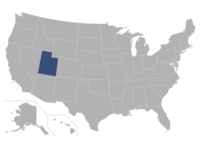
Salt Lake City, UT