SC State’s decision to ax 9 degrees follows report on unpopular programs statewide
Oct 02, 2026 | 1:30 pm ET

Description
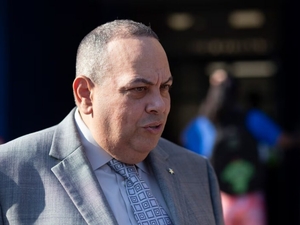
A South Carolina State University student walks outside the school's new engineering building Tuesday, Feb. 25, 2025. The board voted Thursday, Sept. 24, 2026, to eliminate nine degree programs from its catalog. Across public universities statewide, nearly 200 programs have little-to-no participation. (File photo by Jessica Holdman/SC Daily Gazette)
Just over a third of South Carolina State University’s degree programs meet state policies for enrollment and graduation — the lowest rate of compliance among the Palmetto State’s public, four-year schools.
Leaders of the historically Black college are taking steps to change that.
Meanwhile, Statehouse leaders have signaled they’ll continue pushing schools to control their costs and phase out less popular academic programs that lose money or won’t land graduates a good-paying job.
At the heart of the matter is setting students up for success rather than trapping them under student loans they can’t afford to repay, as well as ensuring the state’s taxpayer-supported colleges are financially sound, especially as declining birthrates have universities competing over a smaller pool of college-age students nationwide.
It’s against that backdrop that the governing board of SC State voted last week to eliminate nine degree programs from its catalog — four of which have not enrolled a single student in the past decade.
“We understand that decisions involving academic programs can create anxiety and uncertainty for students, faculty, staff, alumni and others who care deeply about SC State,” reads a joint letter last Friday from university President Alexander Conyers and Interim Provost Louis Whitesides.
“At the same time, we must look ahead,” the letter continued.
“The needs of South Carolina’s workforce are changing, and SC State must continue to evolve with them.”
Out of compliance
While SC State is the least compliant with “program productivity” standards, with less than 40% of programs meeting the state’s definition, it’s far from the only public university offering degrees with little-to-no participation.
On average, 20% of degrees at South Carolina’s 13 public, four-year colleges don’t meet either enrollment or completion benchmarks, according to the latest data from the SC Commission on Higher Education, released in June.
Those benchmarks are pretty low.
A bachelor’s degree program meets compliance with just 13 students enrolled and at least eight students graduating yearly, using an average over five years. The benchmarks for master’s and doctorate degree programs are even lower.
Noncompliant programs can be under probation for at least six years before the higher education agency even puts it on the termination list.
Colleges are supposed to use the productivity report to measure whether they’re offering degrees students actually want for careers and employers actually need. The commission’s review is also supposed to reduce duplication among South Carolina’s colleges. But the agency has been several years behind on producing the report.
SC colleges pushed to trim expenses, degree programs in preparation for ‘enrollment cliff’
Besides, the agency has no authority to force colleges to end programs. It can only make recommendations. The decision lies with each college governing board.
This leads to inconsistency across colleges, said Oran Smith, who sits on both the higher education commission and the governing board for Coastal Carolina University.
“Many boards only meet four or five times a year. Usually, there’s a packed agenda. There isn’t much discussion of these types of matters,” he said.
That’s changing due to the debate by Statehouse budget writers who control how much taxpayer money the colleges receive.
“The Legislature’s action, asking for programs to be reviewed, has caused more discussion of this issue,” Smith said. “I think that’s very healthy because someone needs to be paying attention.”
GOP leaders in the House tried to force cuts this year.
A rule in the initial version of this year’s state budget, as passed by the House, would have required colleges to suspend at least half of their programs that lose money for four consecutive years. The chamber also sought to route money to degrees in science, technology, engineering and math fields, which tend to have more job openings.
But senators removed that proposal after college officials cited unintended consequences of tying cuts to a degree program’s profitability. Looking at the ledger alone could inadvertently include in-demand careers, such as nursing, that have high operating costs, they said.
Reconsidering standards
House Ways and Means Chairman Bruce Bannister said legislators’ push for change will continue next year.
“The purse strings are where we get our influence,” the chamber’s chief budget writer told the SC Daily Gazette. “We will keep trying to make the dollars follow the colleges whose programs deliver the most return to students.”
SC’s largest colleges celebrate record applicants for fall 2025. Most aren’t from SC.
The “program productivity” report will be part of the discussion when college officials come before budget writers with their requests, said the Greenville Republican.
But the Commission on Higher Education also questions whether its benchmarks for enrollment and graduation rates adequately measure a program’s success.
This summer, the commission began a revamp of its monitoring process, which should be completed by the end of this fiscal year. Changes could include measuring whether cuts actually save money.
At Coastal, for example, Smith said, officials have determined that programs with low enrollment don’t lose money when the classes involved are part of students’ general education requirements for other degrees. The professors are still needed.
In its June report, the higher education agency recommended termination for 137 of the roughly 1,000 programs reviewed at South Carolina’s public universities. For 135 of those, it’s the graduation benchmark where they consistently fall short. An additional 51 programs don’t meet the benchmarks and are flagged for review over the next six years.
Statewide, colleges have committed to ending 43 programs on the list.
‘Best interests of our students’
Programs recommended for the chopping block largely fall into four categories:
- Education degrees tied to a specific subject area, such as those to become a K-12 science teacher, a math teacher or a special education teacher
- Language, religion and cultural studies
- General science and math degrees, such as chemistry, biology, physics or economics
- Arts degrees, such as theater, music, English, philosophy or history
SC State’s flagged courses are no exception.
But before now, the governing board of the Orangeburg college has been more reluctant than its counterparts at other schools to eliminate and replace programs.
Over the past five years, for example, the University of South Carolina has terminated 26 programs, including all of its foreign language degrees, and replaced them with 28 higher-demand programs.
And in March, Clemson officials told legislators they shut down about 10 programs a year on average.
Elimination of underperforming programs is something Conyers has advocated since taking the helm at SC State in April 2022. The debate in the Legislature may have aided his case to the board.
“Ultimately, we believe these actions are in the best interests of our students, the university, and the taxpayers of South Carolina,” reads the joint letter from Conyers and Whitesides. “They also will position SC State to invest its resources strategically and develop new academic programs aligned with emerging workforce needs and career opportunities.”
While the Commission on Higher Education can’t force colleges to end programs, it does have authority in approving new programs.
And having so many underperforming degrees on its books makes it difficult for SC State to get that approval for degrees in greater demand, said SC State spokesman Sam Watson.
In addition to ending the nine degrees, the board approved cancelling more than 200 classes that had fewer than 10 students enrolled this fall. Many of those courses were consolidated, changing some students’ class times but increasing the number of students in the classes.
The changes impact 111 students, 3% of the Orangeburg college’s student body, across five programs. While no new students can enroll, those already in the programs can finish their degrees.
The axed program with the largest enrollment — 82 students — will shift from an engineering technology degree, centered around the hands-on construction of systems, to a straight engineering degree more focused on system design.
Some of the course closures involved specialized, degree-specific classes that are no longer needed, Watson said.
While the school is deleting programs, that does not mean all the courses associated with those programs will go away. Those that are essential to other degree programs remain.
For example, while SC State students can no longer get a bachelor’s degree in mathematics, math courses essential to science, engineering and other degrees continue.
Conyers estimates the closures could save the school more than $5 million but did not say how staffing levels might change.
State Rep. Jerry Govan, D-Orangeburg, agrees it makes little sense to offer courses where students aren’t taking the classes. The SC State graduate said that’s where the board of trustees comes in.
“That’s why we appoint them,” he said. “They are the boots on the ground and are supposed to be making these decisions.”
Bannister, the House budget chief, also commended Conyers for taking action.
A turnaround success
The president wants to ensure his alma mater doesn’t get back into a fiscal hole.
A decade ago, it was in danger of shutting its doors.
Amid the Great Recession, the school faced shrinking enrollment and declining revenues but did not make the cuts necessary to match, leading to budget deficits. To fill the holes, it transferred millions of dollars meant for agriculture research, contributing to its cash flow crisis, according to a 2014 report from the state inspector general.
Accreditors with the Southern Association of Colleges and Schools Commission on Colleges put the school on probation, putting the school at risk of losing its accreditation. Students cannot receive federal financial aid at unaccredited colleges.
Legislators and then-Gov. Nikki Haley responded in 2015 by wiping out the entire S.C. State board of trustees.
They also bailed the college out with more than $18 million in loans and a one-time payment of $4.6 million to pay off other debt. They then struck a deal to forgive much of the debt.
U.S. Rep. Jim Clyburn, D-Columbia, one of S.C. State’s most prominent and powerful alum, supported the overhaul, which then saw the college taken off probation as legislators elected new leadership.
New research status for SC State highlights its enrollment, fiscal turnaround
The new board installed one of its own, James Clark, as president in 2016. The school saw financial and enrollment improvements over Clark’s tenure, but alumni and faculty criticized him for those numbers not growing fast enough.
The board fired Clark in 2021 and Conyers took over a year later.
Since then, SC State has boosted its research profile, last year reaching the second-highest level of research under the Carnegie Commission on Higher Education’s ranking system.
It also has seen a rebound in enrollment but has yet to return to the high of 4,650 students it boasted in 2007. Leadership has cited a lack of student housing as holding it back from further growth.
Bannister, the House budget chief, commended Conyers for putting SC State and its students on a path for success.
Govan also said legislators should not discount the impact historical racial discrimination has had on the state’s only public, four-year historically Black university.
“I don’t think we can talk about one without the other,” he said.
In 2023, the U.S. secretaries for education and agriculture sent a letter to Gov. Henry McMaster saying SC State was historically underfunded by nearly $500 million over 30 years compared to Clemson, the state’s predominately white land-grant university.
More recent data show that’s no longer the case. In 2020, SC State received $13,768 in state funding per student versus $8,691 at Clemson.
Bannister said the Legislature has sought to direct more dollars to SC State in the last few budget cycles, in particular to refurbish old facilities and build more housing.
Columbia