SC governor celebrates new law aimed at reducing insurance costs for restaurants, businesses
May 28, 2025 | 6:17 pm ET
Description
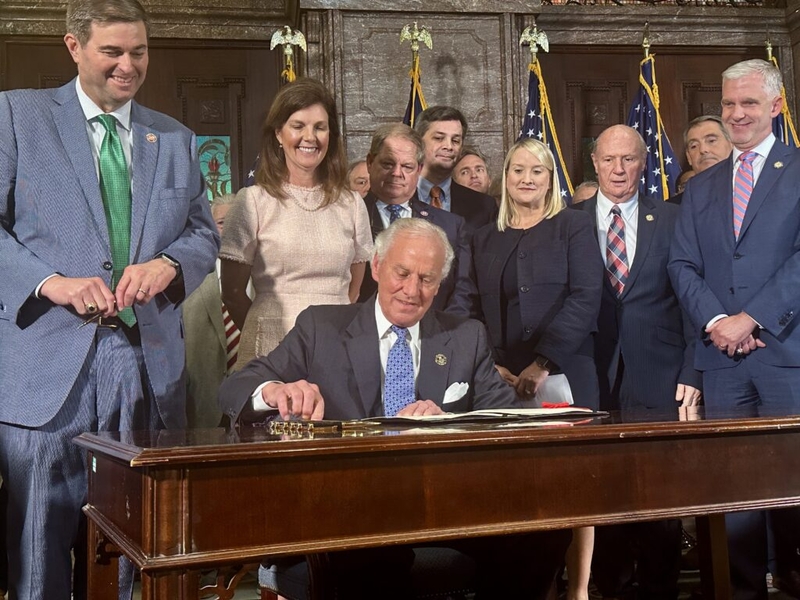
South Carolina Gov. Henry McMaster on Wednesday, May 28, 2025, ceremoniously signed a law that aims to put the brakes on rising insurance costs faced by businesses. (Photo by Jessica Holdman/SC Daily Gazette)
COLUMBIA — South Carolina Gov. Henry McMaster celebrated a law Wednesday that aims to put the brakes on rising insurance costs faced by businesses, especially bars and restaurants, in the Palmetto State.
The new law, which the governor actually signed last week, gives establishments that sell alcohol options, as well as requirements, for reducing their minimum insurance coverage.
It also reforms state rules surrounding personal injury lawsuits and how financial responsibility for fault is assigned while still ensuring victims are fully compensated.
While the ceremony at the Statehouse was celebratory, several legislators were quick to remind the crowd the issue is far from over, even after the late-session compromise that made Wednesday’s public signing possible.
“Progress on important policy matters is often frustratingly slow and incremental,” Senate Majority Leader Shane Massey said. “Today is a recognition of a step in the right direction, but it is a small step.”
Senators give final OK to bill that aims to keep restaurants open, reduce business costs
The Edgefield Republican ran point on the so-called tort reform effort and led negotiations to reach the final compromise that, in his mind, fell short of the broader bill passed by the Senate following an intense and, at times, combative debate.
“My hope is that this small step is not the only step,” Massey added. “And that we use this small step to generate momentum for meaningful change that will then allow us to celebrate something that really matters.”
For his part, House Judiciary Chairman Weston Newton, R-Bluffton, called Wednesday’s ceremony “a fulfillment of an overdue promise,” one made to a hospitality industry facing skyrocketing insurance costs and a shrinking number of carriers in the state willing to insure them because of previous laws passed by the Legislature.
“At no time should it be the government or the actions of government putting businesses out of business,” Senate President Thomas Alexander added. “So today is about protecting businesses to make sure that they can be successful.”
GOP leaders in the House had intended to focus this year simply on relief for restaurant owners.
The new law does this by requiring all businesses that sell alcohol by the drink to have their servers complete alcohol training. In exchange, businesses can reduce what they pay for insurance. Installing scanners to verify that customers’ IDs aren’t fake, closing before midnight and increasing food sales are other options for buying down insurance costs.
Insurance crisis is stopping new restaurants from opening, restaurateurs say
To get the bill to the governor’s desk, however, the House also agreed to include changes to rules governing personal injury lawsuits known as “joint and several liability.”
South Carolina’s last attempt at such lawsuit reform, a law passed 20 years ago, held businesses responsible if they were more than 50% at fault. If no single business or person met that threshold, fault was divided proportionately.
But lawsuits involving alcohol were specifically excluded from those rules, leaving them potentially owing 100% of damages, according to a statement from the governor’s office. Ambiguity in the old law also impacted other businesses, as plaintiffs settled with smaller parties outside of court and only sued the person or group that could pay the biggest award.
The compromise deletes the alcohol exclusion and requires the verdict form given to a jury to include everyone at fault when determining share of responsibility, including people and businesses that weren’t named in a lawsuit.
“Getting to this day was not easy. At times disagreements and obstacles seemed impossible to overcome, rhetoric was sharp, emotions ran hot, and tempers flared,” McMaster said.
Fights broke out on social media and right-wing influencers pumped out messages, resulting in even Donald Trump Jr. weighing in.
“From outside, there were some very deep, personal and I would call vicious attacks on some of our members in the Senate,” Alexander said. “That’s not South Carolina, and it’s certainly not South Carolina at its best.”
Ultimately, the GOP-controlled House and Senate came to an agreement.
“But I must say, our work is not finished. And we look forward to building on the momentum this bill signing — and the strength the coalition of leaders here — represents so that South Carolina can remain the economic development envy of our neighbors and of the entire country,” said Sara Hazzard, president of the S.C. Manufacturers Alliance.
Hazzard and others hope to see a host of other issues, which were stripped from the Senate bill, addressed. That includes changes to medical malpractice and barring lawsuit extensions for construction defects that can stretch out liability beyond a decade.
Most of the law’s changes take effect Jan. 1, 2026.

Columbia