After Morrisey touts agency audits to purge waste, lawmakers learn saving money is likely years away
Aug 10, 2026 | 3:51 pm ET
Description
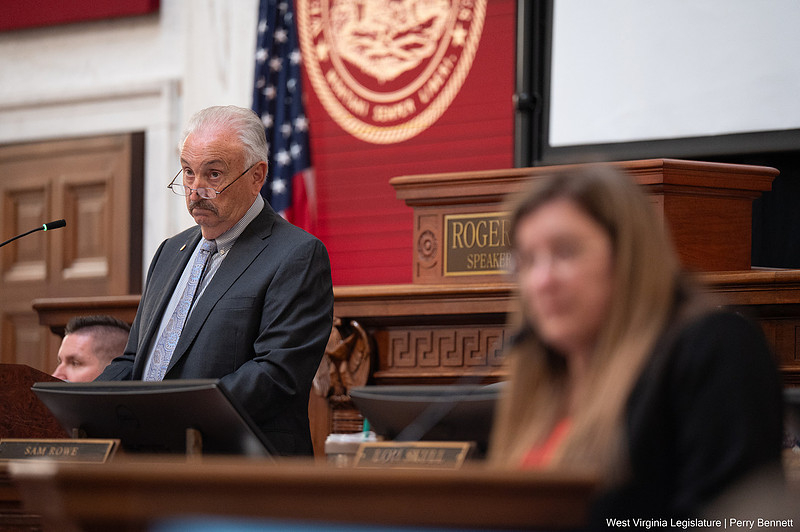
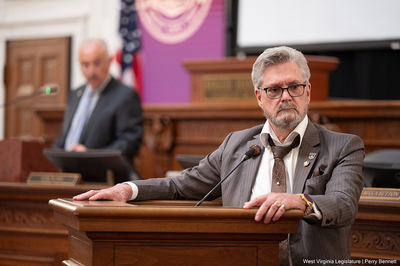
House Finance Chairman Vernon Criss, R-Wood, listens to a presentation from the Department. of Human Services about potential cost savings following an outside audit on Sunday, Aug. 9, 2026 in Charleston, West Virginia. (Photo by Perry Bennett/West Virginia Legislative Photography)
In May, Gov. Patrick Morrisey stood behind a sign that said, “Protecting Taxpayer Dollars,” while announcing that an outside company’s audit of three state agencies revealed a potential $168 million in savings.
The governor, focused on weeding out wasteful spending, noted a lot of the proposed changes — things like replacing outdated technology, bringing foster children in-state and cancelling unused cellphone lines — would not be easy to implement.
Lawmakers have learned from agency leaders over the last few days that the millions of dollars in potential savings won’t be seen anytime soon. Many of the savings are tied to costly technology upgrades across multiple state agencies.
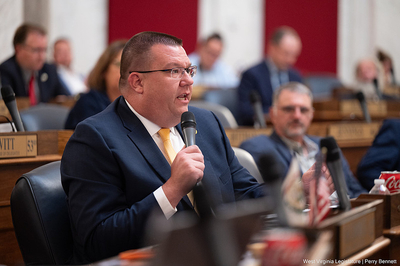
“While I was hopeful that some of the savings discussed in the audits would be felt immediately, I didn’t necessarily expect it,” said Sen. Robbie Morris, R-Randolph. “Many of these initiatives require technology upgrades, changes in processes, and so forth, which I understand doesn’t happen overnight. However, I expect the agencies to work diligently to implement the changes, not only to save taxpayer dollars, but also to provide for more efficient and effective service to our citizens.”
The Morrisey administration paid $1 million to an outside company, BDO USA, to evaluate three state agencies — Homeland Security, the Department of Transportation and the Department of Human Services. BDO recommended a list of potential cost-saving measures for the three agencies.
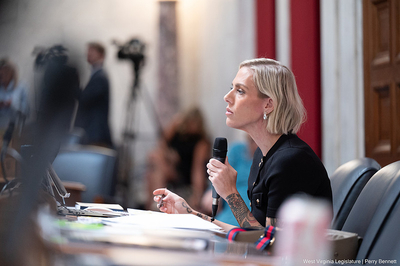
Del. Kayla Young, D-Kanawha, said that it wasn’t “surprising that the potential savings for audits for each of the agencies are years away or more likely not at all.”
“The focus of the current and last administration has largely been cutting taxes, not making government work,” Young said. “The audits had splashy high numbers for saving government funding but is full of ‘could’ and ‘may,’ and departments have largely said the tactics are unrealistic and cost rather than save.”
The BDO audit said that DoHS, the behemoth agency that runs Medicaid, foster care, social services and more, could generate an annual savings of $68.6 million for the state. A list of BDO’s recommendations included reducing the use of mailers and postage costs, fixing the broken $400 million PATH database system and reducing its reliance on out-of-state residential facilities to house foster children.
“The BDO report made clear from the beginning that many of the largest savings opportunities at (DoHS) require a multi-year implementation plan, not an immediate fix within a single fiscal year,” said Lars Dalseide, communications director for Morrisey. “Fixing a disastrous department takes work. We inherited a mess after 30 years of neglect, which is exactly why Gov. Morrisey proactively and voluntarily brought in independent auditors to get to the bottom of what was happening and identify a path forward.”
There are 248 foster children living in out-of-state residential homes, and 156 children are in out-of-state psychiatric hospitals as West Virginia can’t currently serve children with certain emotional or mental health needs in state. It could take three to five years to see savings by expanding in-state care, according to DoHS.
“Out-of-state child placements expose youths to heightened safety risk, and our current approach is financially unsustainable at a cost in the report noted at $142,000 average per child,” DoHS Deputy Secretary Christina Mullins told lawmakers. “So, the department considers contracting with providers to expand in-state residential treatment capacity to be the most feasible option.”
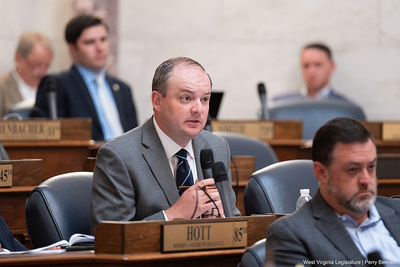
At the state Capitol on Sunday, Sen. Ben Queen, R-Harrison, pressed Mullins on potential sayings for the fiscal year 2028. Lawmakers will work on the FY 2028 budget in January during the regular legislative session; state agencies begin putting together budget requests to lawmakers this fall.
“You said earlier this afternoon we don’t expect to see any savings for three to five years. Obviously, January is in most of our main view here,” Queen said. “Do we expect to see any savings or any report of savings come this next fiscal year for a budget?”
Mullins responded that she didn’t have “specific savings” to share right now.
“When we’re building the 2028 budget, but those are things that we are trying to dive into to understand more so that we can make those recommendations,” she said, noting that savings on bringing foster children back in state could be seen in three to five years.
Dalseide said that DoHS is not waiting to act to save money.
“The department is already working to maximize available federal funding, identify potential vacancy savings, improve federal reimbursement for eligible services, reduce unnecessary spending and accelerate the migration of outdated technology systems,” he said.
Lawmakers question potential savings in transportation, corrections
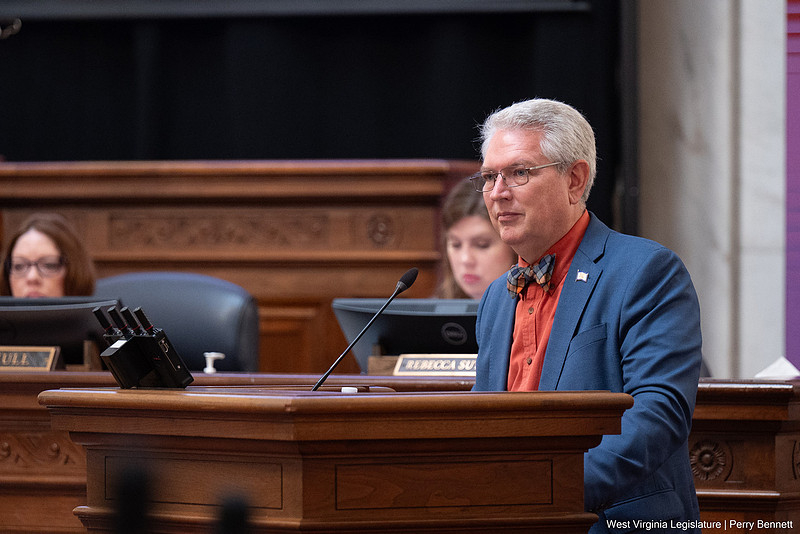
State Transportation Secretary Todd Rumbaugh told lawmakers on Monday that some cost-saving processes will take a couple of years to go through. The BDO audit said the department could save $50.6 million through reducing Human Resources staff, simplifying the bid process for projects, addressing technology issues and more.
“Like we have the IT strategic plan that’s being looked at as part of this, and it’s a two-year plan as they go through and review it (and) the programs that we’re using and try to consolidate and eliminate,” Rumbaugh said. “It will take a while.”
“Other things like the economic development change we made, it was already done before the audit was really completed because we’ve seen that as a problem and started moving,” he continued.
BDO estimated in their audit that the West Virginia Department of Homeland Security could save $39.4 million by addressing workforce issues in correctional facilities, minimizing high litigation costs of $3.5 million annually and more.
“One solution which DCR proposed is using body-worn cameras to provide impartial video evidence and, thereby, reduce conflict. However, procurement and implementation of a BWC system at the scale needed for each corrections officer is expensive,” the audit said.
Corrections Commissioner David Kelly has said body cameras are a top priority for the department in an effort to reduce litigation risks.
“If you’ll recall, when we met in June at Canaan, I said that a lot of the savings would not be recognized directly from DCR,” Kelly told lawmakers. “We believe that savings will be recognized from lawsuits, less lawsuits, which will be a savings to the state of West Virginia.”
Young explained that the lagging timeline for financial savings was “a direct result of years and years of a flat budget, which makes major technology upgrades impossible.”
“Systems across multiple cabinet departments are decades old, yet we continue to pour money into them at bandaids. Without investment into making our state agencies function at a baseline, of course we are behind,” she said.
Charleston, WV